Featured Stories, Latest News & Stories, Press Release
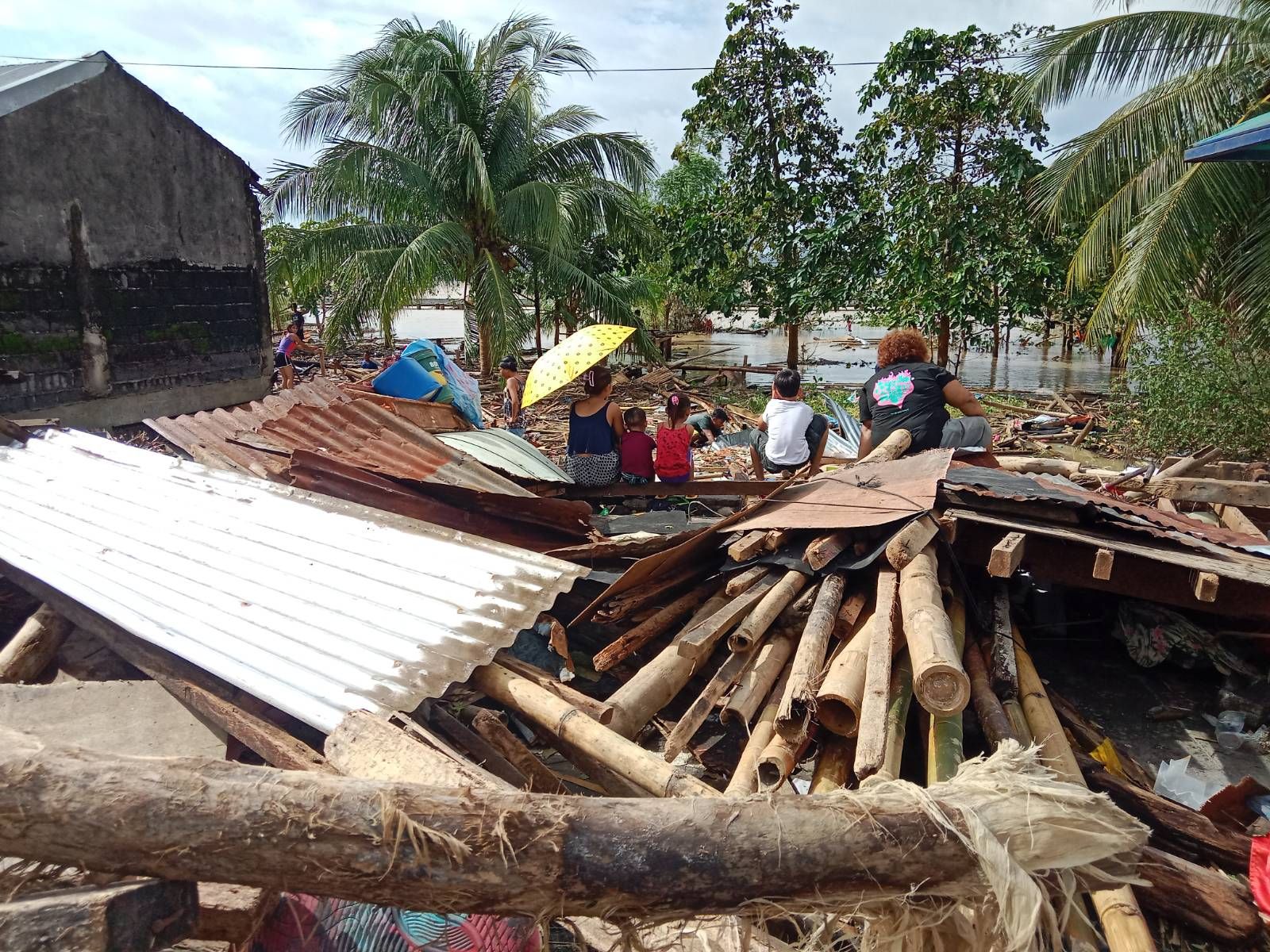
[Manila, November 18, 2024] – Super Typhoon Man-Yi made landfall in the eastern Philippines, hitting Panganiban and Catanduanes, becoming the sixth typhoon to strike the country in a month. This series of relentless storms has impacted over 10 million people, displaced countless families, and caused an estimated 470 million Philippine Pesos in damage to homes, agriculture, and infrastructure—devastating lives and stalling recovery efforts across the region.
“The past month in the Philippines has felt like a relentless, terrifying ordeal – with each storm hitting harder than the last,” said Reiza S. Dejito, CARE Philippines Country Director. “As one typhoon passes, another wave of destruction hits – homes destroyed, fields washed away, lives changed forever. Now, typhoon Man-Yi threatens to push millions further into despair, with more than 10 million people across Luzon and Visayas trapped in a cycle of disaster and fragile recovery.
“This isn’t just a spell of bad weather. It’s a clear example of the unfair distribution of climate change’s effects. The Philippines contributes little to the climate crisis, yet suffers some of its most severe consequences. These storms, intensified by climate change, have left women and girls at greater risk of exploitation, displacement, and loss of livelihood. For families already struggling, each storm pushes them further to the edge. Shelter, food, and gender-focused protection are urgently needed.”
CARE and partners are on the ground, conducting rapid assessments, delivering emergency aid – including food, water, cash and helping communities build long-term resilience. “In every crisis, communities are the real first responders,” Dejito added. “Through the Humanitarian Partnership Platform, we work with local experts to deliver life-saving aid where needed most. Together with our partners, we are urgently calling for support to enable swift and impactful responses led by those on the frontlines.”
Super Typhoon Man-Yi, sweeping through Southern Luzon and Eastern Visayas, adds to five earlier tropical storms that have repeatedly hit these areas, leaving recovery beyond reach for many.
###
For media enquiries, please contact:
Sarita Suwannarat, Asia Regional Communications Advisor
CARE Philippines has been providing humanitarian and development support since 1949, consistently working to uplift vulnerable communities. The Philippines continues to be among the most disaster-prone countries globally, and CARE remains at the forefront, delivering life-saving assistance to those most in need. According to the World Risk Index 2023, the Philippines remains the most at-risk country with the least capacity to respond to natural disasters.
Featured Stories, Latest News & Stories, Press Release
[October 23, 2024 – Manila] – Tropical storm Trami continues to devastate six regions across the Philippines, with Southern Luzon particularly hard-hit. Homes and infrastructure have been submerged. Landslides and widespread flooding devastated farming and fishing areas. Over 400,000 individuals – many still reeling from the devastation of Typhoon Yagi last month – are now grappling with another disaster.
“CARE Philippines, in collaboration with other humanitarian organizations, is on the ground, conducting needs assessment and ready to deliver immediate assistance to those most affected by Tropical Storm Trami. Our primary concern is for the most vulnerable, especially women and girls, who face heightened risks of gender-based violence and neglect as access to essential services like food, water, shelter, and healthcare has been severely disrupted.
Our top priority is to address the urgent needs of those hardest hit. We are deploying rapid assessment teams and working closely with our local partners through the Humanitarian Partnership Platform and authorities to provide life-saving support and ensure that the protection of women and girls, who are disproportionately affected by disasters, remains central to our response.
To effectively respond to this crisis and support recovery efforts, we need the collaboration of all sectors—government, civil society, and the private sector. The scale of need is vast, and only through coordinated efforts can we help affected communities and prevent further loss of life.”
CARE Philippines has been providing humanitarian and development support since 1949, consistently working to uplift vulnerable communities. The Philippines continues to be among the most disaster-prone countries globally, and CARE remains at the forefront, delivering life-saving assistance to those most in need. According to the World Risk Index 2023, the Philippines remains the most at-risk country with the least capacity to respond to natural disasters.
Disaster Response, Featured Stories, Latest News & Stories, Press Release
The funding will help bring food, clean water, sanitation facilities, and protection assistance to the hardest-hit, least-served, most remote communities
Manila, Philippines, 19 August 2024 – The ACCESS consortium – made up of five international and nine local organizations implementing the ACCESS Project – has secured ₱76 million (€1.2 million) in funding from the European Union (EU) to deliver timely, appropriate, life-saving aid to communities in Cotabato, Lanao del Sur, Maguindanao del Norte and del Sur, and Sultan Kudarat who were affected by the July 2024 flooding and landslides.
Said Ansherina Talavera, Humanitarian and Peacebuilding Coordinator of consortium lead CARE Philippines: “As humanitarian workers, we’re committed to addressing human suffering wherever it is found, with a particular focus on the most vulnerable. This funding from the European Union helps us support the hardest-hit communities, who are not only dealing with the aftermath of floods and landslides but are also facing the ongoing challenges of conflict and climate change.”
The consortium had been on the ground when floods and landslides hit the region, allowing it to immediately assess the situation, identify urgent needs, and deliver initial relief. This established presence in Mindanao and across the Philippines is made possible by the ACCESS-initiated Equitable Partnership Alliance – a non-formal network of local, national, and international non-government organizations committed to delivering quality humanitarian, development, and peacebuilding programs in the country.
The funding will help ACCESS provide food assistance, clean water, sanitation facilities, hygiene promotion, and essential services protecting the rights and ensuring the safety and wellbeing of affected families. As with all its emergency response efforts, the consortium will target the hardest hit, least served, difficult-to-reach areas, prioritizing low-income households for whom recovery may be challenging, and including older persons, pregnant and lactating women, persons with disability, female-headed households, and households from indigenous groups.
From El Nino to floods and landslides
The massive flooding and landslides – the result of the interaction of multiple, successive weather systems, including the southwest monsoon – came just as families were recovering from the impacts of El Nino. Many had also been grappling with the protracted, decades-long conflict across Mindanao.
Urgent needs
Among affected and displaced individuals, the consortium found high levels of food insecurity; significant losses in incomes and livelihood assets; poor water supply, sanitation, and hygiene conditions; extensive damages to belongings and the loss of important civil documents; heightened risks of sexual violence and exploitation against women and children; and a need for mental health and psychosocial support.
Said Talavera, “ACCESS is focused on providing urgent aid and helping families rebuild their lives with resilience and dignity.”
ACCESS (Assisting the Most Vulnerable Communities and Schools Affected by Complex Emergencies in Accessing Quality and Timely Humanitarian and Disaster Preparedness Services) is a multi-year, multi-sectoral project funded by the European Union Civil Protection and Humanitarian Aid Operations (ECHO). The ACCESS Mindanao flood emergency response will be implemented by consortium members ACCORD, Action Against Hunger Philippines, CARE Philippines, Community Organizers Multiversity, Humanity & Inclusion Philippines, Mindanao Organization for Social and Economic Progress, and Save the Children Philippines, together with Oxfam Pilipinas and United Youth of the Philippines-Women.
Blog, Featured Stories, Latest News & Stories, Peacebuilding
For twenty years, a deep rift split this indigenous community in the Philippines. What started as a territorial dispute in 2000 evolved into an intense conflict over resources, ideologies, and leadership, eventually spiraling into violence, displacement, and the loss of many lives. It also prevented the formation of a unified council needed to secure the tribe’s land rights. With climate change and environmental degradation potentially making scarce resources even scarcer, further escalation seemed almost inevitable.
But now, two decades later, both sides are taking crucial steps toward reconciliation.
NCIP and BRIDGE Project help clear a path to peace
The Talaandig, the smallest indigenous group in the Philippines’ Caraga Region in Mindanao, is a dwindling tribe with fewer than 2,000 families. The conflict forced some to flee deep into the forests, limiting their access to education and basic services mostly available in the lowlands. Many of its youth also struggle to maintain their traditional way of life and cultural identity due to discrimination and limited opportunities for learning and livelihood.
For years, the tribe tried to settle the dispute, but insufficient resources and the periodic recurrence of violence made it challenging.
With facilitation from the National Commission on Indigenous Peoples (NCIP) and support from the European Commission-funded BRIDGE project, members of the Talaandig tribe recently gathered for a peace dialogue. The goal was to bridge the long-standing divide by openly and respectfully talking about misunderstandings and grievances, committing to preventing future conflicts, and (re)uniting in their claim over their shared ancestral domain. This included establishing clear land boundaries and facilitating the creation of the Certificate of Ancestral Domain Title (CADT) to strengthen their legal claim.
This landmark event opened a new chapter for the tribe. “From now on, there will be no more bloodshed,” declared one tribal chieftain.
“We can’t ignore the hurt this conflict has caused our families and the damage it’s done to our relationships, but I truly believe that, by starting this dialogue today, we can begin to heal,” said another tribal leader.
The peace dialogue
While the dialogue itself took place within a day, most participants spent one day traveling to the venue and another day returning home. For some, because they lived in such remote, “last mile” areas, the journey to the venue involved two days of walking barefoot. Yet, for something that had been out of reach for two decades and for which they spent years preparing, it seemed a reasonable price to pay.
The event began with a traditional Talaandig ceremony invoking peace and unity, led by the tribe’s elders. Two datus, or tribal chieftains,from the conflicting parties presented their perspectives, detailing the origins and consequences of the territorial dispute. Elders, women, and youth from both sides shared insights and recounted their genealogy, the conflict’s history, and its impact on their community.
The group that remained in the original settlement in the lowlands spoke of their community’s milestones, including having two college graduates who are now teachers, and said they hoped these could serve as an inspiration to others and a testament to what the Talaandig can achieve given the opportunity.
Mediators also played a key role, helping pave the way for a peace agreement by using the appropriate mediation processes. Mediators included the Municipal Tribal Chieftain Datu Raul Minglana, Indigenous Peoples Mandatory Representative (IPMR) of San Luis Bae Ederlina Precioso, NCIP Regional Director Ordonio P. Rocero, and NCIP Lawyer Atty. Fritzie Lynne Sumando. BRIDGE project staff, and personnel from the Department of Education (DepEd) and the Municipal Social Welfare and Development Office, served as secretariat and witnesses to the dialogue.
The DepEd teachers also conducted a learner mapping to assess the educational needs of the community, especially in alternative learning systems.
The peace dialogue was a critical first step for the Talaandig Tribe to claim their ancestral domain. | Photo: CARE Philippines
Talaandig women’s voices
Women were instrumental in the peace process by documenting the dialogue and providing significant information to complete the tribe’s history. They also lent the discussion a nurturing and caring lens, helping participants see possible ways to heal past wounds. The event underscored the importance of inclusive participation, involving women in reconciliation and decision-making.
Resolution and future steps
To close the dialogue, the datus exchanged metal bracelets to symbolize their commitment to peace. They reached a tentative agreement on land boundaries and the establishment of the CADT, and all parties pledged to maintain the peace and prevent future conflicts. They also agreed to support each other’s aspirations for a dignified life by educating their children and ensuring equitable access to their ancestral land’s resources.
From humanitarian response to peacebuilding
The dialogue partially illustrates what working within the humanitarian, development, and peace nexus looks like, and how humanitarian and peacebuilding initiatives can build upon each other’s gains. In Mindanao, ACCORD, CARE, and partners implement two projects intentionally designed to complement each other: ACCESS, which addresses urgent humanitarian needs, and BRIDGE, which focuses on peacebuilding.
Months before the dialogue, a group from the tribe – who had been experiencing chronic violence, threats, and harassment for years – was given food, shelter, WASH (water supply, sanitation, and hygiene promotion), health, and civil registration assistance by the EU Humanitarian Aid-funded ACCESS Project. Seeing an opportunity to ask for help and give his people a better future, the group’s leader sought the project’s help in organizing a discussion with the other Talaandig groups. Through BRIDGE, the team from ACCORD supported NCIP in setting up the much-needed talk.
With the NCIP’s partnership with BRIDGE, initial aid from ACCESS, and the Talaandig Tribe’s commitment to peace, cultural preservation, and self-determination, this decades-long conflict may finally be coming to a close.
—
ACCESS is a multi-year, multi-sectoral project funded by the European Union Civil Protection and Humanitarian Aid Operations (ECHO) and implemented by consortium members ACCORD, Action Against Hunger Philippines, CARE Philippines, Community Organizers Multiversity, Humanity & Inclusion Philippines, and Save the Children Philippines.
The “Civil Society, Women and Youth Promoting Culture of Peace in Mindanao” (BRIDGE) Project is funded by the European Commission and implemented by ACCORD Incorporated, CARE Philippines, Community Organizers Multiversity, and Oxfam Pilipinas
Blog, Featured Stories, Latest News & Stories, Women and Girls, Women and Girls
by Josephine C. Kusain and Mary Therese L. Norbe
Photo: Farm fields lay barren due to lack of rainfall and water in Brgy. Santor, Rizal, Kalinga. (Josephine C. Kusain)
The rapid humanitarian assessment (RHA) conducted by CARE Philippines and its partners, Cordillera Disaster Response and Development Services (CorDIS RDS) and Citizen’s Disaster Response Center (CDRC), in response to the 2024 El Niño event in the Philippines, highlighted significant impacts on the agricultural and fishing communities in Kalinga and Negros Oriental. The drought, which affected 59 out of 82 provinces across Luzon, Visayas, and Mindanao, led to severe agricultural losses and food shortages, disproportionately impacting men, women, girls, and boys in these regions.
In Kalinga, communities reliant on rice, corn, and vegetable farming faced immense difficulties in maintaining their fields and gardens. Similarly, in Negros Oriental, sugarcane farmers and fishing communities struggled with reduced productivity due to the harsh weather conditions. Both regions reported increased pest infestations, dried rice fields, and significant productivity reduction and crop losses, leading to severe food shortages and malnutrition, particularly among children. Women in Kalinga adjusted by waking early to work in the fields, while in Negros Oriental, coastal households altered fishing schedules to cope with the intense heat. The shortened fishing windows and fish moving deeper for cooler waters reduced catch potential, further straining coastal livelihoods and incomes.
Photo: The heat cause rice fields to crack and prevented the rice to grow in Kalinga. @CorDis RDS
Water scarcity emerged as a critical issue in both regions, with Kalinga experiencing rotational water sources and frequent interruptions, allowing households access to water for only 3 to 4 hours daily. In Negros Oriental, even coastal communities faced diminished water flow from community tanks and deep wells. The lack of water affected both household and agricultural use, exacerbating the already dire situation for the communities. Farmers in Kalinga faced high gasoline costs to operate water pumps, while those in Negros Oriental contended with reduced water availability, further complicating their agricultural activities. In both Kalinga and Negros Oriental, coping with the heat during El Niño involved seeking shade, timing water collection, and utilizing different containers for water storage.
Photo: No water flows from an open faucet in Brgy. Santor, Rizal, Kalinga @Josephine C. Kusain/CARE
Health issues were widespread, with Kalinga reporting increased cases of coughs, diarrhea, hypertension, and joint pain among adults, while children and girls faced additional challenges such as urinary tract infections and chickenpox. The elderly and persons with disabilities faced barriers in accessing healthcare, with only basic medicines available and specialized treatments limited. Despite these challenges, communities demonstrated resilience by upholding traditional practices like bayanihan, supporting each other, and arranging prayer meetings for sick elders. Both men and women turned to traditional herbal medicine for minor health issues when modern healthcare was inaccessible.
Both men and women sought alternative employment opportunities to bolster their finances, with women in Kalinga diversifying their income by selling snacks, snails, and taro or providing domestic services, while men often sought work in urban areas. Mutual support through interest-free loans among neighbors or borrowing money to meet various needs helped families navigate the crisis.
In terms of safety and protection, the Barangay Local Government Units in Kalinga implemented curfews, store closures, and a liquor ban to address alcohol-related issues. Despite these measures, an incident of rape involving minors prompted intervention from the Department of Social Welfare and Development, resulting in in-house schooling due to bullying concerns. Women also highlighted heightened online exposure due to shortened school hours. Girls indicated no specific safety concerns, relying on the Barangay Council and cultural practices rooted in ancestral lands to ensure community safety. In Negros Oriental, children avoided working in sugarcane fields due to the extreme heat.
The RHA underscored the urgent need for immediate food aid, including staples like rice and nutritional supplements, to address malnutrition and hunger. Emergency livelihood assistance and cash-for-work programs are essential to help families meet their immediate needs. Additionally, distributing hygiene kits and ensuring emergency water supplies are crucial for addressing water and sanitation challenges.
Photo: The rice grains are completely dried and will not mature because of the drought in Kalinga. @CorDis RDS
Reiza S. Dejito, CARE Philippines Country Director, emphasized the importance of coordinated efforts of the government, non-government organizations, and international agencies to address this crisis. “We need to increase the coping capacities of these communities by providing immediate life-saving relief and implementing long-term sustainable recovery plans to mitigate the impact of future climatic events.”
CARE Philippines, with its extensive experience in emergency response and long-term recovery efforts, advocates for a comprehensive approach to resilience-building. This includes livelihood diversification, skills training, sustainable agriculture practices, improved water infrastructure and sanitation facilities, and strengthened community health services to handle critical health issues.
Featured Stories, Latest News & Stories, Press Release, Uncategorized, Women and Girls
Agusan del Sur and Norte, March 2024 — The BRIDGE Project capped off the month of March—National Women’s Month—with workshops to help educators integrate peace education and peace-promoting values in their learning curriculum, conducted in collaboration with Common Reference Educators Workshop (CREW) and the Department of Education.
Held on March 21, 2024, in Agusan del Sur and on March 22, 2024, in Agusan del Norte, the activities gathered a total of 103 primary and secondary school teachers, teaching personnel, and administrators.
Not just about conflict
A key takeaway is that peace “is not just talking about conflict or the absence of war,” as one female educator and workshop participant describes it. “It also talks about gender, the environment, health, and values. Peace is about accepting our diversities,” she says.
Photo: ACCORD
The role of women educators
The BRIDGE Project believes that women educators and women’s civil society organizations (CSOs), along with youth CSOs and national government agencies like the Department of Education, play important roles in peace education and can lead the process of promoting a culture of peace. This entails enabling the meaningful participation of women and girls in peace education activities in school, which must be designed to empower them.
Gender and peace also need to be contextualized in learning tools, especially those highlighting indigenous communities’ peace-promoting practices.
Photo: ACCORD
Advocates of peace
“As duty bearers, we have the responsibility to nurture young people, our students,” says a participant.
Another one echoes this sentiment, saying, “We teachers are advocates of peace. We need to cultivate empathy in our students. [Because] most of the learners are very vulnerable and prone to negative coping mechanisms, we should be there to support [them].”
Addressing educators’ challenges
The workshops were designed to address four specific issues that educators typically face when trying to mainstream peace education:
Messaging: how to discuss the subjects of peace, rights, and citizenship in a comprehensive and comprehensible way
Adaptability: how to introduce these topics into the present curriculum of all levels in a non-ladderized, flexible platform
Acceptability: how to integrate these into a framework or one common reference that various audiences will find helpful and fair
Sustainability: how to sustain peace, rights, and citizenship education
It covered these in three sessions, including one on the Universal Declaration of Human Rights and another on peace and diversity.
Photo: ACCORD
A holistic approach to peace education
Apart from being informative and engaging, participants appreciated the breadth of the workshop topics. Says one participant, “At first, I thought we would be talking about the social injustices. But our discussion went beyond that. [We talked about how] health issues, persons with disabilities, cultural diversities, and environmental concerns are part of peace. Peace Education is a holistic approach. This training [can guide us on] the topics we can use in our lessons.”
Investing in women
In succeeding activities, BRIDGE will further highlight how gender is an important component of peace education, and how empowering women is central to promoting a culture of peace.
As the 2024 International Women’s Day theme reiterates, “If we invest in women, we accelerate progress.”
Photo: ACCORDPhoto: ACCORDPhoto: ACCORD
The “Civil Society, Women and Youth Promoting Culture of Peace in Mindanao” (BRIDGE) Project is funded by the European Commission and implemented by ACCORD Incorporated, CARE Philippines, Community Organizers Multiversity, and Oxfam Pilipinas.
Blog, Disaster Response, Featured Stories, Latest News & Stories, Women and Girls
In a northern Philippine province, a woman and her community’s story of coming together and rebuilding safer houses
When Super Typhoon Egay (international name: Doksuri) struck the Philippines in July 2023, its rapid intensification took many by surprise. It dumped more than a month’s worth of rain in two days, damaged some 56,000 houses, and affected three million people.
Miriam Bisares, 31, lost her home and almost all possessions. She lives with her husband and three children in a barangay (village) by a river in Abra, one of the worst-hit provinces. Running to safety that day was not easy. Her two older kids, ages 14 and 12, were ill with chicken pox and had to be carried. The flood submerged the paths to higher ground, so they had to cut a way through a thick tangle of grass and shrubs.
Today, her community remembers it as a difficult time, but alongside memories of the trials are ones of coming together and rebuilding. And despite the challenges, women like Miriam demonstrated capable leadership, playing a crucial part in helping her community learn how to become more resilient by building safer homes, with support from the European Union Humanitarian Aid and the ACCESS Project.
In the 14 years Miriam’s family had lived in Barangay Sao-atan in Bangued, Abra Province, they hadn’t experienced flooding as destructive as Super Typhoon Egay.
Their old shack—made of light materials and located a few meters away from the edge of a river cliff—was swept away completely.
Recovery was hard. She occasionally finds work in sales as a “push girl” and “promodiser;” her husband is a merchandiser at a food manufacturing company but is not yet a regular employee.
That Barangay Sao-atan lies next to a river is both a blessing and a burden: on the one hand, residents get to plant crops on its fertile banks; on the other, it makes the village flood-prone.
The river also serves as a source of water for household use. During the rainy season, however, the water becomes murky and unusable. During dry spells, the river contracts, and residents have to climb down and up the steep river cliff while balancing one or two buckets.
At around 10 A.M., the water rose quickly. Amidst heavy rain and howling winds, Miriam’s family left their house and sought temporary shelter in this hut, which sits on slightly higher ground, further away from the river.
By 6 P.M., the water was at their feet again. With a big knife, they slashed a path through the bushes to escape.
Months after the typhoon, damaged plastic “durabox” cabinets, scrubbed clean of mud and left to dry out in the sun, still litter the village.
Miriam’s family lost almost everything. Fortunately, her eldest had the presence of mind to save important documents, such as birth certificates, and even her parents’ high school diplomas.
When the floodwaters receded, cleanup—a collective community endeavor—commenced. Miriam and her family stayed with a relative for one month. Thanks to another relative, who owned an unproductive lot in an elevated part of the village and who let Miriam and other neighbors rebuild their houses on it, those affected by the flood were able to start anew in a safer location.
Through the ACCESS Project, Miriam and other residents severely affected by the typhoon received shelter assistance through repair kits and training sessions on how to build back safer. The project encouraged the community to work together to rebuild each other’s homes.
It also formed a shelter roving team, a group of community members that ensured houses were repaired or rebuilt properly. As part of the team, Miriam became well-versed in Building Back Safer (BBS) principles. She can explain why having strong bracing, interlocking joints, anchored posts, and other BBS techniques are key to building safer homes.
Miriam and her family moved into their new house a month before Christmas.
“Malaki ang pagbabago. Safe at komportable kami dito. Hindi na kami nangangamba na maaabutan ng tubig kung sakaling may bagyo (It’s a huge difference. We’re safe and comfortable here. We don’t worry about the water reaching us in the event of a typhoon).”
– Miriam (Bangued, Abra)
The project also provided water, sanitation, and hygiene (WASH) assistance by building a water system and holding hygiene promotion activities. There are shaded benches near the water system where women sometimes congregate, working on chores together, or just staying for a chat.
“Sabi ng mga matatanda, himala daw na may tubig na kami dito. Dati na kasing problema yan (The elders say it’s a miracle we now have water here. That was always a problem),” says Miriam.
These days, Miriam and her husband are focused on taking care of the children. He cooks for them before leaving for work; she walks them to and from school.
Asked what aspirations she has for the family, she says, “Pangarap ko na mapatapos silang tatlo sa pag-aaral para maganda ang kinabukasan nila (I hope we can support the three of them so they can finish school and have a better future.”
ACCESS gave shelter assistance to some 1,650 individuals and repaired 530 houses across the provinces of Abra and Cagayan. The project is funded by the European Union Civil Protection and Humanitarian Aid Operations and implemented by ACCORD Inc., Action Against Hunger Philippines, Humanity and Inclusion Philippines, Community Organizers Multiversity, and CARE Philippines.
It was lunchtime and Shimalyn Flores, 48, rushed to display the last tray of food she cooked to sell at her carenderia or roadside food stall in San Isidro, Siargao Island, Surigao del Norte. Soon, people will eat or buy food for their lunch. Some of them are those who tour the island and find themselves hungry along the highway.
She noted that small businesses like hers have sprouted now that tourism has become vibrant again since the onslaught of Typhoon Rai (Odette) in 2021. When the typhoon hit, most of the small businesses were destroyed. She used to cook hamburgers and viands that she peddled in different areas of the town. The typhoon damaged all her cooking equipment which made it even more difficult to start cooking and selling again.
As the sole breadwinner for her child and elderly parents, she was at a loss as to how to provide for her family. They relied on the relief goods and assistance given by the government and non-government humanitarian organizations to survive daily.
When the relief operations ended, she loaned from a financial service provider and invested in a small pushcart which she filled with rice-based delicacies, shaved ice dessert, burgers, viand, and other street food. She sold these around town in areas where foot traffic is heavy. She had to make sure that all her goods were sold so that she could pay her loan and provide for her family’s needs. Some days are good, and some days are bad for business, hence, she dreaded the times when her income was not enough to pay even the loan’s interest.
When CARE Philippines came and presented the WAVES (Women Adding Value to the Economy in Siargao) project to her community, Shimalyn was one of the participants who were selected to receive livelihood support from the project. Along with other small women entrepreneurs, she was trained by technical experts from the Department of Trade and Industry (DTI)-Surigao del Norte on financial literacy and entrepreneurship. She then received the project’s 15,000-peso cash grant for her livelihood recovery after the training.
“I became confident again to take the risks of improving my business because of what I learned on business and finance management and because I have the capital to use,” she shared.
She bought cooking equipment and ingredients and rented a space where she would sell her goods. She also included some groceries to diversify her products. She shared that having a rented space made selling easier for her than before when she went from one community to another carrying her goods.
“I have increased my income. I am also paying up my loan. And I was able to provide better for my family,” she added.
CARE Philippines works with 1,175 women and men entrepreneurs in Santa Monica, Burgos, San Isidro, Pilar, Del Carmen and Dapa municipalities in Siargao in recovering and sustaining their livelihood and increasing their resiliency through the WAVES project supported by the Tijori Foundation.
Blog, Featured Stories, Latest News & Stories, Women and Girls
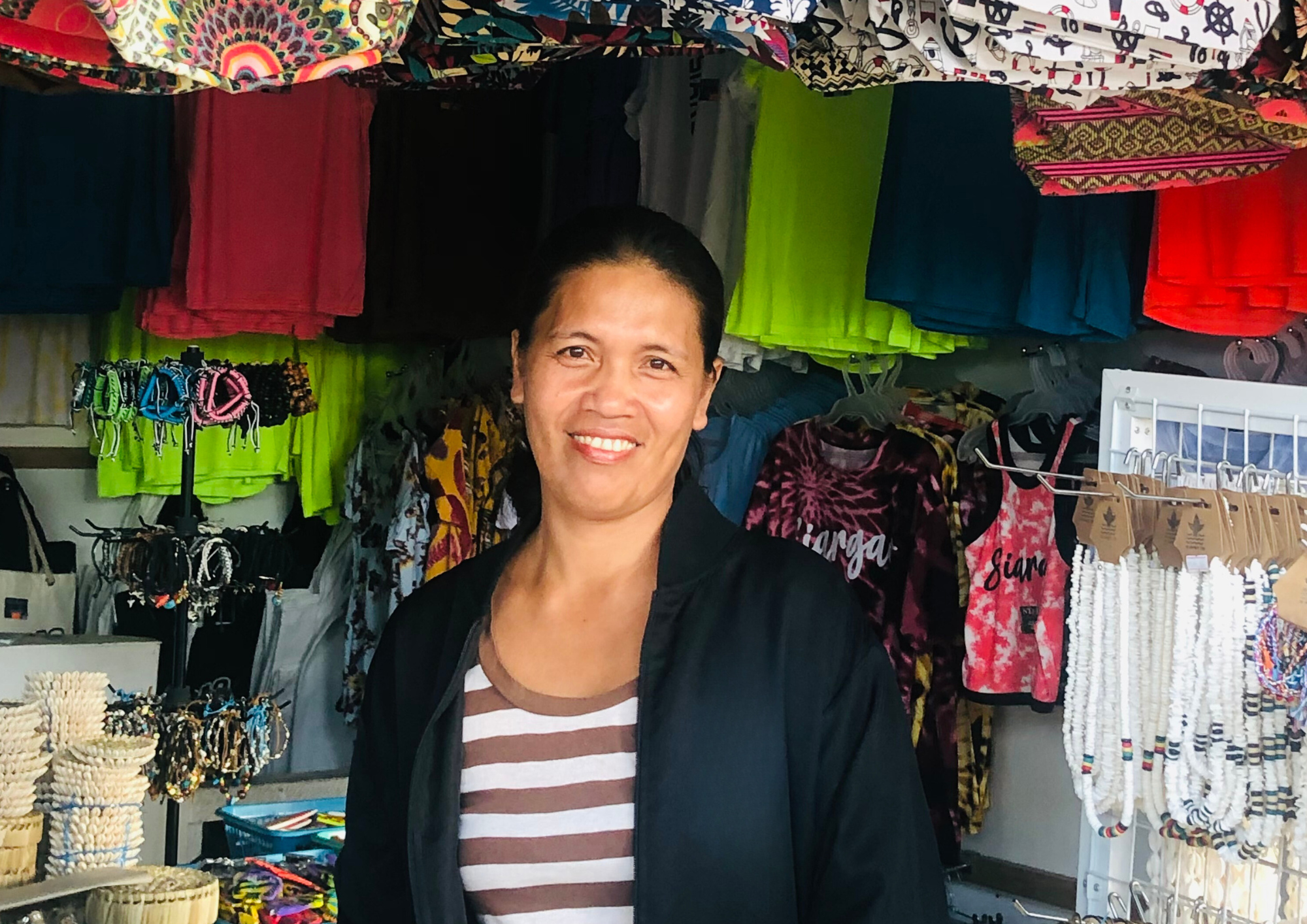
It’s a busy day as tourists swarm the line of stalls at the popular Maasin River in Barangay Maasin, Pilar, Siargao Island, Surigao del Norte. Madel Elimanco, 39, stands at the front of her shop and invites tourists to check the various goods she sells. She has souvenir items such as shirts, bags, shell ornaments, accessories made of coconuts, and delicacies that are sought after by people who flock to the island.
She still gets overwhelmed whenever she earns more than she expects on a day of selling. She remembered how difficult it was for her and her husband to get back on their feet when Typhoon Rai (Odette) struck in 2021. Their stall where they used to sell hot cakes, processed foods, and coconut shell souvenirs was swept away by the strong winds. After the onslaught, her husband who was a tour guide and surfing instructor struggled to find income when all tourists had gone, and the island was left in ruins.
As much as Madel wanted to recover their assets and start selling again, they had no capital to use. She wanted to find a job so that they could survive the daily challenge of putting food on the table and taking care of their children’s needs.
“It was hard for me to find another job because I’m used to running a small business. I wasn’t confident to do something that I don’t have the right skills for”, she said.
CARE Philippines through Project WAVES (Women Adding Value to the Economy in Siargao) identified Madel as one of the women entrepreneurs to be engaged as a project participant who will lead their livelihood recovery. She participated in a series of livelihood and financial literacy training and was supported to recover her assets and improve and diversify her products through financial assistance.
“Before, I only sell a few items. Now, I have more products displayed and sold in my souvenir shop”, she shared.
CARE Philippines and the Department of Science and Technology-Philippine Council for Agriculture, Aquatic and Natural Resources Research and Development (DOST-PCAARD) signed an MOU to provide a holistic package of farming solutions to smallholder vegetable farmers in Mabitac, Famy, Sta. Maria, and Pangil, Laguna province on February 12.
This will be made possible through the Asenso sa Good Agriculture Package (aGAP) Social Enterprise project being implemented in the said municipalities where vegetables are the prime commodity. Small-scale farmers in these areas have costly and or unreliable access to farming inputs, technology, and markets for their produce. Moreover, they suffer from losses caused by natural hazards such as drought, flooding, and typhoons.
Reiza S. Dejito, CARE Philippines Country Director emphasized the importance of collaborating with the DOST-PCAARRD in increasing farmers’ resilience by accessing necessary resources through the latter’s Agri-Aqua Business Hub.
“It’s an alliance that promises to harness the best of science, technology, and community spirit to break down barriers, open doors to opportunities, and pave the way for a new generation of entrepreneurs in agriculture and aquaculture,” she said.
Photo: DOST-PCAARRD
The Agri-Aqua Business Hub is DOST-PCAARRD’s new platform for technology promotion, transfer, and commercialization that offers a diverse range of services. In this project, these are innovative, client-focused, and sustainable agricultural support services that would improve the livelihood of more than 2,000 smallholder farmers in Laguna.
“Working together, we can offer personalized advice, training, and support that is more closely aligned with farmers’ individual circumstances and goals,” shared Dr. Reynaldo V. Ebora, DOST-PCAARRD Executive Director.
Photo: DOST-PCAARRD
aGAP SE is a social enterprise project that offers a range of solutions such as seed, fertilizer, farm tools, and equipment while providing education, financial connection, and market facilitation to smallholder farmers through collaboration and partnership with local government units, government line agencies, businesses, and other stakeholders.
It is supported by the Tijori Foundation, a long-time partner of CARE Philippines in humanitarian and development initiatives.