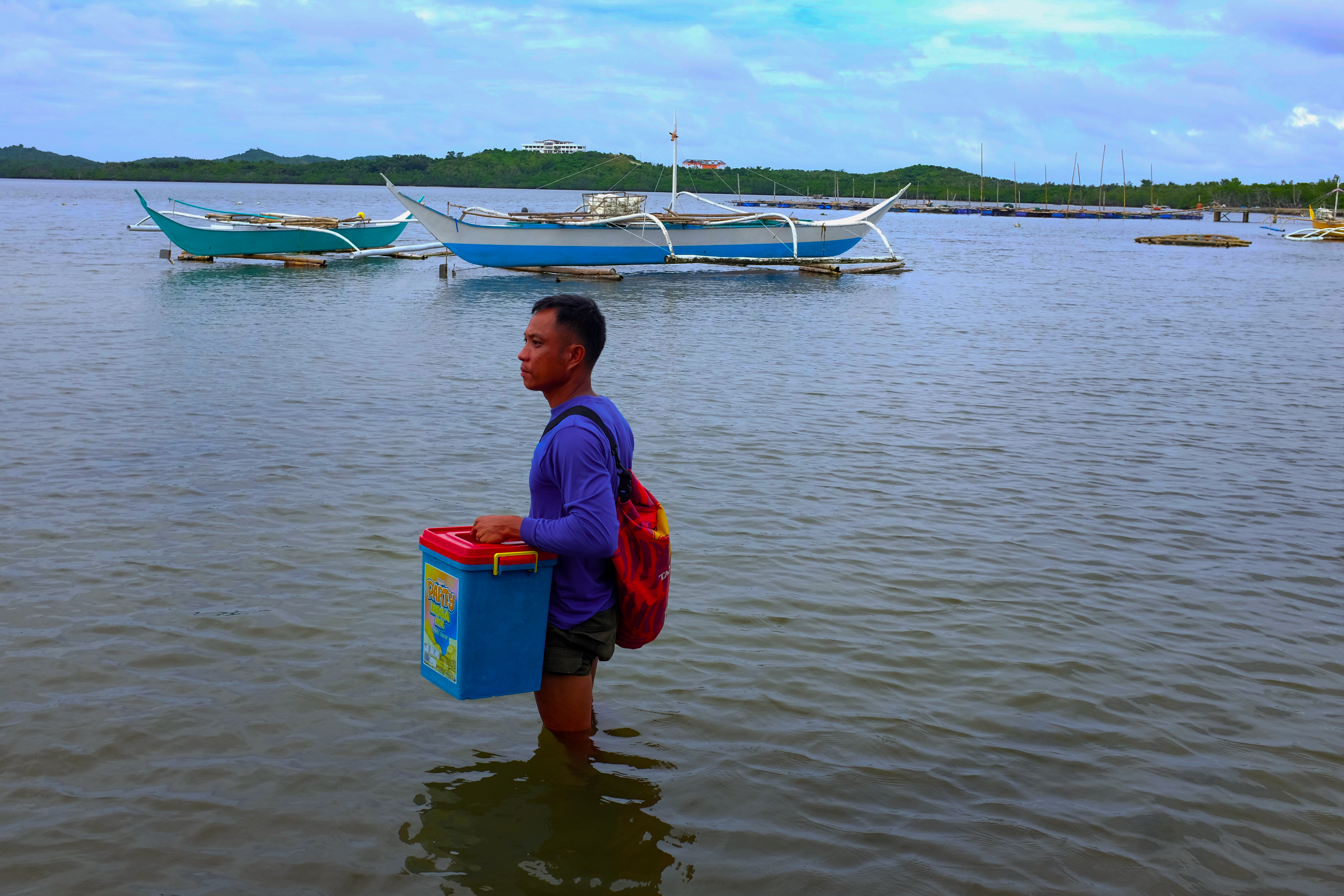
Women and girls in the Philippines are in need of your support.

  • Home
  • Latest News & Stories

CARE, partner NISA deliver learning materials to a conflict-affected elementary school in Basilan

Lorna, 51, carefully checks the foldable tables, chairs, writing, and printing supplies, visual materials, a sound system, printer, and a laptop delivered to Ulitan Elementary School, where she is the teacher-in-charge. Some of their pupils and their parents and guardians were in attendance and witnessed the turnover of these supplies, materials, and equipment needed to improve education delivery in their school.

“We are overwhelmed with the support. These will greatly assist us in our teaching and will surely motivate our pupils to continue learning despite what happened”, she shared.

The Ulitan Elementary School in Brgy Ulitan, Ungkaya Pukan in the Basilan province, suffered a devastating loss when combatants of the Moro Islamic Liberation Front (MILF) and the Philippine military clashed in November last year forced the evacuation of more than 500 households in the community. After the fighting subsided, and it was deemed safe to return to the community, Lorna and her fellow teachers returned to find that multiple gunshots had damaged the school buildings. Desks, chairs, and tables were also turned over and ruined. Gunshots forcefully opened some doors.

Lorna remembered how she stood in her room, scanned the damages, and felt lost on what to do. One hundred fifty-eight (158 enrollees) relied on them to resume their education. Without the necessary supplies and materials, they had to ask for the support of the local government unit, organizations, and private individuals to provide them with desks, tables, and chairs to resume their classes after the school was deemed safe for the pupils to return to.

CARE, NISA staff hand over the learning supplies, materials and equipment to the school administration witnessed by pupils and their parents/guardians in the Ulitan Elementary School.

CARE and NISA Ul Haqq fi Bangsamoro, Inc. consulted with the school administration and the teachers and included their specific needs in the Basilan Emergency Response. On March 4, some of the educational supplies, materials, and equipment they requested were turned over to their school.

Janira, a 71-year-old grandmother, was one among the people who attended the event. She has 3 grandchildren who are learning in the said school. She shared that they were disheartened that they were not able to continue schooling when they fled and stayed at the evacuation center for more than 20 days before they were able to return home.

“I’m glad that they will now have enough chairs and tables so that they can properly write their lessons”, she said. The pupils used to huddle and share the few desks they had in the school.

Pupils raise their hand when asked who were glad that their school have necessary learning materials and equipment to use in their education.

The Basilan Emergency Response is supported by the Tijori Foundation and is being implemented by CARE Philippines and its partner, NISA Ul Haqq fi Bangsamoro, Inc., in collaboration with the BARMM Ministry of Social Services and Development and Development, GPH-MILF Coordinating Committee on the Cessation of Hostilities (CCCH) and the Ad Hoc Joint Action Group (AHJAG).
Showcasing Disaster Risk Financing — British Embassy Reps Visit Start DRF Area in Taft, Eastern Samar

  • CARE Philippines
  • Blog, Featured Stories, Latest News & Stories, Press Release

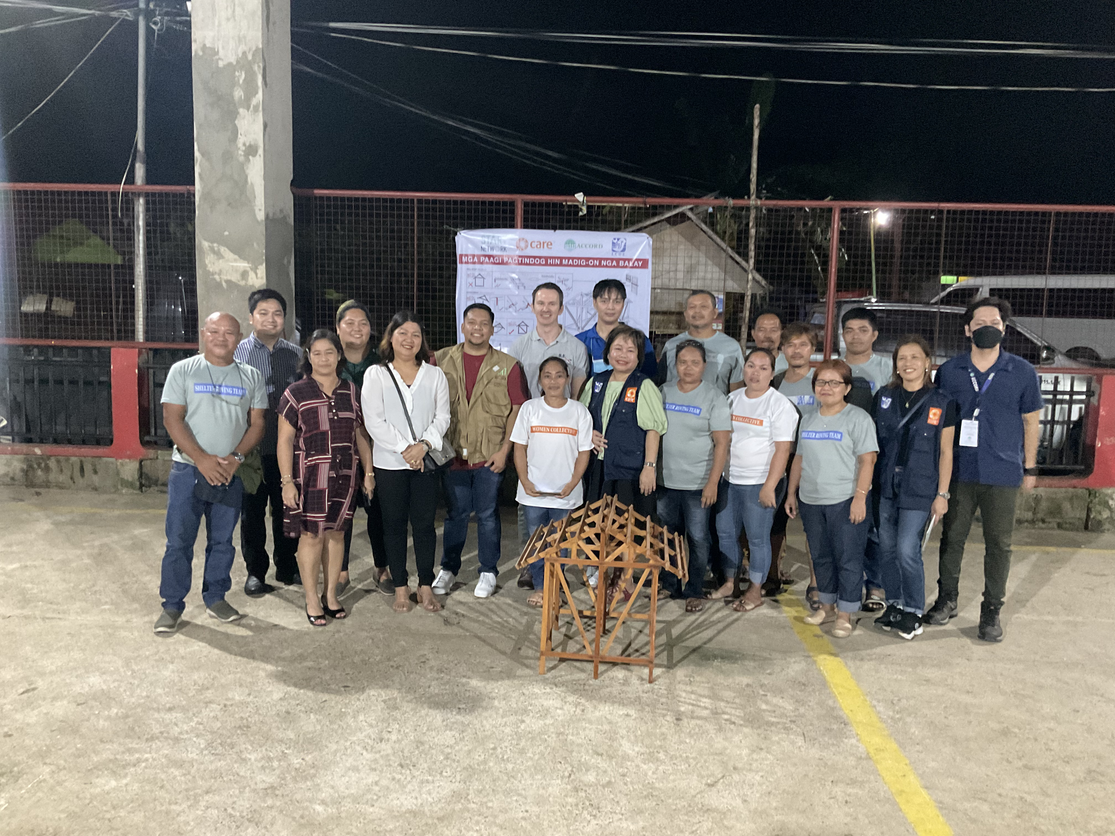
Community members together with barangay local government officials, Taft Municipal Mayor Gina Alzate-Ty and Vice Mayor Maria Concepcion Adalim-Hilario, Political Counsellor Iain Cox of the British Embassy Manila and representatives of LCDE, CARE Philippines, and ACCORD in a group photo with the BBS model house after conducting an FGD. (Photo: L.Fuentes/CARE Philippines)

by Leigh Ginette Fuentes

In the Philippines, it was identified that hydrometeorological hazards are the most underfunded disaster events that the country faces, based on a study by the UP Resilience Institute. Consequently, in a survey conducted by Start Network among its members, it was identified that the major hazard in the country was tropical cyclones followed thirdly by flooding. The country has seen the onslaught of several strong, destructive typhoons in recent years, including Typhoon Haiyan (Yolanda) in 2013 and Typhoon Goni (Rolly) in 2020. Due to the effects of climate change, hazards such as these could intensify and become more frequent, posing a threat to local populations, their lives, property, and livelihoods.

Disaster Risk Financing (DRF) is a program of Start Network that allows members to create their own DRF Systems – a structured way to model and plan for risks. The Start Philippines Disaster Risk Finance system is majorly governed and implemented by Start Network members in-country, together with local NGO partners and scientific experts. The locally led consortium acknowledges the needs of local communities and comes up with data-driven actions to mitigate the impact of disasters and prevent the loss of lives and properties.

Last February 5, Political Counsellor Iain Cox and other key representatives of the British Embassy Manila visited Barangay Nato in Taft, Eastern Samar to learn more about Start DRF and the impact the programming implemented by the Eastern Samar DRF consortium, composed of CARE Philippines, the Leyte Center for Development, Inc. (LCDE), and Assistance and Cooperation for Community Resilience and Development, Inc. (ACCORD, Inc.) on community members, particularly of those vulnerable to the adverse effects of typhoons. These also included members of the barangay local government units from Can-Avid, Eastern Samar which is also a programmatic area.

An introduction to the Alternative Temporary Shelter (ATS) System was followed by an orientation on Build Back Safer (BBS) practices through visual aids and a model house, the same used in an orientation earlier that day with community members from Taft and Can-Avid. Community members and implementing organizations then engaged in a focus group discussion to learn more and delve into the experiences of community members in relation to typhoons, the recent continuous flooding, and the gaps they still see in the community’s ability to prepare for and respond to different disasters.

Among the participants was Lita Fe, 42, who is also member of the Women Collective in Barangay Nato, Taft, Eastern Samar. “Because of the skills and learnings from the capacity building sessions, we are now equipped to do pre-emptive evacuations during emergencies,” shared Lita Fe during a focus group discussion with Barangay representatives, members of the Shelter Roving Team, and other members of the Women’s Collective.

“Women have an important role during emergencies,” she adds, “and the skills we gained allow us to act even before a calamity hits the community.”

To learn more about the Start Network Disaster Risk Financing, please visit https://startnetwork.org/funds/disaster-risk-financing-support .

Farming, sewing, and saving

  • Mary Therese Norbe
  • Blog, Featured Stories, Latest News & Stories, Women and Girls

Dark clouds hovered when Lolita, 53, arrived at her house on a gloomy December morning. She had just finished her daily trek of the muddy trail to and from their vegetable farm in Brgy. Malabanan, Balete, Batangas. It had been raining for a few days, so she and her son, who works with her on the farm, constantly checked how their crops were faring with the weather. They learned to be meticulous in monitoring their crops, especially the vegetables, because of their experience with the Mt. Taal volcanic ash eruption earlier that year.

The string beans they planted were already in their first month of growth when it happened. The leaves turned yellow and were laden with small holes.

“We immediately applied fertilizer to help the crops withstand the effects. It did help them from withering and grew to produce string beans that were shorter and thinner”, shared Lolita. Their few kilos of harvest only paid for a part of the expenses they made for that cropping.

Lolita has been farming for the past thirty years. She shared that the challenges have become more difficult in recent years. The biggest hurdle was the unpredictable weather which greatly affected their planting schedule and their crops’ resilience to the intense heat in the dry season and the heavy rains in the wet season. Added to this was how traders controlled the market: which crops to produce and the price of these crops.

These are the seeds of pigeon peas locally known as kadyos which Lolita stored for planting. | Photo: M. Norbe/CARE

“We used to plant different varieties of vegetables. We had no choice but to stick to only those the market demands”, shared Lolita.

With most farmers doing the same, the supply increases every harvest. This leads to a decrease in the buying price for their crops.

When she attended one of the sustainable agriculture trainings organized by CARE and the Southern Tagalog People’s Response Center – STPRC, Inc., she learned that food producers like her should be innovative in navigating the tricky waters of the market and ensuring that their farm production will be sustained for future generations.

Her son, Reymark, 27, is already working on their farm, and Lolita wanted him and his family to continue reaping the benefits of farming. These training were part of the aGAP (Asenso sa Good Agriculture Package), a project supported by the Metrobank Foundation that assists marginalized farming households whose livelihoods have been doubly affected by the COVID-19 pandemic, and the intermittent Taal Volcano eruptions since January 2020.

After the training, she decided to integrate natural ways of farming by making oriental herbal nutrients (OHN), fish amino acids (FAA) and fermented plant juice (FPJ) and applying these as fertilizers and enhancers to their crops. Her first harvest after this was a success. The string beans yielded more than their usual harvest. The fruits were also longer and firmer. She also noticed that the soil turned darker, and the flowering vegetables kept blooming and bearing fruits every week.

Lolita (left) and another farmer participant peeled garlic to make oriental herbal nutrients (OHN) used to boost plant growth. | Photo: STPRC

She also decreased their production of ampalaya (bitter gourd), which sells at a high price but requires intense labor and is very sensitive to changes in weather and soil conditions and recurrent volcanic ash eruptions. Instead, she focused their vegetable production on crops that were easy to grow and required less amount of capital. She continued storing seeds that were open-pollinated varieties like string beans, okra, pigeon pea and winged beans, so she didn’t need to buy these from traders.

“We are near Taal, and we had to find ways like these to survive the effects of its eruption on our crops and livelihood,” she said.

Hence, Lolita also doesn’t depend on farming as her family’s sole source of income. After doing her farm chores, she sewed school uniforms that retailers of ready-to-wear clothes would buy from her for 130 pesos (2.6 USD) per dozen. She usually finishes two dozen per day. She also works on other farms as a weeder and harvester.

Above photo: Lolita spends most of her time in her porch where she sews school uniforms after her tending to their vegetable farm. |
M. Norbe/CARE

Right photo: Part of income from selling this fresh harvest of string beans will be put in the tin savings bank. | STPRC

“It felt so good to have some cash to use in times of difficulty. I didn’t have to borrow from anyone”, she added.

This story is part of the aGAP (Asenso sa Good Agriculture Package) sa Batangas implemented by CARE and its partner, Southern Tagalog People’s Response Center – STPRC, Inc. in three barangays in the Municipality of Balete in Batangas province. The Metrobank Foundation supports this project.

The Family Farm in Dinagat Island

It started drizzling when husband and wife Francisco, 40, and Jean, 33, finished weeding the vegetable plots at their two-hectare family farm up a hill in Brgy. Sto. Nino, Libjo, Dinagat Island. Francisco’s mother, Anastacia, 63, rushed and joined them to take shelter under a tent where their farmhouse used to stand before Typhoon Odette (Rai) flattened it to the ground. The lumber piled beside the tent was the only remaining reminder of the severe damage that the typhoon caused to their house and their farm. All the crops they lost were replaced with bananas, coconuts, corn, rice, cassava, taro, sweet potatoes, and various vegetables.

Jean shared that it took them a long time to regain the farm’s productivity. The flood and mud washed out all their stored seeds and farm tools. They had to build a temporary shelter down at the village to be close to their relatives and to any assistance they could access. It took more than a month before help came because the roads were difficult to pass due to the mud and debris. Within that period, their family relied on the remaining undamaged root crops they gathered from their farm for food.

When the government released financial assistance worth 5,000 pesos (100 USD), they immediately bought what they needed to restart their production.

“We couldn’t continue to wait for more help because our farm was the only source of income and food we had,” shared Jean.

However, everything they needed was sourced outside of the island. The difficulty of transport raised the prices of commodities, and the family could only do so much with the amount they received. They started replanting bananas from the seedlings of mother plants that survived the typhoon. They also made a small garden and grew vegetables for consumption. On September 2022, they harvested 140 kilos of bananas that sold for 35 pesos (70 US cents) per kilo. Even with this income, they knew it would take a considerable amount of money to get the farm back to produce crops for the market.

Then on October 2022, they were invited to a consultation and were selected as participants in the livelihood recovery project implemented by CARE and its local partner, ACCORD. Through the support of the US Agency for International Development’s Bureau for Humanitarian Assistance (USAID-BHA), their household received 15,000 pesos (300 USD) as assistance for them to use in their livelihood recovery.

They used the amount to hire farm workers to help them clean and prepare the soil for planting. Francisco bought fertilizer and vegetable seeds and started planting them for consumption and selling in the market. They planted okra, sweet potatoes, string beans, green peppers, snow cabbage (pechay), Malabar spinach (alugbati), and spring onions. These vegetables are cultivated easily. Hence, they were able to harvest and earn 2,000 pesos (40 USD) in the first picking.

Francisco picks okra for their family’s dinner. | M. Norbe

“It felt good to be able to earn again after the losses we had because of (typhoon) Odette,” said Anastacia, who missed the time when they were netting at least 4,000 pesos (80 USD) per week with their vegetables, corn, root crops, and bananas.

Anastacia (left) and Jean (right) show the vegetables that they grow in the family farm.

But with the state of their farm slowly returning to what it was before the onslaught, the family was hopeful that they’d be able to recover. They were expecting a massive harvest of sweet potatoes in December with an estimated selling point of 50 pesos (1 USD) per kilo.

“When we have saved enough, we plan to rebuild our farmhouse and return to living and farming here”, said Francisco who shared the difficulty of going uphill to the farm and downhill to their house at the village every day.

This story is part of the “Emergency Assistance to Support Local Recovery Capacity of Families and Communities Affected by Typhoon Odette”, an emergency response project funded by the US Agency for International Development’s Bureau for Humanitarian Assistance (USAID-BHA) and jointly implemented by Action Against Hunger Philippines and CARE Philippines and its local partner, ACCORD Incorporated.

The Vegetable Farm Up the Hill

  • Mary Therese Norbe
  • Blog, Featured Stories, Latest News & Stories, Stories of Change

It was nearly noon, and the sun was already scorching hot when Analyn, 48, picked string beans and snap peas on their 1.5-hectare vegetable farm up a hill in Brgy. Malabanan, Balete, Batangas. It was a grueling task because the trellises that held the vines up were bent low by the strong winds and rain brought by Typhoon Paeng (Nalgae) in September.  She crouched to get the mature beans while dragging a sack where she put her harvest. Her husband, Pablo, 54, picked okra on the other side of the farm. They then met where two large wicker baskets were nearly filled with the vegetables they gathered. They began sorting those of market quality from those they would cook at home or sell to their neighbors downhill.

While packing the vegetables they would sell to the traders in the market, Analyn shared that they are reaping the results of their good decisions at the start of the cropping season.

They were one of several small farmers affected by the volcanic ash eruption of Mount Taal that were invited as participants to CARE’s aGAP (Asenso sa Good Agriculture Package). It was a project implemented with the Southern Tagalog People’s Response Center – STPRC, Inc. with support from the Metrobank Foundation, Inc. that assists marginalized farming households whose livelihoods have been doubly affected by the COVID-19 pandemic and the intermittent Taal Volcano eruptions since January 2020. One of the project’s supports was providing additional farming inputs such as training on good agriculture practices to the participants to help them improve their resiliency to the constant volcanic ash and other climate change effects on their farming.

They learned from one of the sustainable agriculture training they attended that they could plant madre de cacao, a nitrogen-fixing tree, as natural trellises for their climbing vegetables. Their usual wooden post trellis cost 15 pesos each (27 cents). They needed at least 500 post trellises. Using the madre de cacao meant they saved 7,500 pesos (135 dollars). And because it is planted and growing, the tree can help prevent the soil from eroding, and its nitrogen-rich leaves can be used as fertilizer. With the trees rooted to the ground, they withstood being felled by the typhoon’s winds. Hence, the family was able to keep harvesting from their farm.

Moreover, Pablo learned to make fermented plant juice (FPJ) which ingredients were mainly from the plants they were growing. This is an inexpensive alternative to chemical fertilizers. They usually spend 4,000 pesos (72) dollars for fertilizer. With the FPJ, they partially cut the cost for this.

Pablo stirs the fermented plant juice (FPJ) that he made at home using molasses and vegetables harvested from the family farm. | Photo: M. Norbe

“We still couldn’t entirely turn it into an organic farm because we needed the yield that the chemical fertilizers bring. But slowly, we are noticing how the natural fertilizers I made produce healthier plants”, Pablo shared.

He had already experimented using only the FPJ and animal manure on a plot of okra, producing market-quality fruits. He planned to continue applying the knowledge from the training to the farm and see how they could improve their yield.

Pablo harvests okra from a vegetable plot where he experimented full application of fermented fruit juice (FPJ). | Photo: M. Norbe
The FPJ applied produced good market-quality okra fruits with minimal cost compared to chemical fertilizers. | Photo: M. Norbe

For farmers like Pablo and Analyn, yield is the most critical factor in bringing sufficient income from farming. However, their harsh experiences with the changing climate and the constant exposure to volcanic ash taught them that if they didn’t change their ways of farming, their land would continuously be stripped of its fertility and eventually lose yield.

They have been farming for the past 20 years using chemical fertilizers. They observed how these turned the soil so acidic that for every cropping, they added more to produce the same yield as the last. The soil gets easily eroded too, when heavy rains pour.  So, the couple are working hard to bring back their farm soil’s fertility and increase its resilience to extreme weather events by integrating good agricultural practices in their farming.

“We are getting older and we wanted to prepare this land for our son to inherit. When that day comes, this farm will be a thriving business that we hope for him to continue”, Analyn shared.

This story is part of the aGAP (Asenso sa Good Agriculture Package) sa Batangas implemented by CARE and its partner, Southern Tagalog People’s Response Center – STPRC, Inc. in three barangays in the Municipality of Balete in Batangas province. This project is supported by the Metrobank Foundation.

A Sweet Start

Madilyn and Leopoldo show a mixture of Filipino delicacies, muffins and waffles that they sell in Libjo, Dinagat Islands. | M. Norbe

Smoke rose from one of the houses and filled the air with a familiar delicious scent in the village of Plaridel, Libjo, Dinagat Islands. From the kitchen, Madilyn, 32, dipped into hot oil with brown sugar caramel the last batch of turon, a Filipino delicacy made of banana rolled in spring roll wrapper. She was rushing to cook before noon and bring her sweet delicacies to the local pier. It was December, and the port was bustling with activities because of the Christmas season. She, her husband Leopoldo, and their two children took this opportunity to sell Filipino sweet delicacies like turon, caramelized banana and cassava chips, steamed cassava cake, and rice cakes to several passengers and boat crew coming and going.

The trips are usually more than an hour long. These delicacies serve as snacks during the trip or as pasalubong, a homecoming gift brought by travelers to where they are going. Few people know how and have the patience to cook these native treats that Filipinos love to eat. Hence, Madilyn and Leopoldo turned their cooking into a business in the past twelve years.

“It’s a tedious process that takes long hours to be finished, but it also sells quickly,” said Madilyn.

Madilyn cooks turon in their kitchen to be sold at the pier. | M. Norbe

That was why they were relieved that they had resumed their business after their crops were damaged and all their cooking equipment was washed out by Typhoon Odette (Rai) in December 2021.

Leopoldo shared that they were still recovering from the losses that the COVID-19 pandemic caused when the port resumed its operations in May of that year. When the typhoon came, the cassava and bananas they were growing were felled by the strong winds. The flood washed out their cooking pans and steamer. Their kitchen was in complete shambles. Their house’s roof was torn off, and the walls were damaged. The couple shared that they didn’t know how they would start their lives after losing almost everything. On the first few days, they didn’t have anything to eat because the rice they had was soaked wet.

“But we couldn’t give up because we had children to feed, so we scoured for whatever food we could get,” said Madilyn.

Upon seeing that some cassava root crops from their neighbors’ farms survived, the couple’s entrepreneurial instincts kicked in. They asked their neighbors if they could harvest the remaining cassava and pay them only after they sold whatever product they could turn it into. Most farmers would only sell these to traders and didn’t know how to process these into edible products. Madilyn and Leopoldo boiled these and sold them until they earned enough to buy cooking pans and a fabricated steamer for cassava cake. Leopoldo would also gather firewood which saved them money from buying their usual charcoal.

They longed to plant their crops to decrease their expenses in buying from others. However, it would take a huge amount of money to prepare the soil for cropping. Then came the livelihood recovery project facilitated by CARE and ACCORD to their village. They were one of the families selected as participants in this livelihood recovery assistance from the USAID’s Bureau of Humanitarian Affairs. They immediately decided to use the money to finance their cassava cropping.  

“We bought soil enhancers and farm tools and hired a few people to help us in land preparation and planting more than 300 hills of cassava. We added the remaining money to our capital in cooking and selling delicacies”, Leopoldo shared.

It would take four months before the cassava could be boiled and eaten as an alternative to rice and a year to mature to be processed into cassava cake. While waiting for this, Madilyn and Leopoldo continue their business with the help of their children, who peddle their goods in places with a lot of foot traffic in their free time. They earn at least 200 pesos (4 USD) and at most 500 pesos (9 USD) daily, but they hope to increase their sales when schools start in January. With their sales, they have slowly repaired their house and bought additional cooking equipment like a waffle maker for business.

“It’s not always easy because most of us here are still trying to recover from the effects of the typhoon even after a year. In time, we will all be able to return to our livelihood fully”, added Madilyn.

This story is part of the “Emergency Assistance to Support Local Recovery Capacity of Families and Communities Affected by Typhoon Odette”, an emergency response project funded by the USAID’s Bureau for Humanitarian Assistance and jointly implemented by Action Against Hunger Philippines and CARE Philippines and its partner, ACCORD Incorporated.

Back to Fishing

Larry rests at the fishing dock after hours of fishing in Libjo, Dinagat Islands, Philippines.

It was near noon when Larry, 51, came back from five hours of fishing. He called on to his fellow fishermen resting at the fishing dock to help him haul his boat up. Larry was born with dwarfism. His short legs and arms made it difficult to carry his boat up when the water was too low for him to dock safely. Despite this, he shared that his life has always been fishing for the past 15 years in his small village of Osmena in Libjo, Dinagat Islands. This was why he couldn’t imagine how it would have been for him and his daughter had he not gone back to fishing after super typhoon Odette (Rai) severely damaged his boat’s hull.

He had been the sole provider for him and his daughter, Ladimar, who was also born with dwarfism. He yearned to go back to sea and fish, but it would take a huge amount of money to fix his boat. He shared that he used to catch an average of 5 kilos of fish, most of which he used to sell to fish vendors. He could provide food on the table and allowance for his daughter’s schooling. But the typhoon left him without means to earn. They relied on relief goods and monetary assistance from the government for months.

“I felt insecure because we didn’t know how long until the assistance stopped,” Larry shared.

CARE Philippines and ACCORD coordinated with the local government unit of Libjo to provide necessary assistance to the most affected households in their municipality. Larry was among those who could resume their disrupted livelihood with financial assistance from the USAID’s Bureau of Humanitarian Assistance (BHA). 

Larry paddles his new boat to fish which he bought using the financial assistance from USAID’s BHA. | Photo: J. Poliquit/CARE

He immediately bought a slightly bigger boat worth 10,000 pesos (180 USD) and used the remaining 5,000 (90 USD) to fix and repaint his damaged boat. He uses the bigger boat for fishing and the smaller one only for errands until it is completely sound for fishing. After months of being unable to go to sea, Larry is now back to fishing.

“I’m back to earning at least 2,000 pesos (40 USD) a week. It’s enough for us to buy a sack of rice and send my daughter back to school with an allowance”, he said.

Larry packs the fish he caught in an ice box. Most of these will be sold to fish vendors waiting at the dock. | Photo: J. Poliquit/CARE

Fishing is seasonal, and Larry shared that typhoon Odette (Rai) taught him a valuable lesson. When it happened, he was left without anything to take care of his family’s needs. These days, he strives to save part of his income in preparation for emergencies.

He shared that he felt nervous when December arrived this year. It brought back the trauma of the devastation that happened a year ago. “But I know what to do now to secure my house, boat, and fishing gear. I also have money saved to ensure that we can survive for days”, he shared.

But Larry and his fellow fisherfolks in Libjo continue to worry about their municipality’s fishing state. The changing climate has dramatically affected their source of livelihood. They had been experiencing lesser and lesser catches because of the unpredictable weather. Fisherfolks must venture far from shore to catch enough for the day.

Photo: Motorized fishing boats docked at a village port in Libjo, Dinagat | M. Norbe

In addition, they heard that the local government is planning to make an ordinance prohibiting fisherfolks from fishing within 50 kilometers of the municipal waters. With only a boat and paddle, Larry will not be able to go fishing that far.

Hence, he is saving little by little for a motorboat which would cost 50,000 pesos (895 USD). It would take time, he shared, but he could not give up on his livelihood until his daughter graduates and hopefully lands a job with sufficient income.

“I will continue to strive harder because it’s the only way I could give my daughter a good life.”

This story is part of the “Emergency Assistance to Support Local Recovery Capacity of Families and Communities Affected by Typhoon Odette”, an emergency response project funded by the US Agency for International Development’s Bureau for Humanitarian Assistance (USAID-BHA) and jointly implemented by Action Against Hunger Philippines and CARE Philippines and its local partner, ACCORD Incorporated.

Learning Anew: Photo Story

  • CARE Philippines
  • Blog, Featured Stories, Latest News & Stories

by Shirin Bandari

Photo: Teacher Evangeline Montemayor is a volunteer teacher for slow learners and readers in Tibgao. The school has been provided with a kit, such as paper, printers, and laptops. While teachers like Evangeline were given training and reading materials such as story books and flashcards so that all students in the village can have access to education. 

In the remote village of  Tigbao, Cagdianao, Dinagat Islands, families have been dealing with the direct effects of the pandemic and the super typhoon that hit last December 2021. Children suffered the most- homes, livelihoods, and public infrastructures like schools were severely damaged after the storm. 

The pandemic made it challenging for children to learn their modules without the personal presence of their teachers. When Typhoon Odette destroyed the solitary school in Tigbao, children like Kesha Ferol, 7 already struggled to read. But through the educational materials, school kits,  and training for teachers and learning aids provided by the European Union Humanitarian Aid, CARE, and ACCORD — Kesha and her classmates have learned to read, write and count, making way for a better chance in life. 

Erlyn Ferol teaches her daughter Kesha, 7,  to read in their quaint home in Tibgao, Cagdianao, Dinagat Islands. The ongoing pandemic and last year’s Typhoon Odette have directly impacted education in their region.

Kesha is a slow reader; however, various reading materials have helped her to read better. When at home, Kesha tries to sound out each syllable and then words, using the photos as a guide to proper mouth position.

“All our belongings were washed out, even our home. There were no classes for quite some time,” Erlyn recalls. 

Kesha prepares to go to school up a hill from her home. She brings a student kit which is placed neatly inside a plastic envelope.   “We no longer buy anything, the supplies are already complete,” Erlyn says. School materials provided by the European Union Humanitarian Aid were provided to families directly affected by Typhoon Odette.
 Erlyn walks Kesha and her youngest daughter Atalya to school.
Kesha is on the way to the Child-Friendly Space at her school which also serves as a makeshift reading and learning area.  “She has improved and is no longer shy, she mingles with her classmates,” her mother Erlyn says.

A Marungko Flip Chart was used during a study session in the CFS. The reading method uses the modern Filipino alphabet and introduces letters based on their sound — making it easier for learners to recognize and remember them.

 “It is important for me to help children learn how to read. I have encouraged Kesha so that she can achieve her goals and ambition in life,” teacher Evangeline says.

Kesha waits for her term as her classmate recites the words on the reading chart.

“I go to school to learn to read and write,” Kesha says.  

“After one week of attending classes under the new program, Kesha learned to read. When I ask her to read at home, she can already read properly,” says her mother, Erlyn.

The school materials used by the Ferol family and the children of Tibgao were provided by the European Union Humanitarian Aid and ACCORD after Typhoon Odette hit Dinagat shores last December 2021. A student kit consists of art paper, a drawing book, a music writing book, crayons, an eraser, a writing notebook, a composition notebook, a plastic envelope, a pencil, a ruler, and scissors.

Kesha and her classmates go home after the reading session in the Child-Friendly Space. These learning activities may be simple, but they ease the burden of families recovering from Typhoon Odette and also help schools and teachers ensure that children have access to a better learning experience.

The Immediate and Comprehensive Response for Communities Affected by Typhoon Rai (Odette) is funded by the European Union Humanitarian Aid and jointly implemented by CARE Philippines, ACCORD Incorporated, Action Against Hunger Philippines, National Rural Women Coalition (PKKK), and Plan International in Dinagat Islands, Palawan, Southern Leyte, Bohol, Negros Occidental, and Cebu, in the Philippines.

A Teacher’s Chosen Path

  • CARE Philippines
  • Blog, Featured Stories, Latest News & Stories, Uncategorized

Written by Shirin Bandari

Rizaldo prepares his clothes for the boat ride ahead. A medium-sized plastic container is by his side as he sits crossed-legged on the floor. An array of papers and personal items are laid out before him as he decides what to pack for the journey.  In rough waters, it sometimes takes him four hours to travel from his hometown of Araceli, Palawan to the isolated island of Kalandagan. The large waves make it harder for him to traverse the sea in his wooden boat. The island is only accessible by boat and becomes incommunicado during the monsoon season. 

Left: A blue plastic container rests next to Rizaldo as he sits at home and organizes items that he will bring for his journey to Maducang Elementary School in Barangay Kalandagan. This prevents it from getting wet in the rough seas he must traverse to reach the island. | Shirin Bandari

Below: Rizaldo’s personal items that he packs on each trip to Kalandagan. | Shirin Bandari

Rizaldo Gandola has been a teacher for the past five years at Maducang Elementary School in Barangay Kalandagan.

“It can be risky. But even if it is hard, when I’m not on the island, I miss the children. I want to be with them every day,“ Rizaldo says.

His love for teaching and dedication to his students motivate him to push through the dangerous commute.  He spends weekends with his family in Araceli and uses the time in town to file his reports because of the weak internet signal, and stocks up on food due to the limited supplies on the island. In his free time, he goes out to sea to fish for added income so he can afford the gasoline for his boat. But for the rest of the week after each class, Rizaldo lives alone in a quaint hut near the school.  He has grown used to the routine and enjoys the tranquility around him.

The coastal towns of Palawan reaped the devastating effects of Typhoon Odette (Rai) which made landfall in December 2021. The super typhoon ravaged homes, roads, and public facilities including Rizaldo’s school in Maducang. “This is the first time it has happened, a typhoon so strong, it destroyed close to 80% of the homes.”  All four classrooms in the elementary school were shattered, metal roofs ripped and crumpled like paper. Tables, computers, and books were ruined by the gale-force winds and rain.

Fishing, the main source of livelihood on the islands, was affected with boats wrecked, the island was cut off from essential aid and supplies until the weather improved so outside help could reach the locals.

Nearly a year after the devastating super typhoon, the people of Barangay Landagan are steadily rebuilding their lives through the support of the European Union Humanitarian Aid, CARE, ACCORD, and dedicated teachers like Rizaldo. 

“At the time there was no evacuation area except for the school, but even that was impossible.  The locals went to the top of a mountain instead to spend the night and take refuge,” Rizaldo says.

“Project leaders from ACCORD saw our situation and immediately provided hygiene kits, signal boosters so people could contact their loved ones, and invaluable solar panels that were our only source of light and energy,” Rizaldo adds.

Rizaldo stands in a classroom where he usually does the needed paperwork and other school-related documents whenever he goes home from the village of Kalandagan. | Shirin Bandari

The pandemic prevented face-to-face classes and for the past two years, Rizaldo’s students struggled to learn at home using modules.  By the time classes resumed, only 70% could read efficiently. The devastation brought by Typhoon Odette (Rai) further amplified the situation and the children in the community were in dire need of help. CARE and ACCORD assisted in laying the groundwork to bring in volunteer teachers to focus on the children who needed more attention in learning how to read, write and count, easing the pressure on Rizaldo and the rest of the three teachers on the island.

“It has been a tremendous help to receive learning kits, training materials, and storybooks, which were crucial in improving the standard of education in Maducang, where children face limited opportunities,” Rizaldo says. “In the years I have been teaching on the island, families are too poor to buy new bags, shoes, and uniforms. “

In times of disaster — food, water, and shelter are urgent concerns, but as the community recovers, continued access to education is equally important.

Rizaldo is often asked by family and friends why he chooses to teach under such difficult circumstances. “The people of Maducang have been good to me, I do not want to leave the school because I have come to love the children”.


“It is my dream to help them finish their education. May they learn something from me, so they can have a chance to experience a better life.”

The Immediate and Comprehensive Response for Communities Affected by Typhoon Rai (Odette) is funded by the European Union Humanitarian Aid and jointly implemented by CARE Philippines, ACCORD Incorporated, Action Against Hunger Philippines, National Rural Women Coalition (PKKK), and Plan International in Dinagat Islands, Palawan, Southern Leyte, Bohol, Negros Occidental, and Cebu, in the Philippines.


Community-Engaged Recovery: Zenaida’s Story

Written by Shirin Bandari

An idyllic town in Gomez, Dinagat is steadily recovering from the aftereffects of Typhoon Odette (Rai) that ripped through its shores last December 2021. Its remote geographical location made it challenging for lifesaving aid to reach the island. 

Longtime resident Zenaida Andantiga, 67, recalls the day. “The typhoon was powerful.  We took shelter under a large tree so we would not be hit by debris and metal sheets.” Their quaint wooden home was built along a cliff, facing the clear waters of Dinagat.

“Nothing was left of my home,” Zenaida adds. Her children and grandchildren are now helping her rebuild what was lost.

Despite the circumstances, Zenaida volunteered her time at the local barangay hall. She has been doing so for the past 20 years. “We were told by our barangay chairman to survey the places that were damaged. There were many houses by the coast. We helped people go to the school, which was used as an evacuation center.”  Zenaida says.

The European Union Humanitarian Aid, CARE, and ACCORD provided cash assistance and livelihood programs to those affected by Typhoon Odette (Rai). Through this, the Women’s Association in Gomez, Dinagat, set up a compact general store to provide for the needs of the community at affordable prices. Zenaida picks up a few food items from the community store before walking home. | Shirin Bandari

Children and senior citizens are the most vulnerable in a time of disaster. The old have a greater prevalence of chronic conditions due to their unique physical, psychological and medical concerns.  Barangay Health workers of Gomez segregated the seniors from the children in the evacuation center.

“Being a member of the barangay, we have to help one another and those in need. We may not be financially ready to provide support, but we offered our invaluable service as volunteers.” Zenaida adds.

The European Union Humanitarian Aid, CARE, and ACCORD responded with hygiene kits, cash for livelihood assistance, and shelter repair kits to help the community of Gomez rise from the rubble. But it is through the dedication and commitment of volunteers like Zenaida- regardless of her age, saw the proper implementation of the recovery projects laid out for the town.  The rehabilitation of Gomez, Dinagat was successful through the joint effort and participation of its barangay.

“We are thankful for all the support received from the European Humanitarian Aid and ACCORD. The members of a community need to have unity and help one another. But even as a senior, I will try my best to volunteer while I am in good health.” Zenaida adds. 

Photo: Shirin Bandari

Today Zenaida continues to attend barangay hall meetings with other staff members and volunteers. They think and discuss ways to improve the quality of life for others in their town and encourage people to attend gatherings to have a better understanding of the current issues of Gomez.

“I always pray that God keeps us stronger regardless of our ages and situations, if I can still be of help to others,  I will do it, for as long as I can,” Zenaida smiles.

Zenaida diligently records and reports the activities from her volunteer work. She is proud to contribute according to her abilities, especially for the safety and benefit of her community. | Photos: Shirin Bandari

This story is part of the Immediate and Comprehensive Response for Communities Affected by Typhoon Rai (Odette), funded by the European Union Humanitarian Aid and jointly implemented by CARE Philippines, ACCORD Incorporated, Action Against Hunger Philippines, National Rural Women Coalition (PKKK), and Plan International in Dinagat Islands, Palawan, Southern Leyte, Bohol, Negros Occidental, and Cebu, in the Philippines.

Join the fight.
Sign up for our mailing list.