How a mother of three became the heartbeat of her community’s health
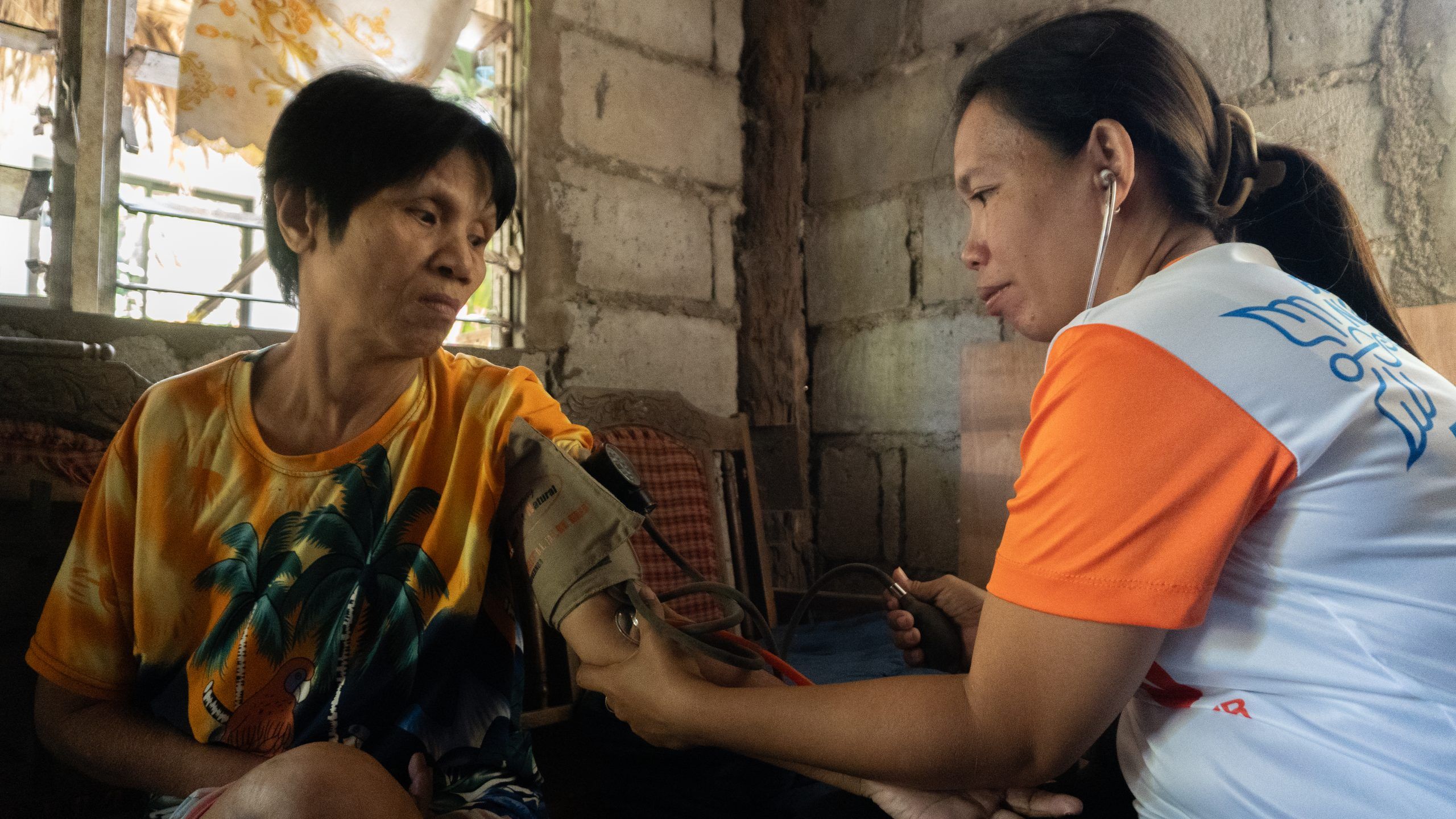
Lanie Lacao, a mother of three and longtime community health worker, has become the first person who families call when they need help. She supports 24 households, guiding her community members through urgent and everyday health concerns.
In the quiet community of Brgy. Tubigan Ilaya, Macalelon, Quezon province, people turn instinctively to one person—Lanie, who has become her community’s steady source of care.
She was a homemaker for years, picking up small jobs cleaning houses and doing laundry to earn extra income. Her former partner worked as a tricycle driver, and in emergencies, neighbors would rush to their home to ask him to bring patients to the hospital in town.
“Even in the middle of the night, we would rush patients to the hospital.”
Those late‑night dashes opened her eyes to how often people needed immediate help and how few people they could call. That is when she decided to volunteer as a Community Health Worker (CHW) in 2017.
She worked for several months without pay. She visited households, checked on mothers, and accompanied families through health concerns. In 2018, the Q1K (First 1,000 Days of Life) Program started in their town. It is designed to ensure the health of both the mother and the unborn child – from the baby’s delivery until the child reaches two years old with free medical services. Lanie became the Q1K president in Macalelon, coordinating with fellow community health workers to enroll pregnant women, explain their benefits, and ensure they received prenatal care.
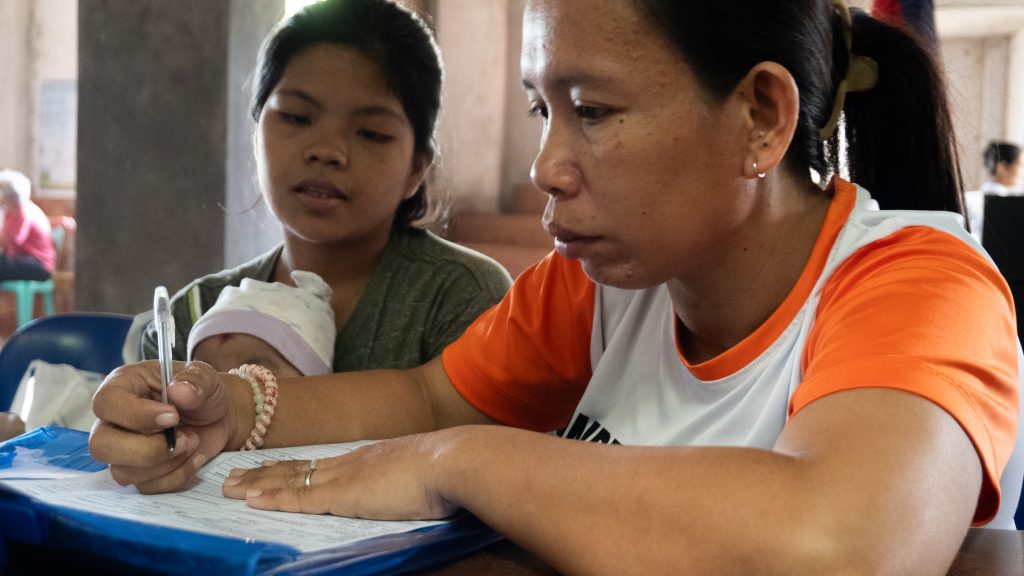
“I love helping out, especially other women. As a mother myself, I know exactly what it’s like to be pregnant and feel like you aren’t ready for it.”
She remembers how she and her former partner had to save slowly for baby clothes, diapers, and delivery expenses. But many women in her barangay faced far more difficult situations, worried not only about childbirth but how to feed and care for a newborn. These stories strengthened her commitment to help.
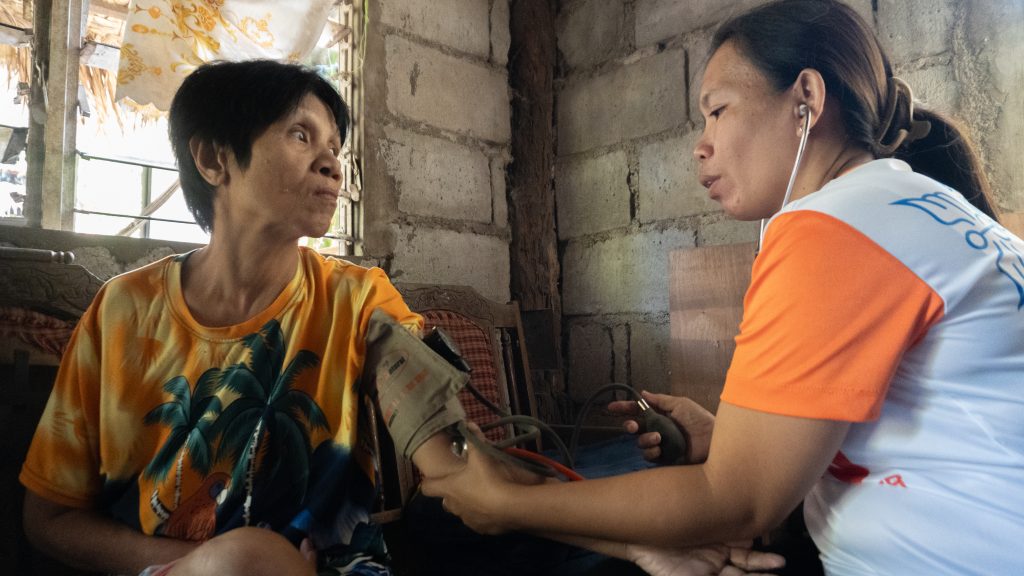
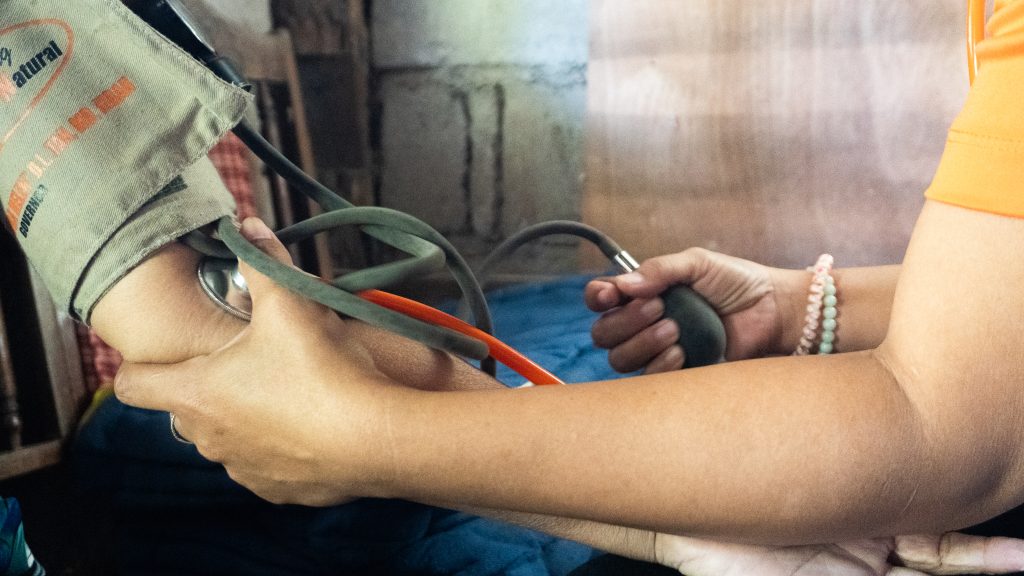
Photos: Lanie visits a patient who suffered a stroke to monitor her blood pressure level. @2026 Mary Therese Norbe/CARE
In 2021, Lanie became an accredited BHW after an older volunteer retired. Her monthly honoraria of PhP 533.00 (USD 8.80) could barely sustain a family for a day, yet she continued. The Rural Health Unit team, trained her in CPR, the Heimlich maneuver, blood pressure monitoring, and taking vital signs. Over time, she became one of the most relied‑upon CHWs by the RHU team and by her neighbors, who knew they could come to her at any hour.
Her house became an unofficial waiting area.
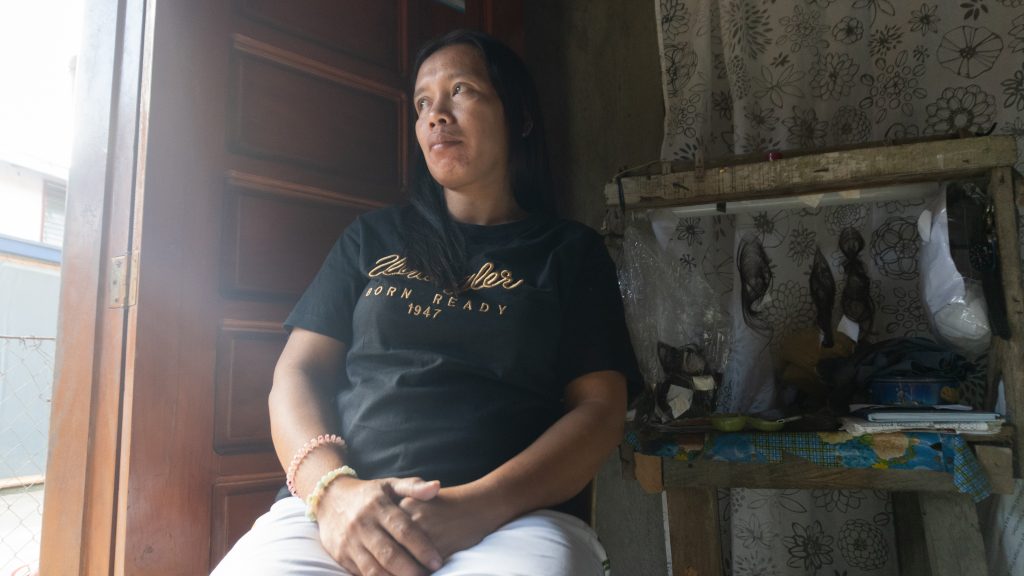
“They come to me because they know I do my best to make sure they get medical attention,” she says. She would call the RHU ambulance, arrange transportation, and make sure families reached the nearest hospital or facility that could help.
When CARE’s HEAL Hub project arrived in their community to train community health workers, Lanie was curious. She downloaded the app, studied its modules, and quickly realized how many misconceptions she had simply accepted over the years.
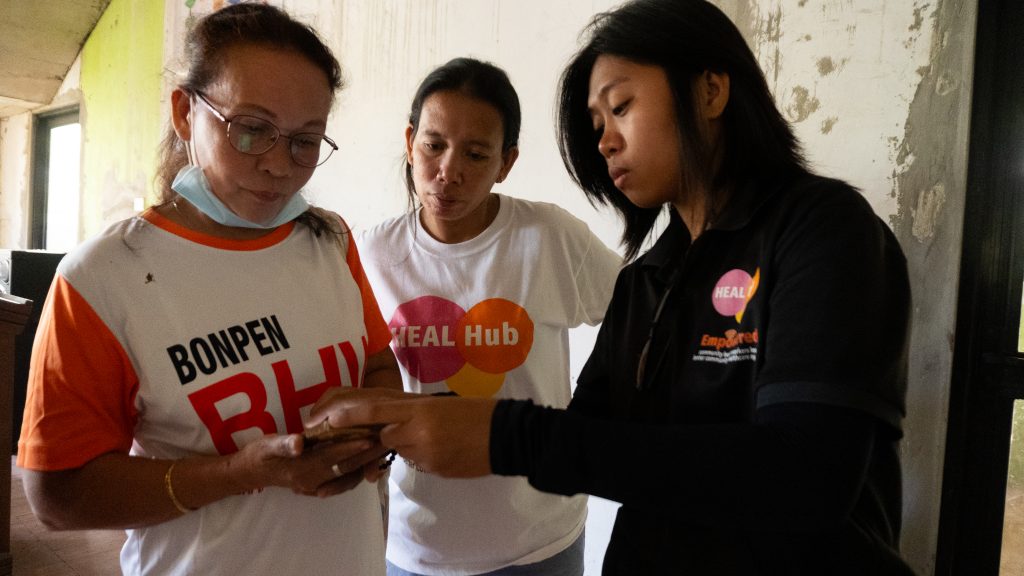
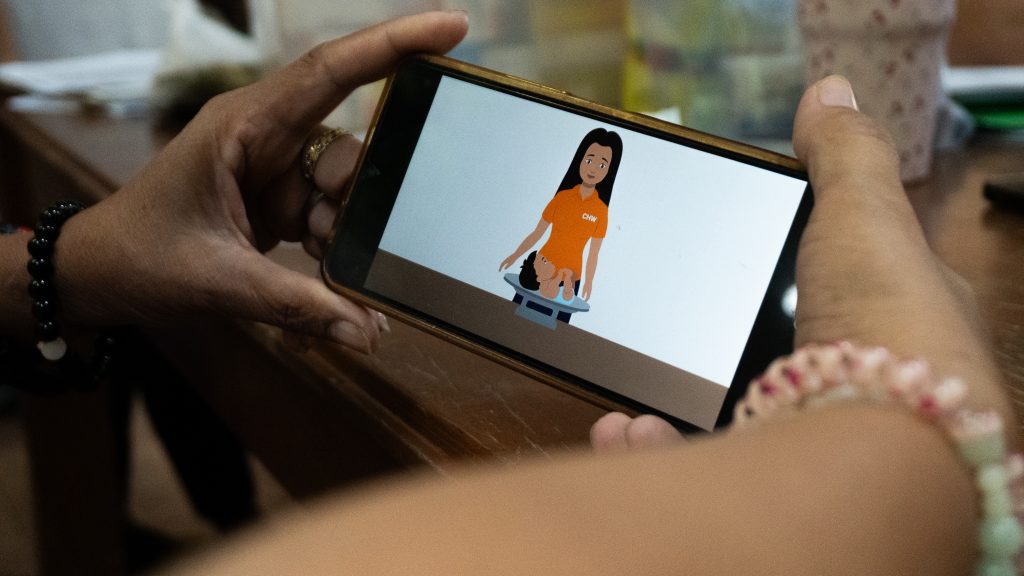
Photos: Lanie and fellow CHW reviews the cancer modules at the HEAL Hub app. @2026 Mary Therese Norbe/CARE
One of her biggest surprises was breastfeeding. She learned she latched her babies incorrectly.
“I thought that what I did before was right,” she says, laughing at herself. “But I was mistaken.”
Now, in her learning session with mothers, she plays the HEAL Hub breastfeeding videos so other mothers can learn proper techniques too.
Today, Lanie is the first point of contact for 24 households in her community. She conducts house‑to‑house visits, checking on pregnant and lactating women and families managing non‑communicable diseases or cancer. One family close to her has a nine‑year‑old boy battling blood cancer.
“He used to play here in my house with the other children,” she recalls softly. “Now I visit their home to reassure his mother that they are doing the right thing by choosing treatment.”
Through HEAL Hub’s cancer module, she learned how to speak with families dealing with fear and uncertainty, and how to encourage them to continue seeking medical help.
The national government has since launched the PhilHealth YAKAP (Yaman ng Kalusugan Program), an expanded primary care package offering outpatient services, lab tests, cancer screenings, and access to more essential medicines. She helps neighbors understand their benefits and guides them through the registration process so they can get the support they need.
Outside her duties, Lanie makes handcrafted wigs at home. She can finish one in about a week—juggling her health work and household responsibilities—and sells each for around ₱3,000, supplementing her income.
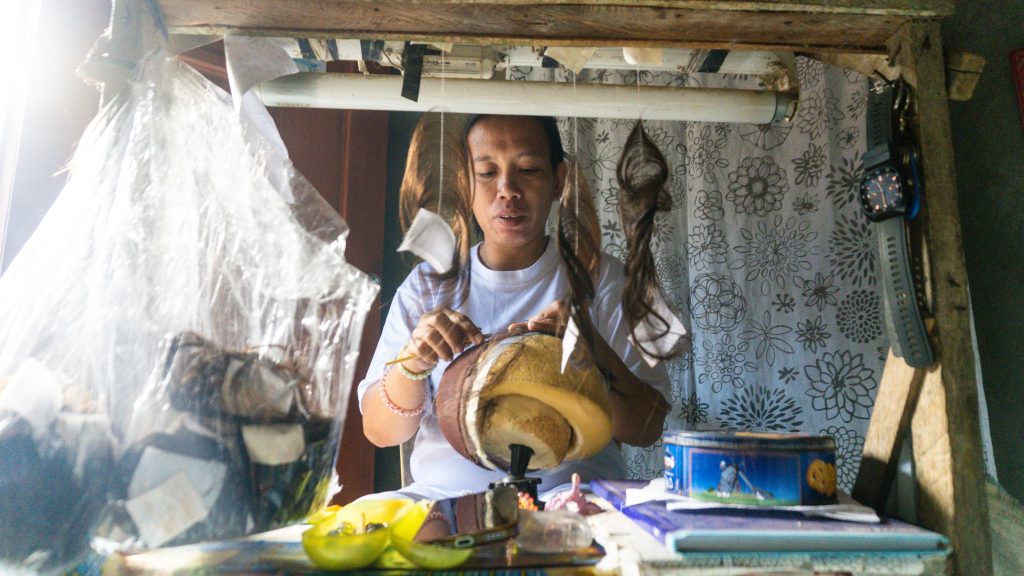
Photo: Lanie works on a wig at her artist’s desk at home. @2026 Mary Therese Norbe/CARE
Despite her dedication, she hopes for greater recognition for community health workers.
“It’s really a voluntary role, but the amount of work is overwhelming,” she says. “I’m just concerned that when we get older and can no longer serve, no one will take over because it doesn’t pay much.”
Still, Lanie keeps going. Because in her barangay, she is the first call, the steady hand, and the quiet reassurance that help is always close.