Women and girls in the Philippines are in need of your support.

  • Home
  • Press Release

Reiza S. Dejito, CARE Country Director Statement on the Ongoing Devastation of Tropical Storm Trami

  • Mary Therese Norbe
  • Featured Stories, Latest News & Stories, Press Release

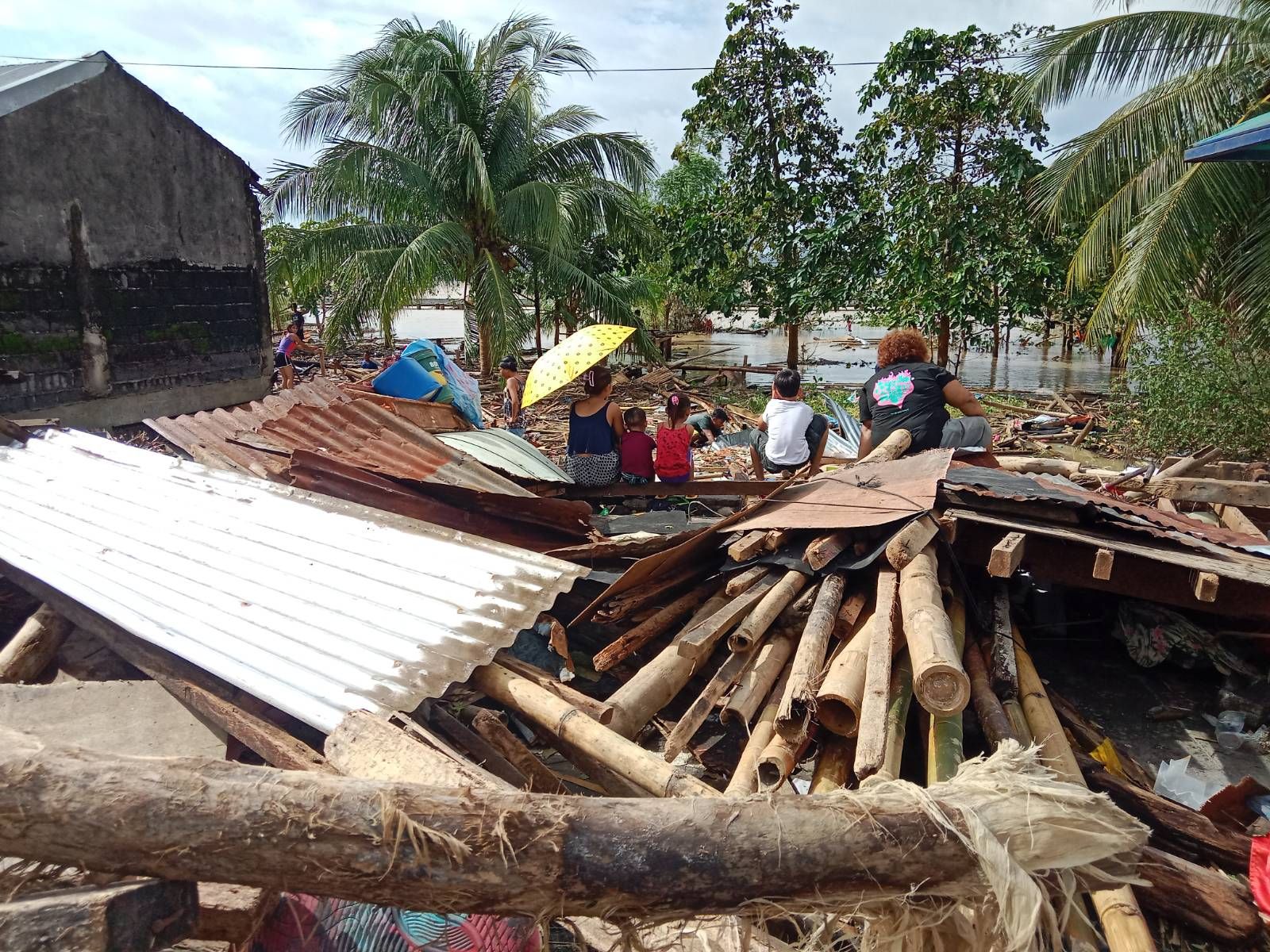
[October 23, 2024 – Manila] – Tropical storm Trami continues to devastate six regions across the Philippines, with Southern Luzon particularly hard-hit. Homes and infrastructure have been submerged. Landslides and widespread flooding devastated farming and fishing areas. Over 400,000 individuals – many still reeling from the devastation of Typhoon Yagi last month – are now grappling with another disaster.

“CARE Philippines, in collaboration with other humanitarian organizations, is on the ground, conducting needs assessment and ready to deliver immediate assistance to those most affected by Tropical Storm Trami. Our primary concern is for the most vulnerable, especially women and girls, who face heightened risks of gender-based violence and neglect as access to essential services like food, water, shelter, and healthcare has been severely disrupted.

Our top priority is to address the urgent needs of those hardest hit. We are deploying rapid assessment teams and working closely with our local partners through the Humanitarian Partnership Platform and authorities to provide life-saving support and ensure that the protection of women and girls, who are disproportionately affected by disasters, remains central to our response.

To effectively respond to this crisis and support recovery efforts, we need the collaboration of all sectors—government, civil society, and the private sector. The scale of need is vast, and only through coordinated efforts can we help affected communities and prevent further loss of life.”


For media inquiries, please contact:

Mary Therese L. Norbe, CARE Philippines Communications Specialist
Email: marytherese.norbe@care.org

Note to Editors:

CARE Philippines has been providing humanitarian and development support since 1949, consistently working to uplift vulnerable communities. The Philippines continues to be among the most disaster-prone countries globally, and CARE remains at the forefront, delivering life-saving assistance to those most in need. According to the World Risk Index 2023, the Philippines remains the most at-risk country with the least capacity to respond to natural disasters.

ACCESS gets ₱76 million from EU for Mindanao flood aid

  • Tanya Mariano
  • Disaster Response, Featured Stories, Latest News & Stories, Press Release

The funding will help bring food, clean water, sanitation facilities, and protection assistance to the hardest-hit, least-served, most remote communities 

Manila, Philippines, 19 August 2024 – The ACCESS consortium – made up of five international and nine local organizations implementing the ACCESS Project – has secured ₱76 million (€1.2 million) in funding from the European Union (EU) to deliver timely, appropriate, life-saving aid to communities in Cotabato, Lanao del Sur, Maguindanao del Norte and del Sur, and Sultan Kudarat who were affected by the July 2024 flooding and landslides.  

Said Ansherina Talavera, Humanitarian and Peacebuilding Coordinator of consortium lead CARE Philippines: “As humanitarian workers, we’re committed to addressing human suffering wherever it is found, with a particular focus on the most vulnerable. This funding from the European Union helps us support the hardest-hit communities, who are not only dealing with the aftermath of floods and landslides but are also facing the ongoing challenges of conflict and climate change.” 

Existing organizational presence enabled quick response 

The consortium had been on the ground when floods and landslides hit the region, allowing it to immediately assess the situation, identify urgent needs, and deliver initial relief. This established presence in Mindanao and across the Philippines is made possible by the ACCESS-initiated Equitable Partnership Alliance – a non-formal network of local, national, and international non-government organizations committed to delivering quality humanitarian, development, and peacebuilding programs in the country. 

The funding will help ACCESS provide food assistance, clean water, sanitation facilities, hygiene promotion, and essential services protecting the rights and ensuring the safety and wellbeing of affected families. As with all its emergency response efforts, the consortium will target the hardest hit, least served, difficult-to-reach areas, prioritizing low-income households for whom recovery may be challenging, and including older persons, pregnant and lactating women, persons with disability, female-headed households, and households from indigenous groups. 

From El Nino to floods and landslides 

The massive flooding and landslides – the result of the interaction of multiple, successive weather systems, including the southwest monsoon – came just as families were recovering from the impacts of El Nino. Many had also been grappling with the protracted, decades-long conflict across Mindanao.  

Urgent needs

Among affected and displaced individuals, the consortium found high levels of food insecurity; significant losses in incomes and livelihood assets; poor water supply, sanitation, and hygiene conditions; extensive damages to belongings and the loss of important civil documents; heightened risks of sexual violence and exploitation against women and children; and a need for mental health and psychosocial support. 

Said Talavera, “ACCESS is focused on providing urgent aid and helping families rebuild their lives with resilience and dignity.” 

Photos: © ACCORD Inc., Action Against Hunger Philippines, Save the Children Philippines, Humanity & Inclusion Philippines | 2024


About ACCESS 

ACCESS (Assisting the Most Vulnerable Communities and Schools Affected by Complex Emergencies in Accessing Quality and Timely Humanitarian and Disaster Preparedness Services) is a multi-year, multi-sectoral project funded by the European Union Civil Protection and Humanitarian Aid Operations (ECHO). The ACCESS Mindanao flood emergency response will be implemented by consortium members ACCORD, Action Against Hunger Philippines, CARE Philippines, Community Organizers Multiversity, Humanity & Inclusion Philippines, Mindanao Organization for Social and Economic Progress, and Save the Children Philippines, together with Oxfam Pilipinas and United Youth of the Philippines-Women. 

Mainstreaming Peace Education in Caraga

  • CARE Philippines
  • Featured Stories, Latest News & Stories, Press Release, Uncategorized, Women and Girls

Agusan del Sur and Norte, March 2024 — The BRIDGE Project capped off the month of March—National Women’s Month—with workshops to help educators integrate peace education and peace-promoting values in their learning curriculum, conducted in collaboration with Common Reference Educators Workshop (CREW) and the Department of Education.

Held on March 21, 2024, in Agusan del Sur and on March 22, 2024, in Agusan del Norte, the activities gathered a total of 103 primary and secondary school teachers, teaching personnel, and administrators. 

Not just about conflict

A key takeaway is that peace “is not just talking about conflict or the absence of war,” as one female educator and workshop participant describes it. “It also talks about gender, the environment, health, and values. Peace is about accepting our diversities,” she says.  

Photo: ACCORD

The role of women educators

The BRIDGE Project believes that women educators and women’s civil society organizations (CSOs), along with youth CSOs and national government agencies like the Department of Education, play important roles in peace education and can lead the process of promoting a culture of peace. This entails enabling the meaningful participation of women and girls in peace education activities in school, which must be designed to empower them.

Gender and peace also need to be contextualized in learning tools, especially those highlighting indigenous communities’ peace-promoting practices.

Photo: ACCORD

Advocates of peace

“As duty bearers, we have the responsibility to nurture young people, our students,” says a participant.

Another one echoes this sentiment, saying, “We teachers are advocates of peace. We need to cultivate empathy in our students. [Because] most of the learners are very vulnerable and prone to negative coping mechanisms, we should be there to support [them].”

Addressing educators’ challenges

The workshops were designed to address four specific issues that educators typically face when trying to mainstream peace education:

  1. Messaging: how to discuss the subjects of peace, rights, and citizenship in a comprehensive and comprehensible way
  2. Adaptability: how to introduce these topics into the present curriculum of all levels in a non-ladderized, flexible platform
  3. Acceptability: how to integrate these into a framework or one common reference that various audiences will find helpful and fair
  4. Sustainability: how to sustain peace, rights, and citizenship education

It covered these in three sessions, including one on the Universal Declaration of Human Rights and another on peace and diversity.

Photo: ACCORD

A holistic approach to peace education 

Apart from being informative and engaging, participants appreciated the breadth of the workshop topics. Says one participant, “At first, I thought we would be talking about the social injustices. But our discussion went beyond that. [We talked about how] health issues, persons with disabilities, cultural diversities, and environmental concerns are part of peace. Peace Education is a holistic approach. This training [can guide us on] the topics we can use in our lessons.”

Investing in women

In succeeding activities, BRIDGE will further highlight how gender is an important component of peace education, and how empowering women is central to promoting a culture of peace.

As the 2024 International Women’s Day theme reiterates, “If we invest in women, we accelerate progress.”

Photo: ACCORD
Photo: ACCORD
Photo: ACCORD

The “Civil Society, Women and Youth Promoting Culture of Peace in Mindanao” (BRIDGE) Project is funded by the European Commission and implemented by ACCORD Incorporated, CARE Philippines, Community Organizers Multiversity, and Oxfam Pilipinas.

Bangsamoro women and youth: emerging leaders from the ground up

  • CARE Philippines
  • Latest News & Stories, Press Release, Uncategorized, Women and Girls

Photo: A young Bangsamoro woman participates in one of the series of gender-sensitive conflict and resilience analysis and capacity-building sessions among women and youth civil society organisations, gender and peace advocates hailing from Basilan, Sulu, and Tawi Tawi (BaSulTa).

Witten by: Juin Ancha and Winonna Fernando (CARE Philippines)

SULU, PHILIPPINES Since the establishment of the Bangsamoro Autonomous Region of Muslim Mindanao (BARMM) in 2019, there has been increased attention to the differentiated impacts of decades-long conflict on Bangsamoro women and girls. However, for most, justice, healing, and reconciliation remain elusive. As we commemorate the 11th anniversary of the International Day of the Girl, women and youth-led CSOs in Sulu are retelling their history to every Moro woman and girl, one story at a time.

“The youth of today are fortunate to not witness the suffering and pain of conflict and war in Sulu following the declaration of Martial Law in the 1970s… But now, I have learned about the impact of historical injustices on communities and how the presence of conflict and war over the past 50 years has contributed to the province’s present condition.” – Woman youth leader whose name was withheld.

Although BARMM has been admired for its efforts for better women’s representation, and has progressed in pushing for laws and initiatives promoting the Bangsamoro’s right to know, right to justice, right to reparation, and the guarantee of non-recurrence through Transitional Justice and Reconciliation, along with other normalization initiatives, the Bangsamoro youth, particularly women and girls, in the isolated segments of Basilan, Sulu, and Tawi-Tawi remain sidelined and without means to access basic services, comprehensive education, and violence prevention programs that can facilitate and sustain their meaningful participation and leadership in formal or informal spaces and letting their voices be heard.

Life amid constant displacements

Sulu is ranked second-third to lowest in the 2019 Provincial Human Development Index by the Philippine Statistics Authority. Decades of evolving conflict have resulted in a vicious cycle of poverty, systemic exclusion, and sociocultural marginalization and discrimination affecting vulnerable populations including youth, women, and children. Surviving in these situations comes in many forms. To some youth it means resorting to other forms of self-preservation such as involvement in crime and illegal activities, violent extremism, and other negative coping mechanisms. But for some women and youth-led CSOs, surviving also means thriving. Despite constant displacements, many women and youth-led CSOs believe that harnessing collective power, claiming space and amplifying influence, and becoming positive agents of change can promote recognition, reconciliation, and healing.

“Justice has not been served to benefit all the abused, displaced and dispossessed. As women youth leaders, we want to be deeply involved in claiming our rights and ensuring that injustices do not happen again.” – Woman youth leader in Sulu whose name was withheld

Engaging young women and girls is key

Apart from conflict, deep-seated cultural norms and beliefs about what women and girls should be and how women and girls should behave have shaped the lives of young Moro people for generations. These norms drive many girls out of school, to forced marriages, and expose them to gender-based violence. However, recent developments have served as proof that reshaping cultural norms and engaging women and girls is key to achieving peace, reconciliation and healing.

CARE Philippines sees gender equality, synergy and complementation in humanitarian-development-peace nexus spaces, as key to ending poverty and social injustices.

In February 2023, CARE Philippines launched the “Civil Society Women and Youth Promoting Culture of Peace in Mindanao” (BRIDGE) Project, funded by the European Commission, aimed at reducing the drivers of conflict through strengthening women and youth CSOs, and working with various peacebuilding actors in Mindanao – complementing its existing humanitarian and disaster preparedness programming in the island.

In partnership with Nisa Ul Haqq fi-Bangsamoro (Nisa) – a women’s rights organization, small-scale women and youth-led CSOs hailing from Basilan, Sulu, and Tawi-Tawi are capacitated and linked with relevant BARMM ministries and commissions with initiatives on peacebuilding and Transitional Justice and Reconciliation. Women and youth-led CSOs from Sulu are committed to increasing their involvement in community memory projects, narrative documentation activities, and rights awareness and information drives that will facilitate communities’ access to services ultimately aimed at addressing drivers that perpetuate conflict in the communities.

Peacebuilding by women, with women

Anything is possible. Miriam Coronel-Ferrer, the first woman to sign a major peace agreement in the world and led the peace negotiations with the Moro Islamic Liberation Front (MILF), and human rights lawyer Raissa Jajurie, co-founder of Nisa and current minister of the Ministry of Social Services and Development of BARMM became an inspiration to many Bangsamoro youth and girls to pursue peacebuilding initiatives using nonviolent collective power.

For many women and youth-led CSOs, retelling their history would mean constantly defying cultural norms and beliefs that have curtailed women and girls’ rights. Through BRIDGE, they are positive to pursue peacebuilding initiatives involving more women youth and girls in the process. True enough, when youth and girls are recognized as equal citizens towards peacebuilding, meaningful participation arises.

As we observe and celebrate the International Day of the Girl, may we continue to seek and maximize avenues that amplify her-stories that promote genuine representation of youth, young women, and girls and ensure that no one is left behind.

CARE, partners prepare for STS Egay as it intensifies into a typhoon

  • CARE Philippines
  • Featured Stories, Latest News & Stories, Press Release, Uncategorized

Manila, Philippines (July 23, 2023)- CARE and its local partners prepare for Severe tropical storm Egay (international name “Doksuri”) as it has further intensified while moving west-northwestward over the Philippine Sea and is forecasted to reach typhoon category within 24 hours and may become a super typhoon on Tuesday.  

In its 5 p.m. weather bulletin on July 23 the Philippine Atmospheric, Geophysical and Astronomical Services Administration (Pagasa) forecasted STS Egay to bring heavy rainfall in Catanduanes, Cagayan, the eastern section of Isabela, Polilio Islands, Camarines Norte, Camarines Sur, and Albay. The forecasted rainfall is generally higher in elevated or mountainous areas. And under these conditions, flooding and rain-induced landslides are possible, especially in areas that are highly or very highly susceptible to these hazards as identified in hazard maps and in localities that experienced considerable amounts of rainfall for the past several days.

In the next three days, STS Egay may also enhance the Southwest Monsoon, bringing occasional rains and gustiness over several areas in the country.

CARE and its partners, Leyte Center for Development and Tarabang para Bicol (TABI) prepare and are ready to respond to the combined effects of STS Egay and the Southwest monsoon and the needs of vulnerable communities that would be affected in Catanduanes, Eastern Visayas, and Bicol Region respectively.

“We have a field office in Catanduanes and ongoing humanitarian programs with our partners in the areas that would be potentially affected by STS Egay. We are ready to activate assessment and quick response mechanisms in coordination with our partner organizations and local government units on the ground”, said Jerome Lanit, CARE Philippines’ Emergency Coordinator.

CARE has been working in the Philippines since 1949, helping communities prepare for disasters, and providing emergency relief and recovery when disaster strikes. It has responded to major disasters such as typhoons and super typhoons, conflicts, and seismologic and health emergencies with focus on the needs of women and girls.

Contact Person:

Jerome L. Lanit, Emergency Coordinator

09175109417

Hot meals comfort 4,276 Mayon Volcano evacuees

  • CARE Philippines
  • Featured Stories, Latest News & Stories, Press Release

Mothers line up to get goto for their family to eat at the San Jose National High School evacuation center in Brgy. San Roque, Malilipot, Albay.

A total of 4,726 evacuees temporarily staying at eight evacuation centers in Camalig and Malilipot, Albay enjoyed the comfort that hot goto or organic rice with meat porridge provides on June 17, 18, 25 and 26.

The Tarabang para sa Bicol (TABI), with support from CARE Philippines, mobilized the members of the Tarabang Youth volunteers (TYVs), Sining Banwa, Disaster Preparedness Committees, barangay officials, private individuals, and some evacuees in preparing, cooking, and distributing the hot meals.

The evacuees who hailed from 6 barangays have been displaced from their communities since the start of the volcano’s magmatic unrest early in June. TABI observed that the affected population struggles to cook for their daily sustenance and survives on canned food. Meals like goto made with organic rice and protein provide nutrition and a break from the usual canned or instant meals they receive.

“Cooking together also helps them, especially, the mothers, ensure that their children will have something delicious and healthy to eat”, shared Arlo Brizuela, TABI’s Office-in-Charge.

In these feeding activities, their group observed how the displaced endured the uncomfortable spaces, tents, and classrooms, especially with the intense heat brought by the hot weather. Water, sanitation, and hygiene facilities are also lacking which brings various concerns on the safety of drinking water, and the possibility of related diseases.

Jocelyn Naga, a member of the Disaster Preparedness Committee in Brgy. Tumpa, Camalig, and an evacuee staying at Taladong Elementary School mentioned that some people are already getting sick, especially the children, due to their current living conditions.

The situation remains uncertain. On July 4, the DOST-PHIVOLCS reiterated that Alert Level 3 (increased tendency towards a hazardous eruption) still currently prevails over Mayon Volcano. It is strongly recommended that the areas inside the 6-kilometer-radius Permanent Danger Zone remain evacuated and that communities within the 7 and 8-kilometer radius be prepared in case the volcanic activity worsens.

Several of the evacuated rely on farming as their source of livelihood. They fear that they will not be able to go back immediately to tilling and providing their families with the necessities to recover because of the losses that their displacement brought about.

TABI staff and volunteers after a successful feeding activity at Malilipot Central School, Malilipot, Albay

CARE Philippines and TABI work together to come up with a more comprehensive humanitarian response to address the immediate needs of the most vulnerable affected population. Food, water, sanitation and hygiene, health, and non-food items such as kitchen and sleeping kits are some of the basic essentials that evacuees aspire to make their living conditions inside the evacuation centers tolerable.

“We plan to source support from our global partners for a humanitarian response that is also geared towards recovery, especially, of those who will have the most difficult time to bounce back and resume their livelihood”, said Jerome Lanit, CARE Philippines Emergency Coordinator.

Contact Person:

Jerome L. Lanit, Emergency Coordinator

jerome.lanit@care.org, +639175109417

Arlo Brizuela, OIC

+639165006491

Conflict-affected community in Basilan receives aid thru CARE, partners

  • Mary Therese Norbe
  • Blog, Disaster Response, Featured Stories, Press Release

CARE Philippines Emergency Coordinator, Jerome Lanit hands over food items to a woman head of a household that was affected by the armed clashes in Ungkaya Pukan town in Basilan. (J. Dulla/CARE Philippines)

Five hundred eighty (580) households that were affected by the series of armed clashes in Brgy. Ulitan, Ungkaya Pukan, Basilan received essential food, non-food items, and shelter kits on February 4 and 5.

Members of these households were forced to leave their homes when combatants of the Moro Islamic Liberation Front (MILF) and the Philippine military clashed in November last year. When the conflict subsided, they returned only to find that some of their houses, including the mosque, madrasah, and an essential government building, were damaged from the fighting.

Some of the members of 120 households whose houses were damaged due to the fighting received shelter repair kits. (J. Dulla/CARE Philippines)

CARE and its partner, NISA Ul Haqq fi Bangsamoro, Inc., with the facilitation of the GPH-MILF Coordinating Committee on the Cessation of Hostilities (CCCH) and the Ad Hoc Joint Action Group (AHJAG) and with the support of the BARMM Ministry of Social Services and Development were able to access the community to deliver life-saving assistance to the affected vulnerable households.

“As humanitarians, it is important that we address first the needs of the members of vulnerable communities who still feel insecure because of the uncertainty of the situation while the peace mechanisms are working for a sustained solution to the conflict,” said Jerome Lanit, CARE’s Emergency Coordinator.

Meanwhile, Shalom Tillah Allian of NISA Ul Haqq fi Bangsamoro, Inc. shared that the collaboration with the BARMM MSSD, MILF CCCH and AHJAG showed that humanitarian and peace building efforts work meaningfully when working together on an equal footing.

“More than just the goods shared to them, to us what is more powerful is to see the mujahideens and the mujahidat owning the initiative as they led the distribution. We cannot overemphasize the importance of cultivating solidarity with the peace process mechanisms afforded to us”, she added.

Photos: Members of the community helped in the repacking and distribution of the relief goods to the affected households. (J. Dulla, S. Allian)

The Basilan Emergency Response is supported by the Tijori Foundation and is being implemented by CARE Philippines and its partner, NISA Ul Haqq fi Bangsamoro, Inc., in collaboration with the BARMM Ministry of Social Services and Development, GPH-MILF Coordinating Committee on the Cessation of Hostilities (CCCH) and the Ad Hoc Joint Action Group (AHJAG).

Showcasing Disaster Risk Financing — British Embassy Reps Visit Start DRF Area in Taft, Eastern Samar

  • CARE Philippines
  • Blog, Featured Stories, Latest News & Stories, Press Release

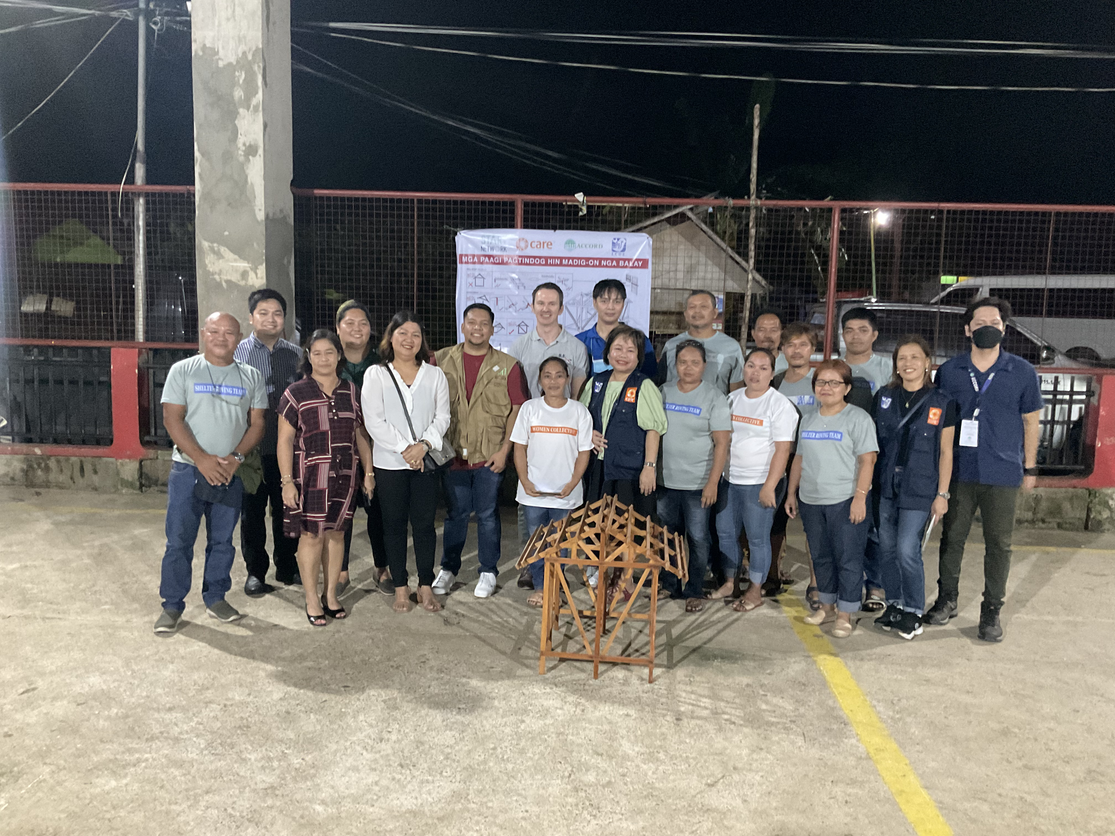
Community members together with barangay local government officials, Taft Municipal Mayor Gina Alzate-Ty and Vice Mayor Maria Concepcion Adalim-Hilario, Political Counsellor Iain Cox of the British Embassy Manila and representatives of LCDE, CARE Philippines, and ACCORD in a group photo with the BBS model house after conducting an FGD. (Photo: L.Fuentes/CARE Philippines)

by Leigh Ginette Fuentes

In the Philippines, it was identified that hydrometeorological hazards are the most underfunded disaster events that the country faces, based on a study by the UP Resilience Institute. Consequently, in a survey conducted by Start Network among its members, it was identified that the major hazard in the country was tropical cyclones followed thirdly by flooding. The country has seen the onslaught of several strong, destructive typhoons in recent years, including Typhoon Haiyan (Yolanda) in 2013 and Typhoon Goni (Rolly) in 2020. Due to the effects of climate change, hazards such as these could intensify and become more frequent, posing a threat to local populations, their lives, property, and livelihoods.

Disaster Risk Financing (DRF) is a program of Start Network that allows members to create their own DRF Systems – a structured way to model and plan for risks. The Start Philippines Disaster Risk Finance system is majorly governed and implemented by Start Network members in-country, together with local NGO partners and scientific experts. The locally led consortium acknowledges the needs of local communities and comes up with data-driven actions to mitigate the impact of disasters and prevent the loss of lives and properties.

Last February 5, Political Counsellor Iain Cox and other key representatives of the British Embassy Manila visited Barangay Nato in Taft, Eastern Samar to learn more about Start DRF and the impact the programming implemented by the Eastern Samar DRF consortium, composed of CARE Philippines, the Leyte Center for Development, Inc. (LCDE), and Assistance and Cooperation for Community Resilience and Development, Inc. (ACCORD, Inc.) on community members, particularly of those vulnerable to the adverse effects of typhoons. These also included members of the barangay local government units from Can-Avid, Eastern Samar which is also a programmatic area.

An introduction to the Alternative Temporary Shelter (ATS) System was followed by an orientation on Build Back Safer (BBS) practices through visual aids and a model house, the same used in an orientation earlier that day with community members from Taft and Can-Avid. Community members and implementing organizations then engaged in a focus group discussion to learn more and delve into the experiences of community members in relation to typhoons, the recent continuous flooding, and the gaps they still see in the community’s ability to prepare for and respond to different disasters.

Among the participants was Lita Fe, 42, who is also member of the Women Collective in Barangay Nato, Taft, Eastern Samar. “Because of the skills and learnings from the capacity building sessions, we are now equipped to do pre-emptive evacuations during emergencies,” shared Lita Fe during a focus group discussion with Barangay representatives, members of the Shelter Roving Team, and other members of the Women’s Collective.

“Women have an important role during emergencies,” she adds, “and the skills we gained allow us to act even before a calamity hits the community.”

To learn more about the Start Network Disaster Risk Financing, please visit https://startnetwork.org/funds/disaster-risk-financing-support .

RISE Coco project to rehabilitate 700 hectares of 1,000 typhoon-affected coconut farmers in Bohol

  • Mary Therese Norbe
  • Featured Stories, Latest News & Stories, Press Release

Highlight of the activity is the signing of the Memorandum of Understanding (MoU) to work together towards the successful implementation of the project. From left: Mr. Gerardo F. Cuadrasal, Jr. , Municipal Administrator of Calape, Bohol representing  Hon. Mayor Julius Caesar F. Herrera; Hon. Mayor Diosdado Gementiza, Jr. of San Isidro, Bohol; Christopher Matthew Ilagan of Cargill; David Gazashvili of CARE Philippines and Mr. Brendan P. Trasmonte, Regional Manager III for Region VII, Philippine Coconut Authority (PCA)

Manila, Philippines (September 26,  2022) — Nine months since Super Typhoon Odette (Rai) felled over three million coconut trees in the province of Bohol, Cargill Philippines partners with CARE Philippines, Cebu-Bohol Relief and Rehabilitation Center (CRRC), and the Philippine Coconut Authority (PCA) to replant 100,000 coconut seedlings in devastated local communities through the RISE Coco (Recovery Intervention for Severely Affected Coconut Farming Communities of Bohol by Super Typhoon Odette) project. More than 10 million coconut trees were damaged in several areas nationwide and gravely affected farming families whose livelihood was dependent on producing copra.

farming families whose livelihood was dependent on producing copra.

The Bohol provincial PCA already pledged to initially replace felled trees with 500,000 dwarf variety seedlings in February. This variety takes three to four years to bear fruit compared to the hybrid variety which takes five years to yield. However, with no other means to provide for their families, farmers are already finding it difficult to bounce back while waiting for harvest. The available coconut seedlings were very limited and were allocated to only a few municipalities. To bridge this gap, coconut farmers supported by this project decided to establish their own community-based seed beds to propagate coconut seedlings for re-planting.

Through the RISE Coco Project, 1,000 coconut farming households in the municipalities of Calape, Catigbian, Loon, and San Isidro will be able to gradually recover and sustain their coconut farming livelihoods. The project focuses on replacing the damaged coconut trees, training the farmers on sustainable agriculture, providing alternative livelihoods while waiting for the coconut trees to bear fruit, and organizing the farmers into cooperatives to have better access to markets and corporate buyers.

The project was officially launched on September 15, 2022, at the Calape Forest Resort and was attended by almost 100 participants from the local government offices, PCA officials, Cargill, CARE, CRRC and farmer leaders in the province. As the first coconut disaster rehabilitation program in the province spearheaded by the private sector, the project is strongly supported by the provincial government of Bohol and the municipal mayors of the four covered municipalities. PCA, including its regional and provincial offices, also expressed commitment to provide technical assistance during the project implementation.

PCA Region 7 Manager Brendan Trasmonte acknowledged the critical and challenging role that the PCA will play in the success of the project as it needs quality seed nuts and seedlings and the technical knowledge of coconut farmers to sustain and expand their sources of income beyond coconut farming.   

This project partnership is anchored on a global agreement between Cargill and CARE International to work together to implement programs that would rehabilitate livelihoods impacted by disasters, support recovery and promote food security of affected farming communities.

“It’s our way of supporting the rehabilitation of the livelihoods of the coconut farmers of Bohol severely impacted by the climate-induced Supertyphoon Odette – the same coconut farmers who have been our reliable suppliers of copra over the years which we in turn crush at our General Santos City plant into world-class crude coconut oil,” said Cargill Philippines’ Corporate Affairs Director Christopher Matthew Ilagan.

Cargill’s Copra & Palm Origination Commercial Director, Jonathan Sumpaico added, “Cargill is committed to grow with the communities where we live and work.   The RISE Coco program, as part of our broader partnership with CARE Philippines, allows us to put that commitment into action by ensuring the farmers affected by the Supertyphoon produce sustainably grown copra and continue to benefit from responsible economic development as our partners.”

Meanwhile, CARE Philippines Country Director David Gazashvili sees the project as a way to develop the resiliency of coconut farming communities against the drastic effects of climate change.

“Farmers will be trained to increase their capacities to better prepare for disasters alongside local government structures. This implies ensuring the availability of food for their family and community and ability to cope and bounce back through other sources of income and immediate government support”, he said.

The RISE Coco project is led by CARE Philippines and is being implemented with CRRC with active participation from Cargill employees across all project areas.

Symbolic turnover of coconut seedlings to the farmer leaders of the coconut farming communities in the selected project sites.

# # #

About Cargill

Cargill helps the world’s food system work for you. We connect farmers with markets, customers with ingredients and families with daily essentials – from the foods they eat to the floors they walk on. Our team around the world innovates with purpose, empowering our partners and communities as we work to nourish the world in a safe, responsible, sustainable way. This includes 2,000 colleagues across 27 locations in the Philippines, where we’ve been working since 1948 to make our global vision a local reality. Visit https://www.cargill.ph/en/home to know more.

From feed that reduces methane emissions to waste-based renewable fuels, the possibilities are boundless. But our values remain the same. We put people first. We reach higher. We do the right thing. It’s how Cargill has met the needs of the people we call neighbors and the planet we call home for 157 years – and how we’ll do so for generations to come. For more information, visit Cargill.com and our News Center.

About CARE
Founded in 1945 with the creation of the CARE Package®, CARE is a leading humanitarian organization fighting global poverty. CARE places special focus on working alongside women and girls. Equipped with the proper resources women and girls have the power to lift whole families and entire communities out of poverty. In 2020, CARE worked in over 100 countries, reaching more than 90 million people through 1,300 projects. To learn more, visit www.care.org.

South Sudan continues to be one of the deadliest places to be an aid worker

  • CARE Philippines
  • Featured Stories, Latest News & Stories, Press Release

South Sudan continues to be one of the deadliest places to be an aid worker, according to
analysis done by CARE International on data from the Humanitarian Outcomes Aid Worker
Security Database. Forty-four aid workers have lost their lives globally since the beginning of
this year, including 11 in South Sudan, 8 in Afghanistan and 7 in Myanmar. Not only are
these three countries among the most dangerous places for aid workers, they are also
incredibly challenging places for citizens, with nearly 40 million people facing hunger across
these countries.


Abel Whande, CARE South Sudan Country Director, said, “South Sudan is facing its worst
hunger crisis since it gained independence 11 years ago. That the very people committed to
easing suffering and supporting the most vulnerable continue to be killed, is horrifying.
Failing to ensure the safety of humanitarians means disruptions to vital aid operations, and
with 7.74 million people in South Sudan facing acute hunger, these disruptions could mean
the difference between life and death for some. And this year, the knock-on effects of the
Ukraine crisis are exacerbating the situation, with sharp increases in the cost of food and
fuel causing more pain and suffering.”


The single deadliest day for aid workers in 2022 so far occurred in Afghanistan, when eight
polio vaccinators were killed while conducting home visits on 24 February. Polio vaccinators
have frequently been targeted in Afghanistan, one of only two countries where wild
poliovirus is endemic – the other country being Pakistan.


CARE Afghanistan’s Humanitarian Advocacy Advisor, Mélissa Cornet, said, “It’s devastating
that eight aid workers have died in Afghanistan this year. They were doing incredibly
important work in a country that is in the midst of a complex humanitarian crisis – nearly 19
million people face acute hunger, the economy has all but collapsed, affected communities
are still reeling from last month’s deadly earthquake and the price of food and everyday
essentials has skyrocketed over the past year. Women and girls are often disproportionately
affected in times of crisis and this crisis is no exception. We continue to hear reports of girls
being married at a young age just to help the family survive. It’s essential that aid workers –
including women humanitarian workers who are so critical to reaching women and girls –
are protected, so they can continue carrying out lifesaving work.”


So far in Myanmar in 2022, seven humanitarian workers have died. “One million people are
now displaced in Myanmar and over 13 million people in the country face hunger. It is
crucial that aid workers are protected, and humanitarian organisations have unimpeded
access to affected communities to carry out vital work,” said Nate Rabe, Country Director
for CARE International in Myanmar.


Three aid workers have died in attacks in Ukraine this year – the first aid worker deaths in
the country since 2014. “The security situation for aid workers has deteriorated sharply
since the escalation in conflict in February this year. With a third of Ukrainians displaced
from their homes and millions still inside the country, it’s more important than ever that the
safety of humanitarian workers is preserved so they can carry out critical work,” said
Richard Simpson, CARE Country Representative Ukraine.


“While the situation is incredibly difficult and precarious for so many in Ukraine, tragically,
we are witnessing several donor governments re-directing overseas development
assistance, especially to respond to the crisis in their own countries, which indirectly
impacts funding for other humanitarian crises. As a result, humanitarian appeals of
countries experiencing the worst hunger and famine-conditions, including Somalia, Mali,
Niger, Afghanistan and South Sudan, are drastically under-funded,” said Delphine Pinault,
Humanitarian Policy Advocacy Coordinator & UN Representative for CARE International.
This year’s World Humanitarian Day theme #ItTakesAVillage is inspired by the saying ‘It
takes a village to raise a child.’ Similarly, it takes a village to support a person in a
humanitarian crisis – aid agencies, local volunteers and emergency services come together
to provide urgent health care, shelter, food, protection, water, livelihoods and much more.
Ms Pinault said, “And with the world facing an unprecedented hunger crisis, the
international donor community plays a crucial role in ensuring funding decisions are strictly
needs-based and not politically driven.”


Notes to the editor
Analysis is based on the Humanitarian Outcomes’ Aid Worker Security database
where incidents are defined as deliberate acts of violence affecting aid workers, such
as killings, kidnappings, and attacks that result in serious
injury: https://aidworkersecurity.org/incidents/. Numbers in the database for 2022
are provisional for the first six months of the year, with full official annual figures
released at the end of calendar years. 2022 figures are available here:
https://aidworkersecurity.org/


There have been 73 major attacks on aid workers so far in 2022 with 44 deaths this
year (numbers accurate as of 1 August). The majority of deaths, 95%, involved
national staff (42 out of 44 deaths were national staff. The two international staff
were killed in South Sudan and Mali). South Sudan tops the fatalities list so far in
2022 with 11 deaths.


Funding of humanitarian response plans https://hum-insight.info/
About CARE: Founded in 1945, CARE is a leading humanitarian organisation
fighting global poverty. CARE has more than seven decades of experience
helping people prepare for disasters, providing lifesaving assistance when a
crisis hits, and helping communities recover after the emergency has passed.
CARE places special focus on women and children, who are often
disproportionately affected by disasters.

To learn more, visit www.care-international.org
For media enquiries contact:
Suzy Sainovski
Senior Humanitarian Communications Coordinator, CARE International

Join the fight.
Sign up for our mailing list.