Women and girls in the Philippines are in need of your support.

  • Home
  • Press Release

Selling Flowers in the Streets during a Pandemic

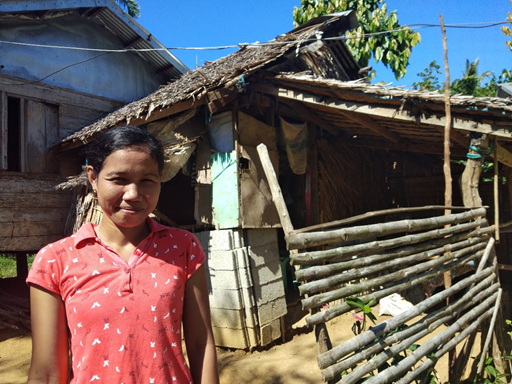
Rose (24 years old) is a resident of Sapa, Barangay Panghulo, Malabon City. Her household is composed of eight individuals which includes her five children, her mother, father, aunt who is a senior citizen. Her family’s main source of income is distributing and selling Sampaguita flower garlands. 

Most members of her community lost their employment. Rose revealed that since most men in the community work at construction sites, all of them lost their jobs during the lockdown enforced by the government to control the pandemic. Women while primarily responsible for caring for the children, also sold sampaguita garlands on the side to augment household incomes. Due to the enhanced community quarantine (ECQ) or lockdown, they were unable to sell the garlands and had no sustainable source of income. 

“Bawal kasi talaga lumabas. Halimbawa, nakita ka ng barangay sa labas, huhulihin ka kaagad lalo na pag wala kang mask” (Rose, female, 24 years old, Malabon City) 

“We were not allowed to go out at all. If the barangay officials see you outside of your house, they would arrest you immediately especially if you do not have a face mask.”(Rose, female, 24 years old, Malabon City) 


Rose also mentioned that the quarantine protocols in their barangay are extremely strict. For each household, throughout the ECQ, only one person is allowed to go out and do errands. They did not have curfew hours since residents were not allowed to go out if they do not have a quarantine pass. If apprehended, curfew violators are taken to the barangay office. Rose also mentioned that those who guard and enforce quarantine protocols in their community are all men. 

When asked whether they had access to face masks during the ECQ, Rose shared that they could not afford a box of face masks. It was too expensive, so they used cloths and handkerchiefs as an alternative for protective gear. She also mentioned that practicing social distancing was difficult and almost impossible for them since their house is small and all of them were forced to stay inside.

Rose shared that they received food aid four times during the lockdown. However, this was insufficient to meet the foods needs of the whole household. Most of the time they were eating only twice or once a day in order to make food supply last longer. As for the cash aid, she mentioned that there were a lot of households in the community that did not receive cash assistance even though they lost their jobs and applied for the government’s Social Amelioration Program (SAP). 

“Kulang po talaga ang binibigay ng barangay. Minsan sabi ko sa anak ko pag humihingi ng pagkain, inom na lang siya tubig para ma-survive ang gutom.” (Mary (Rose’s mother), female, 49 years-old, Malabon City) 

“The food aid given by the barangay is insufficient. Sometimes when my children ask for food, I just tell them to drink lots of water so that they can endure their hunger and survive.” (Mary (rose’s mother) female, 49 years-old, Malabon City) 

Since the implementation of General Community Quarantine (GCQ), Rose and her family were able to go back to selling and distributing Sampaguita garlands. However, it would take them 8 to 9 hours of walking every day since there is no public transportation. They also mentioned that as of now there is little profit from selling since the pandemic has caused the closure of many business establishments.

How to Better Manage the COVID-19 Pandemic: Some Suggestions

Care Philippines Integrated Risk Management Director Celso Dulce shares his thoughts on how the Philippines could have handled the pandemic better.

The Philippines has been acknowledged globally as a leading practitioner on disaster risk reduction, applying community-centred approaches. We should have been drawing from this vast reservoir of experience and knowledge in dealing with the COVID-19 pandemic. The call of the frontline healthcare workers to “sit down and talk and replan with a sense of urgency,” as infections rise unabated despite four months of lockdown, should impel us, and especially our government leaders to rethink and recalibrate.

Risk communication

We are very good at managing natural disasters. The COVID-19 pandemic, however, is an unknown, unfamiliar threat. We must saturate therefore communities, in urban slums and gated villages, in coastal areas as well as remote mountain villages, with correct information on the risks related to COVID-19. The infection prevention and control (IPC) protocols, the need to wear face masks, to frequently wash hands, to not to touch eyes, nose and mouth, to keep physical distance require behavioural change. This change does not come overnight. There is therefore the need for constant reminders, about the risks, about the capacity of the healthcare system being swamped, and about what the people can and should do. The messaging that we are doing okay, that we have beaten the UP projection, that we are doing better compared to other countries does not help.

Threats of, and actual arrests are also not achieving their intended outcomes. Threats of arrests alone do not work. A comprehensive plan and approach, and effective implementation should prove superior to threats of arrest. It is also equally important that the leaders we look up to, from the national level to the community, are observed to be models in practicing IPC protocols. It is important that leaders lead by words and by actions.

Equally important, let us undertake risk communication applying our vaunted community-based approaches. Let us raise the awareness and educate every community official, every informal community leader, every community member, on the risks of the pandemic and on the appropriate measures to defeat the threat. Let us mobilize all of them as our risk communicators.

Monitoring, testing, tracing, isolating, and treating

Health surveillance should involve every individual in every household, community, economic enterprise big and small, and all government offices and facilities. Self-assessment tools are available. Some households and offices are already conducting self-assessment regularly for early detection of symptoms of infection among them. This practice should be expanded, with support in terms of setting up reporting mechanisms linked to official COVID-19 surveillance systems in the community and local government unit.

Much energy has been spent on the debate about mass testing. We need free, mass testing. By mass we mean bulk, or quantity, not 100% of the 110 million total population. Targeted mass testing should be done, informed by monitoring information on the geographic concentration of COVID-19 cases. With targeted mass testing, 100% coverage can be carried out in specific communities and sub-villages. Why free? Vulnerable households cannot afford the costs of testing. Free testing also removes the excuse for not undergoing the test.

Failure to identify infected persons, using available information coming out of the tests, will put to waste all pandemic response efforts, and result in unimaginable economic costs and human suffering, as we are now experiencing.

Aggressive contact tracing must be carried out. This is an efficient use of the mass testing results compared to random, hit and miss testing. It also narrows down substantially the number of individuals that will be actively monitored for possible infection.

Effectively isolate the confirmed, suspected and probables. Apply a mix of approaches appropriate to specific contexts. Home quarantine is possible for upper middleclass households but not for the urban poor. Conditions among the poor (highly congested living spaces) would just result in whole families being infected. Putting urban poor communities under hard lockdown, with threats of arrest but without putting in place other measures to isolate the confirmed, suspects and probables would be counter-productive. Continued access to critical services shall also be made available especially to vulnerable groups including older people, persons with disabilities, seriously ill persons, and indigent households in lockdown situations so that there is no reason to violate protocols.

More isolation facilities can be set up. Alternative temporary shelter models are available; they can be adapted to different requirements for isolation, in place of cramming people during lockdowns into congested spaces with little WASH facilities and other basic necessities.

Provide free treatment to those infected, giving priority to the poor. The cost of hospitalization and treatment is literally driving potential patients to the ground. By encouraging people to seek treatment, think about the benefits in terms of the number of individuals that will no longer be affected because patients are actively seeking health care.

Our healthcare system is near collapse. There is no reason not to believe the cry for a timeout and for decision-makers to reflect on the situation and to introduce essential changes. For a start, government should take better care of our frontline healthcare workers. Provide adequate PPEs, better working environment, shorter working hours, increased salaries and benefits, and transportation support. Without improving their working conditions, we cannot expect prospective healthcare workers to queue in recruitment offices.

All the surveillance efforts must be closely linked to risk communication objectives. A negative test is not a guarantee that an individual will no longer be infected later. A patient that has recovered already is not guaranteed that reinfection will not occur. Risk communication must be continuous, so that the change in behaviour we want is achieved and maintained.

Resilient livelihoods

Household livelihoods should be given equal importance. We must not be blind to the fact that many people are violating protocols because they feel they have no choice. This is supported by a Gender Analysis study. “Its either the virus will kill us, or hunger will” is also an oft-repeated declaration of the poor. Government should support financially and technically poor and economically-displaced households to shift to livelihood activities that are safe to undertake for them and for the community. Disasters can also create opportunities, including in livelihoods. Now more than ever, the strategies of diversification, protection and strengthening must be applied to make livelihood activities resilient.

For those employed in the private sector or government, each office or business enterprise must put in place strict IPC protocols. Daily symptoms monitoring must be carried out, work from home arrangement be put in place where appropriate, workplace safety measures must also be in place. Extreme lockdowns are bad for business. Serious infection in workplaces are similarly bad for business. A happy balance between keeping the business going and ensuring safety of employees and the public must be achieved. In this light, the responsibility of government to monitor private and public sector compliance with health protocols as well as employees rights must be ensured.

Transportation and travel

Transportation is the lifeblood of the economy. Transportation is also vital in delivering basic services, as well as urgent humanitarian assistance. Strangle transportation and we asphyxiate the economy, basic service and humanitarian assistance delivery. There is a need to rethink the transportation strategy in the time of the pandemic. Pre-COVID, developing mass transportation was seen as the ideal path to development. Mass transportation has become more important at the time of the pandemic, due to IPC concerns. Government must therefore seek out new strategies to make mass transportation available to the public. Look at the option of subsidizing the operations of bus companies. Seriously rethink the policy on jeepneys and motorcycles. If there are risks about observance of health protocols, what should be done to mitigate the risks? This of course should be combined with limiting movement to essential travel. Require big private companies and government offices to bring to the office and bring back home their workers. In the minimum government should provide transportation to hospital workers. They can barely don off and then put on again their PPEs. The least that government can do is reduce the hours they need to go home to their families, if we desire our healthcare system not to totally collapse.

In terms of compliance to let travel restrictions, enforcement should be made at point of source and destination instead of having highly visible checkpoints that create monstrous traffic jams along major thoroughfares. Let us empower communities and homeowners’ associations to become responsible travel restriction enforcers.

Participation and community engagement

The magnitude of the problem is so massive that government alone cannot manage the pandemic. To be successful, government has to rely on the people, on their participation in all aspects of COVID-19 response. As mentioned earlier, we have extensive experience in community-centred DRR. We should use such experience to our advantage.

Vulnerable groups have specific needs. We have seen an elderly couple, the husband pushing a wheelchair several kilometres going to the hospital for regular dialysis on wheelchair. We have seen young couples with dead babies in their arms because they could not be admitted in hospitals. We have seen senior citizens braving the rain and possible infection to get their ayuda (assistance). The list is long. Older people, persons with disabilities, persons with chronic illness, pregnant and lactating women, solo parents, indigent households and indigenous people, among other have specific needs during disasters and pandemics that must be identified and addressed.

Civil society organization, NGOs, international NGOs, UN agencies and institutional donors have been our partners in past emergencies. They should not be excluded from participating in all aspects of the response to COVID-19.

Upholding human rights

All people have rights, including the right to life with dignity. The rights cannot be set aside in the name of pandemic protection and control, or any disaster. Where people are vulnerable to natural hazards, climate and environmental risks, or pandemics, violations of human rights exist. Their vulnerability indicates the lack of access to basic services. These vulnerabilities are often heightened during times of humanitarian emergencies, when access to basic services and humanitarian assistance is denies. The right to receive assistance, the right to participate, the right to have a say in decisions affecting them, the right to life with dignity are often violated during emergencies.

It is the right of the people to benefit from quality design and delivery of programs and services. This right creates an obligation on duty bearers, foremost the government, to constantly work for excellence, regularly reflecting on implementation to with the aim of identifying areas where improvement can be undertaken. All duty-bearers have the responsibility to uphold these rights, especially during emergencies. And being onion-skinned in the face of public criticism has no place in public service.

Women Leading Emergencies

Gender equality and social inclusion are cross-cutting themes that are central to CARE’s emergency and development programming.

Why Women Lead in Emergencies? Most women affected by crisis have little or no influence over decisions that affect their lives and this matters because participation is a right. Women have a human right to participate in the public and political life of their community and country. But it’s a right that’s not put into practice, and especially in emergencies. In CARE, we believe when women’s voices are not heard, women’s rights and needs are often not adequately met, and emergency response can reinforce gender inequality. Women’s equal voice, leadership, and participation save lives, and challenges and transforms the root causes of poverty and injustice. Through the latest project, Women Lead in the Philippines (WLiE), Gender Equality and Women’s Voice meets Inclusive Governance in CARE’s 2020 Program Strategy as a joint initiative.

The said project is a 9-month action research that pilots a 5-element model built on the objective of women being able to influence decisions about their lives. Globally, this project is part of a larger Women Lead in Emergencies initiative. In the Philippines, Women Lead will be embedded in the programming of three diverse projects and teams working in disaster risk reduction and climate governance (INCREASE), Bangsamoro women’s health (NCD), and rural women’s organizing with a focus on Protection and GBViE/SRHiE (PKKK).

Through WLiE, the organization looks to integrate the projects in its already existing humanitarian and development/resilience projects across 23 municipalities in 7 provinces, including 6 mass evacuation camps in Marawi City. The natural and man-made crises experienced in these sites vary – Eastern Samar, Cebu, and Leyte in the Visayas islands are regularly beset by typhoons; Marawi City is Ground Zero of the 2017 siege in Mindanao, which displaced 350,000 people;  Surigao del Surand Northern Samar are incredibly remote, with some communities located eight-hour hikes away from the nearest town center.             

The goal is to engage more than 500 women leaders and 2,000 individuals through community-based women’s groups and collectives in 8 months, while working  with local DRR organizations AADC and LCDE, and continue to develop relationships with local women’s rights networks PKKK through stand-alone activities to strengthen the voice, leadership and meaningful participation of poor and marginalized women directly affected by crisis in humanitarian action and programs, and in public decision-making, both formal and informal. WLIE adheres to six principles: women acting with women, women deciding, doing no harm, meeting women where they are, increasing quality of participation, and transforming unequal power and decision-making skills.


Women Taking on More Leadership Roles

Jovelyn Malinao, 49 years old, has been Brgy. Gamut’s Chairperson since 2013, after serving as a Barangay Councilor for 9 years. But unlike other public servants with aspirations of public service, Jovelyn never imagined that she can lead a barangay. “Before, I was shy as I was a mere housewife. I don’t usually talk to people. I prefer to stay at home, take care of my children, do our chores like washing our clothes, and take care of my husband,” said Jovelyn. It was only after her friends and other individuals in the barangay have encouraged her that the thought came to her mind. She finally decided to run for public office when her husband also told her, “Go and try it.”

Jovelyn understands the barriers that women have to go through to become leaders. “Before, leadership is only for men,” said Jovelyn. Women face challenges and could not easily participate in community activities. “First, women are hindered from participating in community activities when there’s no support coming from the family, especially when the husband doesn’t give consent. Secondly, women always think of the family’s livelihood first. When they don’t have enough income to support the family, they prioritize the family’s needs first and they can’t participate in community activities. Thirdly, women want to focus more on their children and their needs.”

Jovelyn may relate to the challenges to women’s community participation, but strongly feels the need to serve their barangay. She knows that a woman leader and women, in general, can do more. “I believe that both sexes have the same concern for constituents. But, I think it is best that we give women a chance to become leaders, because women can easily encourage participation from the community. It can be compared to a home when children would run to their mothers when they have problems because mothers are empathetic and understanding,” she shared.

To overcome these challenges, women leaders must step up and encourage participation of other women to community activities. Jovelyn focused her efforts on information education campaigns and communal learning activities such as trainings, seminars, and workshops. She personally went to the women in her barangay to motivate them to join in these activities. For her, everyone should know that women have equal rights as men in accessing opportunities. “It is important to make women understand that they have rights to lift up themselves and for the men to know that they should not hinder what the women want to achieve,” said Jovelyn. Because of Jovelyn’s efforts, along with the support of her barangay council, more women in Brgy. Gamut participate in community activities and also take leadership roles.

Brgy. Gamut, in Barobo, Surigao del Sur, is one of barangays supported by Philippines: Increasing the Resilience to Natural Hazards (INCREASE). INCREASE aims to increase the resilience of 45,000 women and men small-scale farmers and fishers, including 720 extreme poor female-headed households, to natural hazards and the effects of climate change.

This project is implemented by CARE Philippines, together with Assistance and Cooperation for Community Resilience and Development, Inc (ACCORD), Cordillera Disaster Response and Development Services (CORDIS), Leyte Center for Development, Inc (LCDE), and Agri-Aqua Development Coalition – Mindanao (AADC), through the support of SKala Initiatives of Germany

CARE prepares for first typhoon to hit the Philippines this year, ready to respond

Typhoon Vongfong (locally known as Ambo), the first typhoon to hit the Philippines this year, continues to intensify and is expected to remain within the Philippine Area of Responsibility (PAR) until Monday, May 18, 2020.

As of May 14, 2020 2 PM, Vongfong has made landfall in the provinces of Northern and Eastern Samar. Vongfong will have a maximum sustained winds of up to 150 km/h near the center and is currently moving west at 15 km/h.

The typhoon is forecasted to bring heavy rainfalls and winds in the Eastern Visayas Region, the Bicol Region, Aurora, Quezon, and Romblon provinces, according to the Philippine Atmospheric, Geophysical, and Astronomical Sciences Administration (PAG-ASA). General flood warnings have also been issued in the Eastern Visayas and Bicol Region.

Philippine Institute of Volcanology and Seismology (PHIVOLCS) has also warned that torrential rains may cause lahar to flow down the slopes of Mayon Volcano in the province of Albay.

Local authorities warn people to prepare for storm surges in coastal communities, and landslides and flashfloods in upland and low-lying areas. Its powerful winds can uproot trees and topple electric posts.

 “Apart from the current COVID-19 pandemic, the Philippines is also starting to enter the monsoon season. CARE and partners are ready to conduct assessments and respond as needed, while ensuring proper social distancing and following local quarantine protocols,” said David Gazashvili, CARE Philippines Country Director.

CARE has been working in the Philippines since 1949, helping communities prepare for disasters, and providing emergency relief and recovery when disaster strikes.  CARE has ongoing programs across the Philippines, including in the areas potentially affected by Typhoon Vongfong.  CARE is closely monitoring the track of the typhoon, and is ready to activate assessment and response teams in coordination with partner organizations and local government units on the ground.

Photo Credit: Eastern Visayas Media Without Borders

Rising from Ground Zero

It was a few minutes before lunchtime and Jamerah was busy preparing for that afternoon’s order of ube barbeque (similar to bananaque) she would be selling to her neighbors at the Boganga Relocation site. This is where her family of five found home after having moved around thrice after the Marawi Siege.

Jamerah used to sell ready-to-wear clothes in the city where she had her own shop along the then vibrant roads of Marawi. She lost her shop during the siege and more than two years after, she is still clueless about what was left of it – if any.

“Nakatanggap kami ng iba’t ibang tulong mula sa mga NGO at gobyerno. Minsan ay sa pagkain napupunta ang cash assistance na nakukuha namin pero madalas ay nilalaan ko ito sa mga bagay na maaaring tumagal pa.”

“We were able to receive different forms of assistance from the Philippine Government and NGOs. For the cash assistance we were able to get, part of it went to our every food but I managed to keep some to be used in the future.”

Aside from selling ube barbeque, she also has a small sari-sari store in their relocation site block, much like in every block in Boganga. However, Jamerah shared that the competition among sari-sari stores is quite high and there is a need to continuously innovate and bring in new items to sell.

“Kwek-kwek ang binebenta ko dati pero napansin ko, masyado ng marami ang nagtitinda dito sa amin. Ang ginawa ko, jobos na ang binenta ko para rin makatulong sa iba pang mga nandito.”

I used to sell kwek-kwek before but I noticed that many of my neighbours are also selling this. What I did, instead of adding to the competition, I sold the food coloring they use in creating the kwek kwek to be able to help them too.”

Jamerah is also venturing in a small printing business in her community. She saved up most of her profit to purchase a printer that doubles as a photocopy machine. Her neighbors would often knock on her door even late at night to print their children’s school work or to produce a copy of documents they would be submitting to different agencies.

Her husband supports her by driving a sidecar within the relocation site. This is also used to deliver drinking water in different parts of the site.

“Naniniwala ako na kahit saan ako mapunta, mapa-evacuation center o dito, kailangan kong kumayod para sa pamilya ko. Kung aalalahanin ko lang yung kakainin namin mamayang gabi o bukas, at hindi ako iisip ng pang-matagalang solusyon, baka wala rin kaming makain sa mga dadating pang buwan.”

I believe that wherever I go – whether transitory camps or in evacuation centers – I need to work hard for my family. If I only think of our food for today and tomorrow and I do not plan for a long-term solution for our situation, we might not be able to eat in the following months

Jamerah is one of the beneficiaries of the Response to the Unmet Humanitarian Needs of the Most Vulnerable Conflict-affected Populations in Mindanao (#REACHMindanao). The European Union Civil and Protection Aid (ECHO) has been providing life-saving support to those displaced by the cyclical and protracted crisis in Mindanao through this project.

Through the cash assistance she received from REACH, she was able to purchase food for her family. She also chose to use the part of the assistance to start her small sari-sari store which allows them to have access to food in the longer run.

#REACHMindanao is being implemented by CARE Philippines, ACCORD Incorporated, Oxfam Sa Pilipinas, Action Against Hunger Philippines, United Youth of the Philippines-Women, Community Organizers Multiversity, IDEALS Inc, and Kalimudan sa Ranao Foundation Incorporated.


CARE Ready to Respond to Philippine’s Taal Volcano, Possible Hazardous Eruption

A mother bathing her daughter in a portalet near their evacuation center
Photos by: Kara Medina

On the afternoon of January 12, 2020, the Taal Volcano located in the province of Batangas (Region IV-A, Luzon Island), had a steam driven explosion. It has since been in a period of unrest, resulting to 75 volcanic earthquakes with intensities ranging from Intensity II – IV within the vicinity of the volcano as of January 13, 5 AM PHT.

The local government of Batangas has declared a state of calamity on January 13, 2 PM PHT. Authorities have begun evacuating residents to neighboring municipalities. Total evacuation of Taal Volcano Island has been ordered.

Lava fountains have been visible from the crater of the volcano. Ashfall has also spread across the island of Luzon, reaching even the northernmost islands. Local authorities have advised the public to remain indoors and wear protective gear, particularly face masks to prevent inhaling ash.

According to the PHIVOLCS Volcano Bulletin (January 13, 8 AM PHT), Taal Volcano remains to be on Alert Level 4. There is a possible hazardous eruption within the next hours or days.

CARE has deployed an assessment team into the area to gather information on priority needs of the affected population.  CARE and its partners is closely monitoring the activity of Taal Volcano together with our partner ACCORD (Assistance and Cooperation for Community Resilience and Development) and CDRC (Citizens Disaster Response Center).

“CARE and partner teams are ready to provide assistance to those who are affected by the Taal Volcano eruption” says David Gazashvili, CARE Philippines country director. 

CARE has worked in the Philippines since 1949, providing emergency relief when disaster strikes and helping communities prepare for disasters. CARE is currently responding to the recent earthquakes in Mindanao, Typhoon Kammuri in Visayas, and displacement crisis in Marawi, Maguindanao and other areas of Mindanao. 

Displaced children and their mothers at the Tagaytay Drug Rehabilitation Center.
Photo by: Kara Medina

CARE, SKala, local orgs to increase resilience of Philippine communities to natural hazards

According to the World Risk Index 2018, the Philippines is among the most vulnerable countries to the impact of natural disasters and climate change worldwide. Each year, around 30 typhoons affect the country, leaving the multiple sectors – women, children, persons with disabilities, and the elderly, among others – to suffer the consequences.

CARE Philippines, together with its local partners, is implementing “Philippines: Increasing the Resilience to Natural Hazards” (INCREASE). The project aims to increase the resilience to natural, climate, and environmental hazards of 45,000 women and men small-scale farmers and fishers across four provinces in the country, with special focus on 720 extremely poor female-headed households.

INCREASE will be working with 36 barangays across eight municipalities in the provinces of Mt. Province, Cagayan, Northern Samar, and Surigao del Sur. These barangays are among the hardest-hit communities in the country, one of the firsts to be impacted by strong rain and typhoons along the east coast of the Philippines.

From 2019 to 2021, the project will strengthen the disaster preparedness and risk reduction capacities of these barangays and municipalities through enhancing local early warning systems, building on alternative livelihoods, and strengthening climate and disaster governance within the provinces.

The project will build on CARE, Agri-Aqua Development Coalition Mindanao (AADC Mindanao), Assistance and Cooperation for Community Resilience and Development, Inc (ACCORD), Cordillera Disaster Response and Development Services (CorDis RDS), and Leyte Center for Development (LCDE)’s extensive experiences in disaster risk reduction and climate change adaptation work with high-risk communities together with local government units (LGUs), civil society organizations (CSOs), and national government agencies (NGAs).

CARE´s “Philippines: Increasing the resilience to natural hazards” project is supported by the SKala initiative. SKala is driven by the German entrepreneur Susanne Klatten in partnership with the think tank and non-profit consultancy PHINEO. The SKala Initiative will support about 100 high impact social purpose organisations (SPOs) in the fields of health, education, gender, inclusion, and resilience.

Dengue declared national epidemic in the Philippines, CARE to provide dengue prevention kits in evacuation camps

A dengue epidemic has been declared in the Philippines after recording more than 600 deaths and over 146,000 cases in 2019 alone – a 98% increase from the previous year.

According to the World Health Organization, dengue is one of the fastest-spreading mosquito-borne diseases in the world and has increased 30-fold in the past 50 years.

The start of the rainy season in the Philippines is a huge contributing factor as mosquitoes lay eggs in spaces or containers that can hold stagnant water – bottle caps, dish dryers, gutters, trash cans, old rubber tires.

“We are alarmed by the increasing number of dengue cases in the Philippines. We are concerned about the exposure to dengue-infected mosquitoes of the internally displaced people in our project areas especially those who live in tents and temporary shelters” said David Gazashvili, CARE Philippines Country Director.

The Bangsamoro region, where CARE has ongoing programs, already exceeded the alert threshold level with 2,301 cases. The towns of Wa-o and Marantao in Lanao del Sur, which are adjacent to Marawi City, have the most number of dengue cases in the province.

CARE will be providing “dengue prevention kits” composed of insect repellent lotion and mosquito nets to be distributed in evacuation camps. CARE and its partners will also conduct awareness-raising activities during distributions and will support the Department of Health’s “Deng-get-out!”, a vector control program which aims to search and destroy mosquito breeding sites.

The City Health Office of Marawi and the province of Lanao del Sur are also coordinating with CARE and other international organizations for the provision of fogging machines that would help kill breeding dengue-infected mosquitoes.

CARE is a leading humanitarian organization fighting global poverty. CARE places special focus on working alongside women and girls because, equipped with the proper resources, they have the power to lift whole families and entire communities out of poverty. CARE has worked in the Philippines since 1949 and is known for its programs on emergency preparedness and response, health, livelihood recovery, disaster risk reduction, climate change adaptation, innovations and gender-based violence, including humanitarian support to the displaced people in Mindanao, who still live in evacuation camps and temporary shelters two years after the Marawi City siege.

Media Contacts: 
Dennis Amata, CARE Philippines

Phone: +63.917.510.8150; Email: dennis.amata@care.org

Website: www.care-philippines.org

CARE, Abbott and the Abbott Fund launch partnership to address noncommunicable diseases in humanitarian settings

Program focused on helping people affected by conflict in Marawi City, Philippines

Chronic diseases are a critical but often overlooked problem in regions affected by disasters, conflict and other humanitarian challenges 

Marawi City — The global humanitarian organization CARE, the healthcare company Abbott and its foundation the Abbott Fund today announced a three-year program to screen, diagnose, prevent and manage noncommunicable diseases (NCDs) for people who remain displaced two years after the armed conflict in Marawi City, Philippines. The partnership is among the first of its kind to address NCDs in areas affected by disasters, conflict and other humanitarian challenges.

Diabetes, cardiovascular disease, and other chronic diseases don’t receive enough attention in humanitarian settings, even though nearly three out of four deaths globally are caused by NCDs. Diabetes and hypertension are among the leading causes of mortality and morbidity in Marawi City and Lanao del Sur, Philippines, according to the Integrated Public Health Office in Lanao del Sur. A significant percentage of internally displaced people (IDPs) continue to be exposed to NCD risks such as unhealthy diets and physical inactivity. The Department of Health reports that one out of every three Filipinos dies before the age of 70 from NCDs.

The new health project launched on June 13 in Marawi City with a forum engaging key local stakeholders. The goal of the pilot project is to create a model for the effective management of NCDs in humanitarian settings, with a focus on management, pro-active follow up, and prevention of diabetes, hypertension and obesity (i.e., screening and identifying pre-diabetics and pre-hypertensives); strengthening the health system to successfully respond to NCDs; and community mobilization.

“Addressing noncommunicable diseases remains a neglected area in humanitarian response,” said CARE USA President and CEO Michelle Nunn. “CARE is well-positioned to fill the void, and we are confident that our partnership with Abbott and the Abbott Fund will produce key learnings for the global emergency response and development community. We expect the engagement of women, in particular, will be critical to the project’s success.”

“Through our partnership with CARE, we hope to improve the lives of people affected by noncommunicable diseases in Marawi, and to establish a new model for the effective prevention and care of chronic diseases in these challenging settings globally,” said Melissa Brotz, vice president, Global Marketing and External Affairs, Abbott, and president, the Abbott Fund.

The Marawi siege was a five-month-long armed conflict in 2017 between government forces and militant groups that forced more than 350,000 residents of Marawi and neighboring towns to flee and seek refuge in evacuation centers.

Two years later, more than 66,000 people remain displaced, with some living in eight evacuation sites in Marawi and neighboring towns and others living in transitory shelters or with relatives. Rebuilding work has yet to formally start in “Ground Zero,” the 250-hectare former battle area and the most devastated part of the city.

“The unfavorable conditions of the displaced families living in evacuation centers and transitory shelters remain a primary concern. While living in tents for two years, they have had to suffer under the hot sun and, when rain arrives, heavy downpours. Individuals living in this kind of setting are extremely vulnerable to stress and NCDs especially those who have existing health issues. They also struggle to access testing and preventive care support,” said David Gazashvili, CARE country director in the Philippines.

Program work in Marawi City and Lanao del Sur will include screening to identify people with NCDs and those at risk of developing NCDs. Nurses and other healthcare providers will be trained to lead “NCD Clubs” to advance disease prevention and management by engaging IDPs in lifestyle changes and compliance with ongoing treatment. The program also will focus on expanding access to needed clinical care either within or outside the camps and strengthening the ability of local healthcare systems to manage NCDs. In addition, an advocacy campaign will raise awareness and educate on the prevention and control of NCDs from the community to the national government level.

The program has a strong focus on women as leaders through community engagement, screenings, referral, counseling, follow-up, monitoring, data collection and analysis. This includes identifying and engaging women at evacuation centers and shelters who may have expertise in healthcare or related fields to lead teams that map activities and run NCD Clubs.

CARE will facilitate conversations among key stakeholders including local government units, health offices, academic institutions, the private sector and leaders of the displaced population with an aim to integrate prevention and control of such diseases into policies across all government departments and levels.

To support the partnership, the Abbott Fund is providing $1 million in funding over three years. Abbott also is donating diabetes monitors and test strips to help advance efforts to address diabetes in affected communities.

“There is a need to raise awareness on the prevention and control of hypertension, diabetes, and obesity. We are committed to collaborating with various stakeholders to address these needs and support the displaced people two years after the siege,” said Aimee Mateo, CARE project coordinator.

About CARE
Founded in 1945 with the creation of the CARE Package®, CARE is a leading humanitarian organization fighting global poverty. CARE places special focus on working alongside women and girls because, equipped with the proper resources, they have the power to lift whole families and entire communities out of poverty. That’s why women and girls are at the heart of CARE’s community-based efforts to confront hunger, ensure nutrition and food security for all, improve education and health, create economic opportunity and respond to emergencies. In 2018, CARE worked in 95 countries and reached more than 56 million people around the world. CARE has worked in the Philippines since 1949 and is known for its programs on emergency preparedness and response, livelihood recovery, disaster risk reduction, climate change adaptation, innovations, gender-based violence and health. Connect with us at www.care.org, on Facebook at www.facebook.com/CAREfans and on Twitter @CARE.

About Abbott and the Abbott Fund
Abbott is a global healthcare leader that helps people live more fully at all stages of life. Our portfolio of life-changing technologies spans the spectrum of healthcare, with leading businesses and products in diagnostics, medical devices, nutritionals and branded generic medicines. Our 103,000 colleagues serve people in more than 160 countries. Connect with us at www.abbott.com, on LinkedIn at www.linkedin.com/company/abbott, on Facebook at www.facebook.com/Abbott and on Twitter @AbbottNews and @AbbottGlobal.

The Abbott Fund is a philanthropic foundation established by Abbott in 1951. The Abbott Fund’s mission is to create healthier global communities by investing in creative ideas that promote science, expand access to healthcare and strengthen communities worldwide. For more information on the Abbott Fund, visit www.abbottfund.org.

Media Contacts: 
Dennis Amata, CARE Philippines; Phone: +63.917.510.8150; Email: dennis.amata@care.org; Website: www.care-philippines.org

Angela Duff, Abbott and the Abbott Fund; Phone: +1.224.668.6894; Email: angela.duff@abbott.com; Website: www.abbott.com

Join the fight.
Sign up for our mailing list.