Women and girls in the Philippines are in need of your support.

  • Home
  • Press Release

Women Leading Emergencies

Gender equality and social inclusion are cross-cutting themes that are central to CARE’s emergency and development programming.

Why Women Lead in Emergencies? Most women affected by crisis have little or no influence over decisions that affect their lives and this matters because participation is a right. Women have a human right to participate in the public and political life of their community and country. But it’s a right that’s not put into practice, and especially in emergencies. In CARE, we believe when women’s voices are not heard, women’s rights and needs are often not adequately met, and emergency response can reinforce gender inequality. Women’s equal voice, leadership, and participation save lives, and challenges and transforms the root causes of poverty and injustice. Through the latest project, Women Lead in the Philippines (WLiE), Gender Equality and Women’s Voice meets Inclusive Governance in CARE’s 2020 Program Strategy as a joint initiative.

The said project is a 9-month action research that pilots a 5-element model built on the objective of women being able to influence decisions about their lives. Globally, this project is part of a larger Women Lead in Emergencies initiative. In the Philippines, Women Lead will be embedded in the programming of three diverse projects and teams working in disaster risk reduction and climate governance (INCREASE), Bangsamoro women’s health (NCD), and rural women’s organizing with a focus on Protection and GBViE/SRHiE (PKKK).

Through WLiE, the organization looks to integrate the projects in its already existing humanitarian and development/resilience projects across 23 municipalities in 7 provinces, including 6 mass evacuation camps in Marawi City. The natural and man-made crises experienced in these sites vary – Eastern Samar, Cebu, and Leyte in the Visayas islands are regularly beset by typhoons; Marawi City is Ground Zero of the 2017 siege in Mindanao, which displaced 350,000 people;  Surigao del Surand Northern Samar are incredibly remote, with some communities located eight-hour hikes away from the nearest town center.             

The goal is to engage more than 500 women leaders and 2,000 individuals through community-based women’s groups and collectives in 8 months, while working  with local DRR organizations AADC and LCDE, and continue to develop relationships with local women’s rights networks PKKK through stand-alone activities to strengthen the voice, leadership and meaningful participation of poor and marginalized women directly affected by crisis in humanitarian action and programs, and in public decision-making, both formal and informal. WLIE adheres to six principles: women acting with women, women deciding, doing no harm, meeting women where they are, increasing quality of participation, and transforming unequal power and decision-making skills.


Women Taking on More Leadership Roles

Jovelyn Malinao, 49 years old, has been Brgy. Gamut’s Chairperson since 2013, after serving as a Barangay Councilor for 9 years. But unlike other public servants with aspirations of public service, Jovelyn never imagined that she can lead a barangay. “Before, I was shy as I was a mere housewife. I don’t usually talk to people. I prefer to stay at home, take care of my children, do our chores like washing our clothes, and take care of my husband,” said Jovelyn. It was only after her friends and other individuals in the barangay have encouraged her that the thought came to her mind. She finally decided to run for public office when her husband also told her, “Go and try it.”

Jovelyn understands the barriers that women have to go through to become leaders. “Before, leadership is only for men,” said Jovelyn. Women face challenges and could not easily participate in community activities. “First, women are hindered from participating in community activities when there’s no support coming from the family, especially when the husband doesn’t give consent. Secondly, women always think of the family’s livelihood first. When they don’t have enough income to support the family, they prioritize the family’s needs first and they can’t participate in community activities. Thirdly, women want to focus more on their children and their needs.”

Jovelyn may relate to the challenges to women’s community participation, but strongly feels the need to serve their barangay. She knows that a woman leader and women, in general, can do more. “I believe that both sexes have the same concern for constituents. But, I think it is best that we give women a chance to become leaders, because women can easily encourage participation from the community. It can be compared to a home when children would run to their mothers when they have problems because mothers are empathetic and understanding,” she shared.

To overcome these challenges, women leaders must step up and encourage participation of other women to community activities. Jovelyn focused her efforts on information education campaigns and communal learning activities such as trainings, seminars, and workshops. She personally went to the women in her barangay to motivate them to join in these activities. For her, everyone should know that women have equal rights as men in accessing opportunities. “It is important to make women understand that they have rights to lift up themselves and for the men to know that they should not hinder what the women want to achieve,” said Jovelyn. Because of Jovelyn’s efforts, along with the support of her barangay council, more women in Brgy. Gamut participate in community activities and also take leadership roles.

Brgy. Gamut, in Barobo, Surigao del Sur, is one of barangays supported by Philippines: Increasing the Resilience to Natural Hazards (INCREASE). INCREASE aims to increase the resilience of 45,000 women and men small-scale farmers and fishers, including 720 extreme poor female-headed households, to natural hazards and the effects of climate change.

This project is implemented by CARE Philippines, together with Assistance and Cooperation for Community Resilience and Development, Inc (ACCORD), Cordillera Disaster Response and Development Services (CORDIS), Leyte Center for Development, Inc (LCDE), and Agri-Aqua Development Coalition – Mindanao (AADC), through the support of SKala Initiatives of Germany

CARE prepares for first typhoon to hit the Philippines this year, ready to respond

Typhoon Vongfong (locally known as Ambo), the first typhoon to hit the Philippines this year, continues to intensify and is expected to remain within the Philippine Area of Responsibility (PAR) until Monday, May 18, 2020.

As of May 14, 2020 2 PM, Vongfong has made landfall in the provinces of Northern and Eastern Samar. Vongfong will have a maximum sustained winds of up to 150 km/h near the center and is currently moving west at 15 km/h.

The typhoon is forecasted to bring heavy rainfalls and winds in the Eastern Visayas Region, the Bicol Region, Aurora, Quezon, and Romblon provinces, according to the Philippine Atmospheric, Geophysical, and Astronomical Sciences Administration (PAG-ASA). General flood warnings have also been issued in the Eastern Visayas and Bicol Region.

Philippine Institute of Volcanology and Seismology (PHIVOLCS) has also warned that torrential rains may cause lahar to flow down the slopes of Mayon Volcano in the province of Albay.

Local authorities warn people to prepare for storm surges in coastal communities, and landslides and flashfloods in upland and low-lying areas. Its powerful winds can uproot trees and topple electric posts.

 “Apart from the current COVID-19 pandemic, the Philippines is also starting to enter the monsoon season. CARE and partners are ready to conduct assessments and respond as needed, while ensuring proper social distancing and following local quarantine protocols,” said David Gazashvili, CARE Philippines Country Director.

CARE has been working in the Philippines since 1949, helping communities prepare for disasters, and providing emergency relief and recovery when disaster strikes.  CARE has ongoing programs across the Philippines, including in the areas potentially affected by Typhoon Vongfong.  CARE is closely monitoring the track of the typhoon, and is ready to activate assessment and response teams in coordination with partner organizations and local government units on the ground.

Photo Credit: Eastern Visayas Media Without Borders

Rising from Ground Zero

It was a few minutes before lunchtime and Jamerah was busy preparing for that afternoon’s order of ube barbeque (similar to bananaque) she would be selling to her neighbors at the Boganga Relocation site. This is where her family of five found home after having moved around thrice after the Marawi Siege.

Jamerah used to sell ready-to-wear clothes in the city where she had her own shop along the then vibrant roads of Marawi. She lost her shop during the siege and more than two years after, she is still clueless about what was left of it – if any.

“Nakatanggap kami ng iba’t ibang tulong mula sa mga NGO at gobyerno. Minsan ay sa pagkain napupunta ang cash assistance na nakukuha namin pero madalas ay nilalaan ko ito sa mga bagay na maaaring tumagal pa.”

“We were able to receive different forms of assistance from the Philippine Government and NGOs. For the cash assistance we were able to get, part of it went to our every food but I managed to keep some to be used in the future.”

Aside from selling ube barbeque, she also has a small sari-sari store in their relocation site block, much like in every block in Boganga. However, Jamerah shared that the competition among sari-sari stores is quite high and there is a need to continuously innovate and bring in new items to sell.

“Kwek-kwek ang binebenta ko dati pero napansin ko, masyado ng marami ang nagtitinda dito sa amin. Ang ginawa ko, jobos na ang binenta ko para rin makatulong sa iba pang mga nandito.”

I used to sell kwek-kwek before but I noticed that many of my neighbours are also selling this. What I did, instead of adding to the competition, I sold the food coloring they use in creating the kwek kwek to be able to help them too.”

Jamerah is also venturing in a small printing business in her community. She saved up most of her profit to purchase a printer that doubles as a photocopy machine. Her neighbors would often knock on her door even late at night to print their children’s school work or to produce a copy of documents they would be submitting to different agencies.

Her husband supports her by driving a sidecar within the relocation site. This is also used to deliver drinking water in different parts of the site.

“Naniniwala ako na kahit saan ako mapunta, mapa-evacuation center o dito, kailangan kong kumayod para sa pamilya ko. Kung aalalahanin ko lang yung kakainin namin mamayang gabi o bukas, at hindi ako iisip ng pang-matagalang solusyon, baka wala rin kaming makain sa mga dadating pang buwan.”

I believe that wherever I go – whether transitory camps or in evacuation centers – I need to work hard for my family. If I only think of our food for today and tomorrow and I do not plan for a long-term solution for our situation, we might not be able to eat in the following months

Jamerah is one of the beneficiaries of the Response to the Unmet Humanitarian Needs of the Most Vulnerable Conflict-affected Populations in Mindanao (#REACHMindanao). The European Union Civil and Protection Aid (ECHO) has been providing life-saving support to those displaced by the cyclical and protracted crisis in Mindanao through this project.

Through the cash assistance she received from REACH, she was able to purchase food for her family. She also chose to use the part of the assistance to start her small sari-sari store which allows them to have access to food in the longer run.

#REACHMindanao is being implemented by CARE Philippines, ACCORD Incorporated, Oxfam Sa Pilipinas, Action Against Hunger Philippines, United Youth of the Philippines-Women, Community Organizers Multiversity, IDEALS Inc, and Kalimudan sa Ranao Foundation Incorporated.


CARE Ready to Respond to Philippine’s Taal Volcano, Possible Hazardous Eruption

A mother bathing her daughter in a portalet near their evacuation center
Photos by: Kara Medina

On the afternoon of January 12, 2020, the Taal Volcano located in the province of Batangas (Region IV-A, Luzon Island), had a steam driven explosion. It has since been in a period of unrest, resulting to 75 volcanic earthquakes with intensities ranging from Intensity II – IV within the vicinity of the volcano as of January 13, 5 AM PHT.

The local government of Batangas has declared a state of calamity on January 13, 2 PM PHT. Authorities have begun evacuating residents to neighboring municipalities. Total evacuation of Taal Volcano Island has been ordered.

Lava fountains have been visible from the crater of the volcano. Ashfall has also spread across the island of Luzon, reaching even the northernmost islands. Local authorities have advised the public to remain indoors and wear protective gear, particularly face masks to prevent inhaling ash.

According to the PHIVOLCS Volcano Bulletin (January 13, 8 AM PHT), Taal Volcano remains to be on Alert Level 4. There is a possible hazardous eruption within the next hours or days.

CARE has deployed an assessment team into the area to gather information on priority needs of the affected population.  CARE and its partners is closely monitoring the activity of Taal Volcano together with our partner ACCORD (Assistance and Cooperation for Community Resilience and Development) and CDRC (Citizens Disaster Response Center).

“CARE and partner teams are ready to provide assistance to those who are affected by the Taal Volcano eruption” says David Gazashvili, CARE Philippines country director. 

CARE has worked in the Philippines since 1949, providing emergency relief when disaster strikes and helping communities prepare for disasters. CARE is currently responding to the recent earthquakes in Mindanao, Typhoon Kammuri in Visayas, and displacement crisis in Marawi, Maguindanao and other areas of Mindanao. 

Displaced children and their mothers at the Tagaytay Drug Rehabilitation Center.
Photo by: Kara Medina

CARE, SKala, local orgs to increase resilience of Philippine communities to natural hazards

According to the World Risk Index 2018, the Philippines is among the most vulnerable countries to the impact of natural disasters and climate change worldwide. Each year, around 30 typhoons affect the country, leaving the multiple sectors – women, children, persons with disabilities, and the elderly, among others – to suffer the consequences.

CARE Philippines, together with its local partners, is implementing “Philippines: Increasing the Resilience to Natural Hazards” (INCREASE). The project aims to increase the resilience to natural, climate, and environmental hazards of 45,000 women and men small-scale farmers and fishers across four provinces in the country, with special focus on 720 extremely poor female-headed households.

INCREASE will be working with 36 barangays across eight municipalities in the provinces of Mt. Province, Cagayan, Northern Samar, and Surigao del Sur. These barangays are among the hardest-hit communities in the country, one of the firsts to be impacted by strong rain and typhoons along the east coast of the Philippines.

From 2019 to 2021, the project will strengthen the disaster preparedness and risk reduction capacities of these barangays and municipalities through enhancing local early warning systems, building on alternative livelihoods, and strengthening climate and disaster governance within the provinces.

The project will build on CARE, Agri-Aqua Development Coalition Mindanao (AADC Mindanao), Assistance and Cooperation for Community Resilience and Development, Inc (ACCORD), Cordillera Disaster Response and Development Services (CorDis RDS), and Leyte Center for Development (LCDE)’s extensive experiences in disaster risk reduction and climate change adaptation work with high-risk communities together with local government units (LGUs), civil society organizations (CSOs), and national government agencies (NGAs).

CARE´s “Philippines: Increasing the resilience to natural hazards” project is supported by the SKala initiative. SKala is driven by the German entrepreneur Susanne Klatten in partnership with the think tank and non-profit consultancy PHINEO. The SKala Initiative will support about 100 high impact social purpose organisations (SPOs) in the fields of health, education, gender, inclusion, and resilience.

Dengue declared national epidemic in the Philippines, CARE to provide dengue prevention kits in evacuation camps

A dengue epidemic has been declared in the Philippines after recording more than 600 deaths and over 146,000 cases in 2019 alone – a 98% increase from the previous year.

According to the World Health Organization, dengue is one of the fastest-spreading mosquito-borne diseases in the world and has increased 30-fold in the past 50 years.

The start of the rainy season in the Philippines is a huge contributing factor as mosquitoes lay eggs in spaces or containers that can hold stagnant water – bottle caps, dish dryers, gutters, trash cans, old rubber tires.

“We are alarmed by the increasing number of dengue cases in the Philippines. We are concerned about the exposure to dengue-infected mosquitoes of the internally displaced people in our project areas especially those who live in tents and temporary shelters” said David Gazashvili, CARE Philippines Country Director.

The Bangsamoro region, where CARE has ongoing programs, already exceeded the alert threshold level with 2,301 cases. The towns of Wa-o and Marantao in Lanao del Sur, which are adjacent to Marawi City, have the most number of dengue cases in the province.

CARE will be providing “dengue prevention kits” composed of insect repellent lotion and mosquito nets to be distributed in evacuation camps. CARE and its partners will also conduct awareness-raising activities during distributions and will support the Department of Health’s “Deng-get-out!”, a vector control program which aims to search and destroy mosquito breeding sites.

The City Health Office of Marawi and the province of Lanao del Sur are also coordinating with CARE and other international organizations for the provision of fogging machines that would help kill breeding dengue-infected mosquitoes.

CARE is a leading humanitarian organization fighting global poverty. CARE places special focus on working alongside women and girls because, equipped with the proper resources, they have the power to lift whole families and entire communities out of poverty. CARE has worked in the Philippines since 1949 and is known for its programs on emergency preparedness and response, health, livelihood recovery, disaster risk reduction, climate change adaptation, innovations and gender-based violence, including humanitarian support to the displaced people in Mindanao, who still live in evacuation camps and temporary shelters two years after the Marawi City siege.

Media Contacts: 
Dennis Amata, CARE Philippines

Phone: +63.917.510.8150; Email: dennis.amata@care.org

Website: www.care-philippines.org

CARE, Abbott and the Abbott Fund launch partnership to address noncommunicable diseases in humanitarian settings

Program focused on helping people affected by conflict in Marawi City, Philippines

Chronic diseases are a critical but often overlooked problem in regions affected by disasters, conflict and other humanitarian challenges 

Marawi City — The global humanitarian organization CARE, the healthcare company Abbott and its foundation the Abbott Fund today announced a three-year program to screen, diagnose, prevent and manage noncommunicable diseases (NCDs) for people who remain displaced two years after the armed conflict in Marawi City, Philippines. The partnership is among the first of its kind to address NCDs in areas affected by disasters, conflict and other humanitarian challenges.

Diabetes, cardiovascular disease, and other chronic diseases don’t receive enough attention in humanitarian settings, even though nearly three out of four deaths globally are caused by NCDs. Diabetes and hypertension are among the leading causes of mortality and morbidity in Marawi City and Lanao del Sur, Philippines, according to the Integrated Public Health Office in Lanao del Sur. A significant percentage of internally displaced people (IDPs) continue to be exposed to NCD risks such as unhealthy diets and physical inactivity. The Department of Health reports that one out of every three Filipinos dies before the age of 70 from NCDs.

The new health project launched on June 13 in Marawi City with a forum engaging key local stakeholders. The goal of the pilot project is to create a model for the effective management of NCDs in humanitarian settings, with a focus on management, pro-active follow up, and prevention of diabetes, hypertension and obesity (i.e., screening and identifying pre-diabetics and pre-hypertensives); strengthening the health system to successfully respond to NCDs; and community mobilization.

“Addressing noncommunicable diseases remains a neglected area in humanitarian response,” said CARE USA President and CEO Michelle Nunn. “CARE is well-positioned to fill the void, and we are confident that our partnership with Abbott and the Abbott Fund will produce key learnings for the global emergency response and development community. We expect the engagement of women, in particular, will be critical to the project’s success.”

“Through our partnership with CARE, we hope to improve the lives of people affected by noncommunicable diseases in Marawi, and to establish a new model for the effective prevention and care of chronic diseases in these challenging settings globally,” said Melissa Brotz, vice president, Global Marketing and External Affairs, Abbott, and president, the Abbott Fund.

The Marawi siege was a five-month-long armed conflict in 2017 between government forces and militant groups that forced more than 350,000 residents of Marawi and neighboring towns to flee and seek refuge in evacuation centers.

Two years later, more than 66,000 people remain displaced, with some living in eight evacuation sites in Marawi and neighboring towns and others living in transitory shelters or with relatives. Rebuilding work has yet to formally start in “Ground Zero,” the 250-hectare former battle area and the most devastated part of the city.

“The unfavorable conditions of the displaced families living in evacuation centers and transitory shelters remain a primary concern. While living in tents for two years, they have had to suffer under the hot sun and, when rain arrives, heavy downpours. Individuals living in this kind of setting are extremely vulnerable to stress and NCDs especially those who have existing health issues. They also struggle to access testing and preventive care support,” said David Gazashvili, CARE country director in the Philippines.

Program work in Marawi City and Lanao del Sur will include screening to identify people with NCDs and those at risk of developing NCDs. Nurses and other healthcare providers will be trained to lead “NCD Clubs” to advance disease prevention and management by engaging IDPs in lifestyle changes and compliance with ongoing treatment. The program also will focus on expanding access to needed clinical care either within or outside the camps and strengthening the ability of local healthcare systems to manage NCDs. In addition, an advocacy campaign will raise awareness and educate on the prevention and control of NCDs from the community to the national government level.

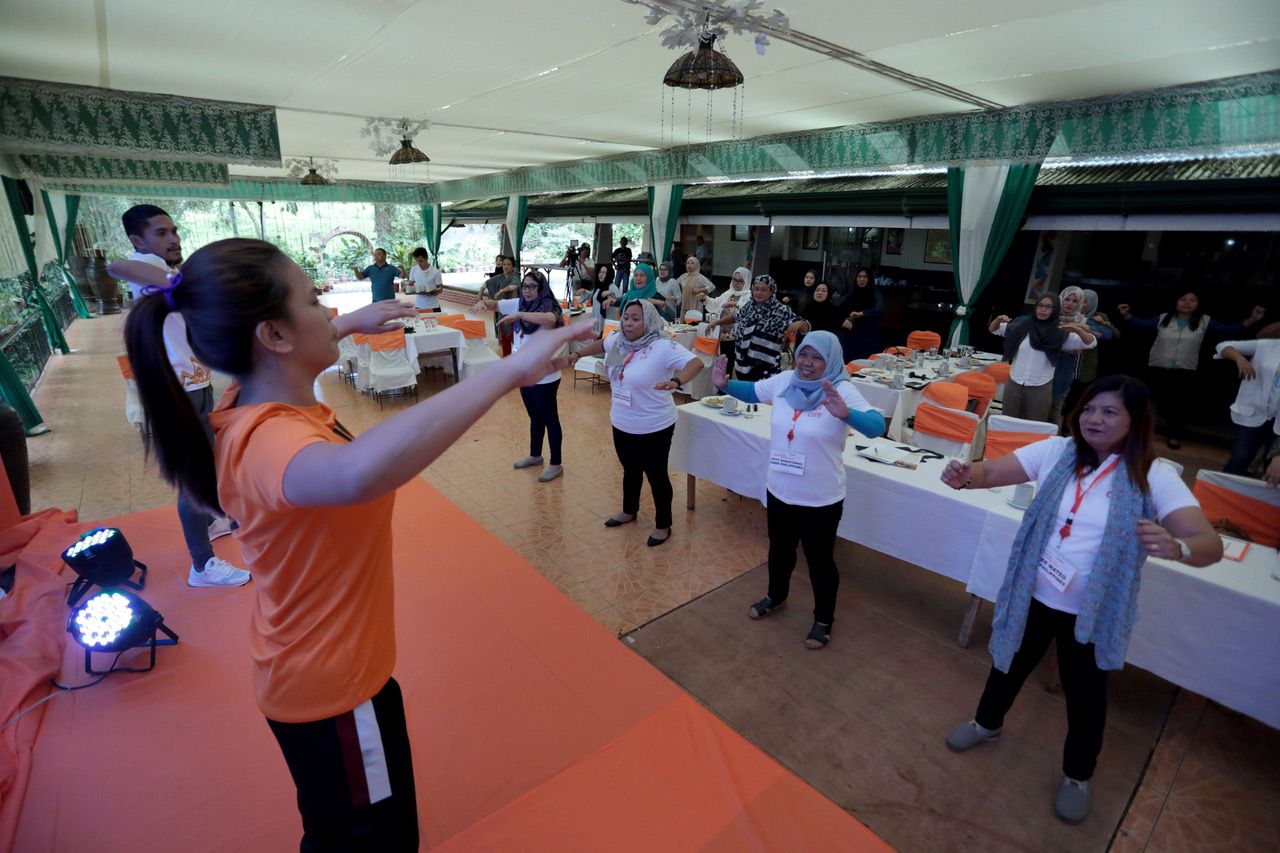
The program has a strong focus on women as leaders through community engagement, screenings, referral, counseling, follow-up, monitoring, data collection and analysis. This includes identifying and engaging women at evacuation centers and shelters who may have expertise in healthcare or related fields to lead teams that map activities and run NCD Clubs.

CARE will facilitate conversations among key stakeholders including local government units, health offices, academic institutions, the private sector and leaders of the displaced population with an aim to integrate prevention and control of such diseases into policies across all government departments and levels.

To support the partnership, the Abbott Fund is providing $1 million in funding over three years. Abbott also is donating diabetes monitors and test strips to help advance efforts to address diabetes in affected communities.

“There is a need to raise awareness on the prevention and control of hypertension, diabetes, and obesity. We are committed to collaborating with various stakeholders to address these needs and support the displaced people two years after the siege,” said Aimee Mateo, CARE project coordinator.

About CARE
Founded in 1945 with the creation of the CARE Package®, CARE is a leading humanitarian organization fighting global poverty. CARE places special focus on working alongside women and girls because, equipped with the proper resources, they have the power to lift whole families and entire communities out of poverty. That’s why women and girls are at the heart of CARE’s community-based efforts to confront hunger, ensure nutrition and food security for all, improve education and health, create economic opportunity and respond to emergencies. In 2018, CARE worked in 95 countries and reached more than 56 million people around the world. CARE has worked in the Philippines since 1949 and is known for its programs on emergency preparedness and response, livelihood recovery, disaster risk reduction, climate change adaptation, innovations, gender-based violence and health. Connect with us at www.care.org, on Facebook at www.facebook.com/CAREfans and on Twitter @CARE.

About Abbott and the Abbott Fund
Abbott is a global healthcare leader that helps people live more fully at all stages of life. Our portfolio of life-changing technologies spans the spectrum of healthcare, with leading businesses and products in diagnostics, medical devices, nutritionals and branded generic medicines. Our 103,000 colleagues serve people in more than 160 countries. Connect with us at www.abbott.com, on LinkedIn at www.linkedin.com/company/abbott, on Facebook at www.facebook.com/Abbott and on Twitter @AbbottNews and @AbbottGlobal.

The Abbott Fund is a philanthropic foundation established by Abbott in 1951. The Abbott Fund’s mission is to create healthier global communities by investing in creative ideas that promote science, expand access to healthcare and strengthen communities worldwide. For more information on the Abbott Fund, visit www.abbottfund.org.

Media Contacts: 
Dennis Amata, CARE Philippines; Phone: +63.917.510.8150; Email: dennis.amata@care.org; Website: www.care-philippines.org

Angela Duff, Abbott and the Abbott Fund; Phone: +1.224.668.6894; Email: angela.duff@abbott.com; Website: www.abbott.com

Communities rebuild resilient livelihoods five years after Yolanda

Typhoon Yolanda, internationally known as Haiyan, has become a name that’s hard to forget. The super typhoon wiped out homes, killed more than 6,300 people, and devastated agricultural lands leaving those who survived homeless and without any source of income. But for the people who witnessed its wrath, the only way to move forward was to pick up the pieces and rise.

“What we experienced after Yolanda was unimaginable. But through the years we’ve managed to recover and now we can say we are more prepared for future disasters,” said Yolanda Colbe, a cassava farmer from Carigara, Leyte.

Yolanda, who is frequently teased by her neighbors because of her name, showed determination to get back on her feet five years after the typhoon made a scourging landfall. She is one of the 153,206 people being supported by international humanitarian organization CARE in strengthening livelihoods and preparing for disasters.

“After Haiyan, Leyte and Samar were hit by relatively strong typhoons that also left huge agricultural damage. This hampered the recovery efforts of the affected people who heavily relied on agriculture,” shared Tess Bayombong, Project Team Leader of CARE Philippines.

Bayombong sees the importance of establishing resilient livelihoods, ensuring community participation and partnering with different stakeholders to recover from a major disaster like Yolanda.

Moving forward after Yolanda

The Government of Canada, through Global Affairs Canada (GAC), helped CARE bridge emergency to development phase through the “Typhoon Haiyan Reconstruction Assistance” (THRA), a four-year project that supports economic reconstruction of the Yolanda-affected people in Leyte, Antique and Iloilo.

The THRA project is able to support 449 community associations through technical assistance, provision of tools and equipment for their enterprises, and trainings on entrepreneurship, financial literacy, values formation, good agricultural practices, disaster preparedness, climate change mitigation and adaptation, gender and development, value chain analysis and other industry-focused subjects.

Colbe, who is also a farmers’ association president, shared that they have learned so many lessons after Yolanda. In Leyte, they had to look for other sources of income because coconut plantations were severely damaged. While waiting for coconut trees to fully recover, they find cassava production an equally beneficial alternative given the available market.

“The trainings helped us to mobilize farmers in our community and start improving and expanding our cassava plantations. Now we get to earn from cassava production and help our families,” added Colbe.

Climate-resilient livelihoods

CARE’s assisted community associations are now practicing organic farming and applying eco-friendly and innovative agricultural techniques in collaboration with the Department of Agriculture, Philrootcrops and Agricultural Training Institute. Farmers and commodity processors have set up demo farms for other partners to replicate good agricultural practices and learn about intercropping.

Farmers are building structures according to “Build back safer” techniques, using agriculture waste for fertilizer production and ensuring that their livelihoods don’t degrade the ecosystem.

A tripartite agreement among CARE, Fatima Multi-Purpose Cooperative (FMPC) and the Philippine Crop Insurance Corporation was signed, providing assisted farmers in Leyte with insurance cover for crops and livestock and personal insurance for both accident and life. This is seen as a risk mitigating measure and a first step towards the promotion of resiliency and sustainability.

Meaningful collaboration

Collaboration among humanitarian organizations, communities, donors, government agencies, local government units, academic institutions and private companies is key to achieving resilient livelihoods.

“It is not just CARE’s work. The partnerships we’ve built and maintained greatly contributed to the sustainability of the livelihoods we supported. The alignment of our program with other existing livelihood programs of other agencies enables us to multiply our impact,” shared Bayombong.

After Yolanda, the farmers were organized to form community associations. CARE and its partners FMPC, Antique Development Foundation and Taytay sa Kauswagan Inc. have also facilitated the registration of farmers’ associations with the Department of Labor and Employment so they can access more support from the Government and make business with industrial buyers. Some of these associations were able to prepare proposals and have received equipment, seeds and financial and technical support from government agencies.

“Before Haiyan, we just produce cassava for household consumption. But after participating in CARE’s livelihood project, we learned that cassava has a market in our province and there’s a big company buying processed cassava,” said Colbe.

CARE continues to work with the affected people and reach more communities in the Philippines. CARE works in the most vulnerable and geographically isolated areas affected by Haiyan, with special attention given to women and girls and the most marginalized.

###

About CARE: CARE is an international humanitarian organization delivering emergency relief and long-term development projects with special focus on women and girls. CARE worked since 1949 in the Philippines and is known for its disaster response, emergency preparedness, livelihoods recovery, and integrated risk management programs.

About THRA project: The Typhoon Haiyan Reconstruction Assistance (THRA) project is a four-year development project financially supported by the Government of Canada through Global Affairs Canada and implemented by CARE in the Philippines. The project supports the economic reconstruction of people affected by typhoon Yolanda in Leyte, Antique and Iloilo.

For media inquiries, contact Dennis Amata at 0917-510-8150 and dennis.amata@care.org

CARE and partners launch RILHUB, an interactive learning platform on resilience and innovations

CARE and its partner organizations in the Philippines have joined forces to develop and launch the country’s newest platform for learning, reflection and collaboration on resilience building and innovations.

The Resilience and Innovation Learning Hub or RILHUB is a joint initiative of CARE (lead), Assistance and Cooperation for Community Resilience and Development (ACCORD), Agri-Aqua Development Coalition Mindanao and Citizens’ Disaster Response Center to develop and share learning materials on the following areas: disaster risk reduction; climate change adaptation; ecosystem restoration and management; and innovations.

“The Philippines is one of the most disaster-prone countries in the world. Solving complex challenges around increasing disaster risks, a changing climate and a degrading environment requires collective action and commitment to learn,” said David Gazashvili, CARE Philippines Country Director.

RILHUB’s primary objective is to create knowledge by gathering and synthesizing existing and new information, identifying good practices from its partners, and developing case studies, stories, tools and modules through an accessible online platform and learning events.

RILHUB will also hold regular conferences, talks, workshops, and dialogues across the country to help build capacity of organizations working with local communities.

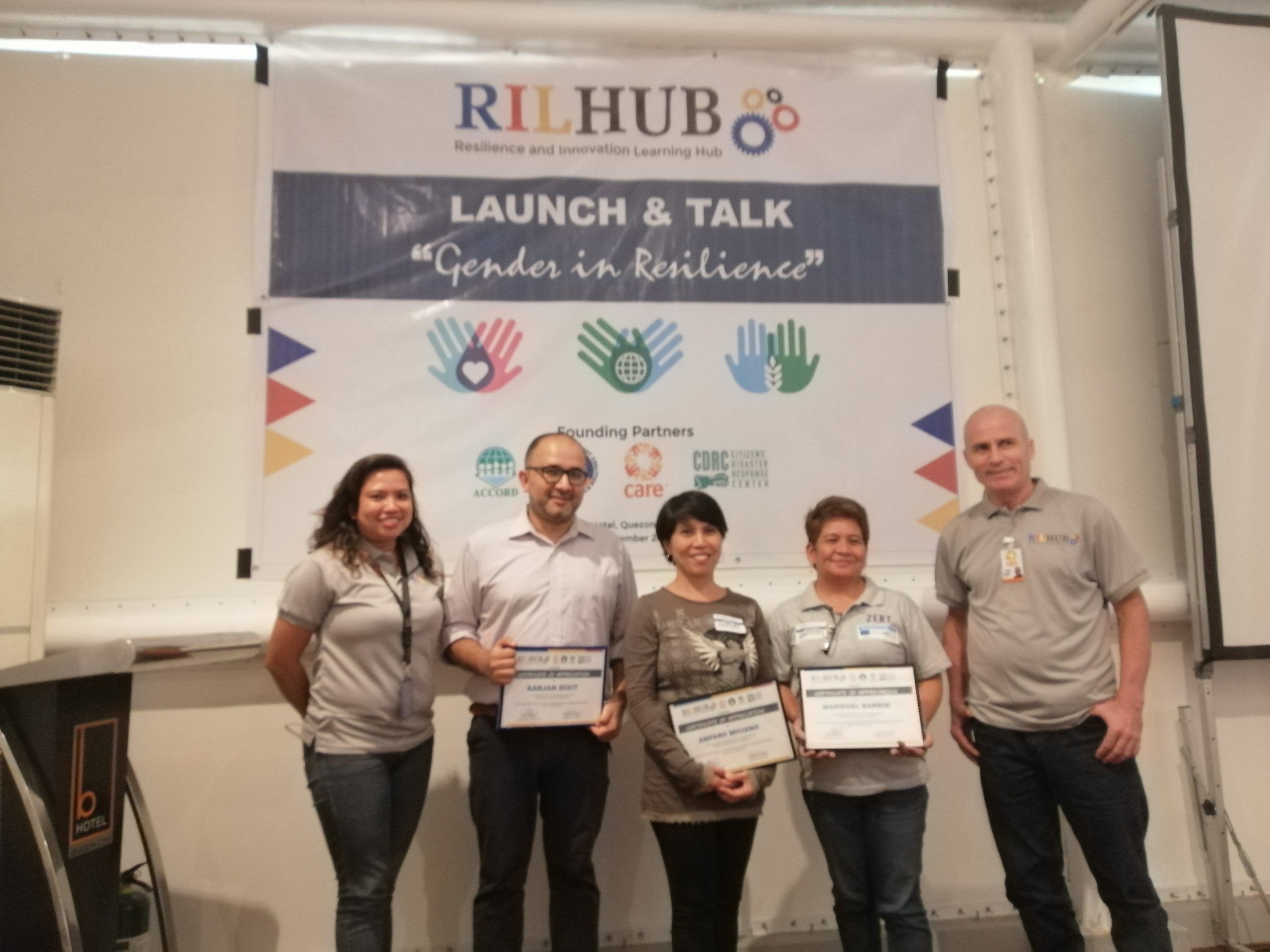
The recently concluded soft launch of RILHUB in Quezon City, Philippines also served as its first learning activity. A talk on “Gender in Resilience” included presentations from CARE, the National Coalition of Rural Women and Partners for Resilience Philippines. The launching was also attended by various organizations involved in development programming.

“The vulnerable and marginalized groups in every community are the most affected by disasters and climate change impact. We recognize the importance of involving women, children, persons with disability and other groups in equal decision-making and participation in humanitarian and development program activities,” shared France Jimenez, RILHUB Coordinator.

RILHUB is also generating strength from the rich experiences of its founding partners and the communities they work with.

“Resilience building, to be truly inclusive, should include the narratives and learnings from vulnerable communities affected by recurring disasters. Working with them generated rich knowledge and information that are worth sharing, and the RILHUB is one of our ways of bringing these back to the communities, said Sindhy Obias, Executive Director of ACCORD.

RILHUB is now preparing for upcoming talks and learning events that will focus on important concepts, approaches and issues in resilience building and innovations.

“We are excited to feature more stories and case studies from the ground, work with experts, package materials and organize events. RILHUB is not an exclusive platform. We are looking forward to collaborate with more organizations, communities, academic institutions, media, artists, writers, and innovators,” added Jimenez.

To learn more about RILHUB, visit www.rilhub.org or contact info@rilhub.org.

Join the fight.
Sign up for our mailing list.