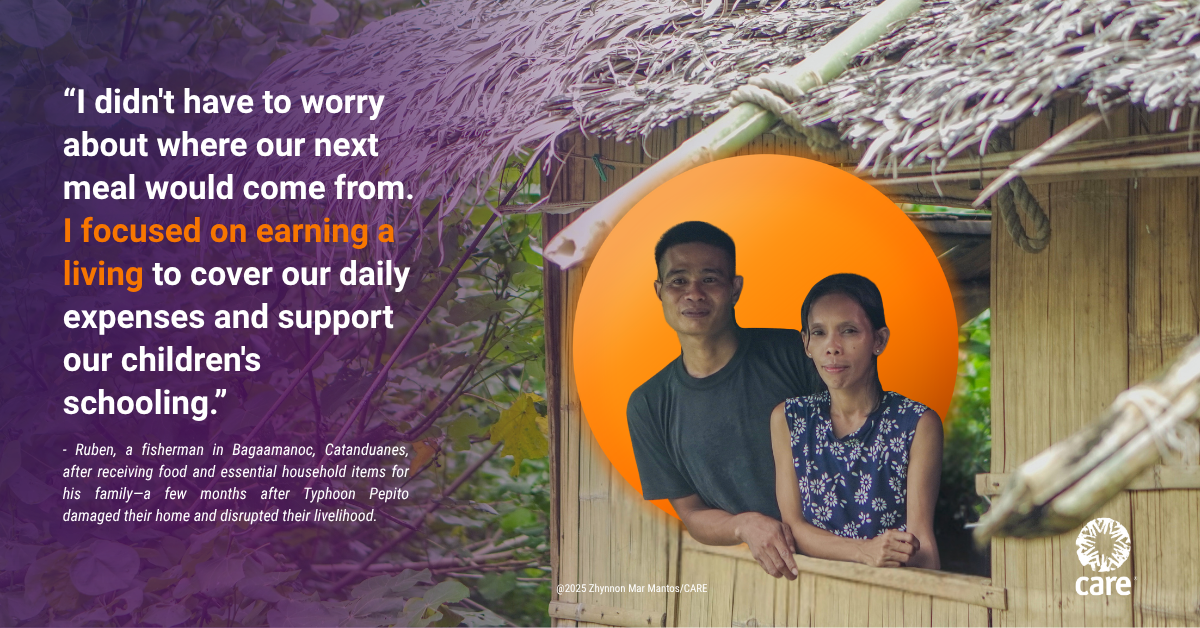
For Ruben and Jonnely Benitez, life in their village in Bagamanoc, Catanduanes, is a rhythm dictated by the seasons. The couple worked hard to build a stable life for their five young children.
During the fishing season, from August to October, Ruben, 34, would dive into the clear waters, his livelihood dependent on the quality of his catch. When the harvest arrived, he turned to the land, processing coconuts for and stripping abaca for fiber. He’d pick up his tools and work as a carpenter if times were lean. His steady hands provided for his family and ensured that there was always food on the table and that their children could attend school.
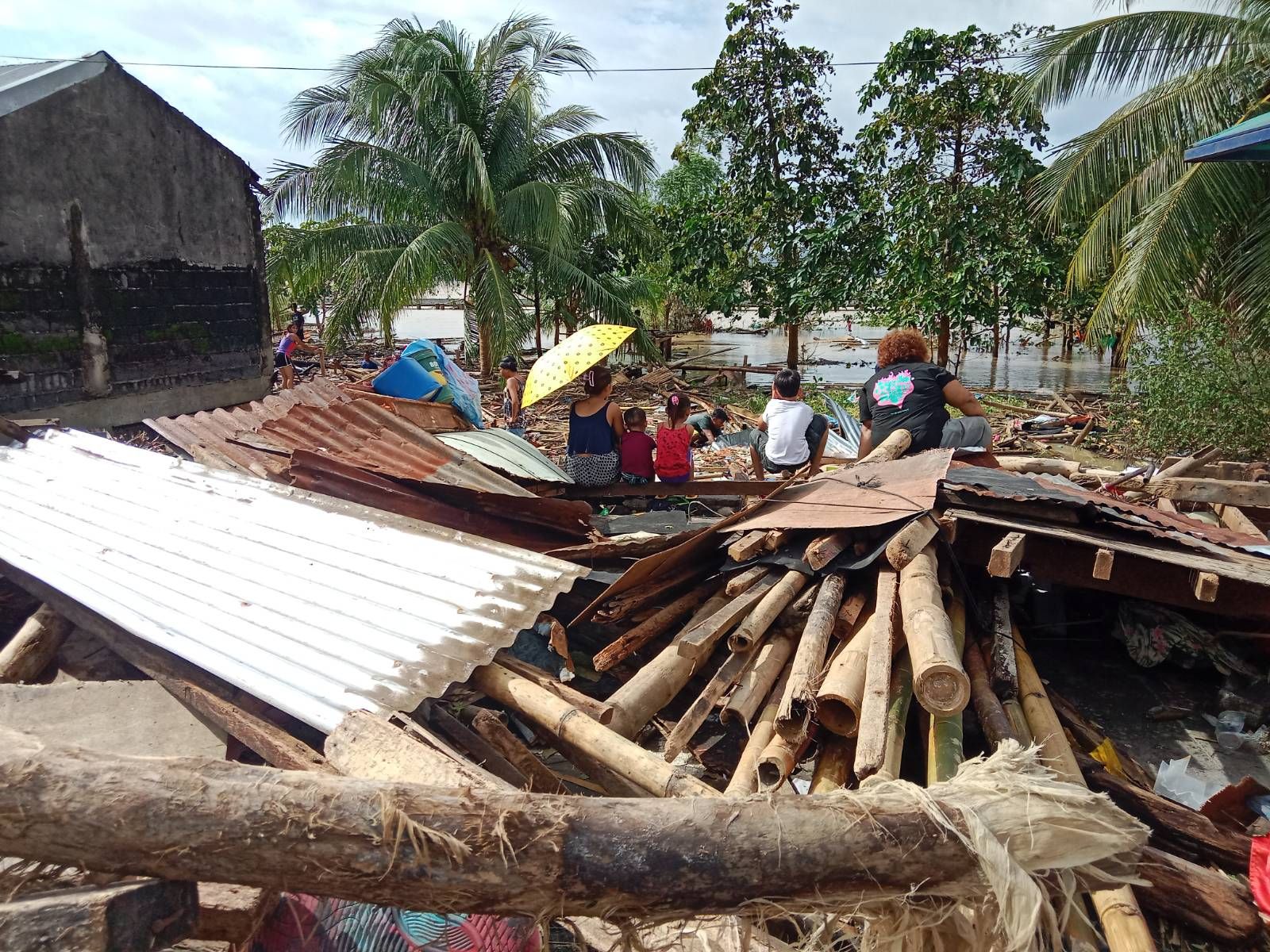
Their life changed when Typhoon Pepito struck. The storm tore the roof from their home and ruined their belongings. The family took shelter in an evacuation center for a few days. The couple worked together to salvage what tin and other materials they could find to piece their roof back together.
The storm had washed away more than just their home. The coconut and abaca crops were damaged, leaving Ruben without his usual work.
“I also couldn’t go dive fishing,” Ruben recalled. “The water was murky after the storm.”
For two months, the family relied on the local government’s assistance, but the goods they received were often not enough for their family of seven.
The immediate assistance from the Gates Foundation was a big help. They received food and other important household items for cooking and sleeping. This was a great relief for Jonnely, who cooks for the family every day.
Photo: A woman carries food items home to share with her family.
“I cooked nutritious food for my family,” she said. “We had mung beans, dried fish, and eggs. We even had chicken.” She added that her children were glad to eat meat again.
The 75 kilos of rice they received lasted for two months. This help allowed Ruben to focus on finding work. He started earning an income again by helping his neighbors fix their own damaged homes.
“I didn’t have to worry about where our next meal would come from,” Ruben explained. “I focused on earning a living to cover our daily expenses and support our children’s schooling.”
Today, the family is still getting back on its feet. Because their work depends on the seasons, they hope another big storm doesn’t come soon. Ruben and Jonnely continue to work hard to rebuild their life, showing the quiet strength of a family facing an uncertain future.
Featured Stories, Food & Nutrition, Latest News & Stories
For Liezel, 33, and her husband, Mark Anthony, 35, life in their village in Pandan, Catanduanes, was built on hard work. As a cook at a nearby resort and a construction worker, they earned a decent income together, enough to provide for their two children.
Their stable life was turned upside down when Typhoon Pepito struck. The storm’s powerful winds tore the roof and walls from their house. With their home destroyed, the family had to stay with Liezel’s sister for over a month.
The typhoon took more than just their home; it took their jobs. It damaged the resort where Liezel worked and halted all construction projects in the area. With no income, the family relied on government food aid to survive. After a month, the resort reopened, but with only Liezel working, the family struggled to afford enough food. Her husband was not able to get back to work until February.
“It was difficult because this was the first time we experienced a typhoon that destroyed our house and stripped our savings,” Liezel said.
The experience also left a lasting impact on her children. “Every time it rains hard, they get scared,” she shared.
In March, CARE and its partner TABI, with support from the Gates Foundation, came to their village with food, kitchen items, and sleeping materials. This support which included 75 kilos of rice and other food items, like chicken, was essential to keep going.
Photo: A family waits for a boat to carry their food, kitchen items and sleeping materials to their village. The food could last a family of five for 2-3 months while they recover their livelihood.
“I saw how my children were smiling from ear to ear, especially when I fried the chicken. It was their favorite meal, even before the typhoon,” she said.
With enough food to last their small family for the next three months, Liezel felt a sense of relief she hadn’t felt in months.
“As a cook, I always worry about my children’s food,” she said. “And I was so happy that they got to eat well again.”
This support provided the stability her family needed to get back on their feet.
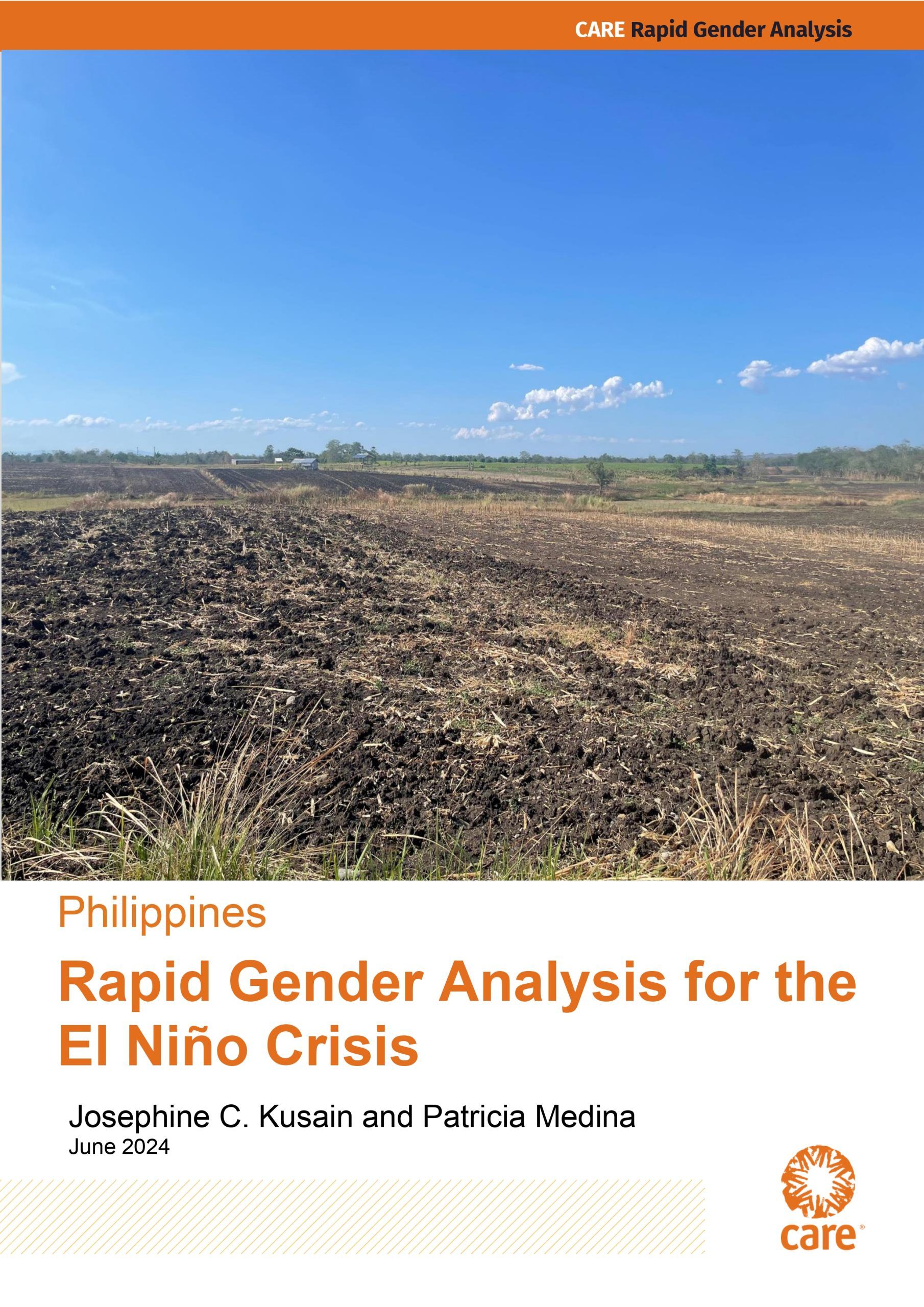
Farm fields lay barren due to lack of rainfall and extreme heat on May 4, 2024, in Brgy. Santor, Rizal, Kalinga. (Photo: Josephine C. Kusain/CARE Philippines)
Significant portions of the Philippines are experiencing below-normal rainfall levels and above-average temperatures due to El Niño, impacting 59 out of 82 provinces across the Luzon, Visayas, and Mindanao regions. This extensive drought has adversely affected millions, with severe implications for agriculture and fisheries.
In May, CARE Philippines and its local partner, the Cordillera Disaster Response and Development Services (CorDIS RDS) conducted a Rapid Humanitarian Assessment (RHA) in Kalinga, one of the drought-stricken provinces in the country. Key local government officials and residents of three severely affected communities in Rizal and Balbalan municipalities were interviewed to particularly determine the drought’s impact on women, men, girls, and boys.
The RHA reports that these communities thrive on farming rice, corn, and vegetables are experiencing livelihood loss and hunger as repercussions of the El Nino. The lack of rainfall has made it impossible to maintain the fields and gardens, resulting in severe food shortages.
In Barangay Santor, Rizal, a farming family’s corn fields lay barren, and the garden withered due to the extreme heat. With the soil cracked and lack of rain, Julie Romero, 49, and her family of eight are left with nothing to harvest or sell. Farm work and other daily labor opportunities have also ceased due to the lack of water to irrigate the fields.
Photo: Julie Romero sits by her home’s kitchen during the interview (JR Paclay/CORDISRDS
With no produce to sell, Julie sells snacks like boiled corn and peanuts at the Bulanao, Tabuk public market. Despite her efforts, her daily earnings were barely enough to meet their basic needs. The meager income supplemented by her husband’s occasional work in construction was insufficient to cover their mounting expenses, especially, those incurred for their children’s education.
Julie shared that they worry for their children if the drought persists in the coming months.
“They eat whatever is on the table. They are used to the hardships of our life. But I am unsure about their education,” she added.
One child already stopped schooling because they could not provide for her school needs.
She also fears for their tenure on the land that they till and rent for 10 cavan or 500 kilos of corn per cropping. With the drought, they asked their landlord to waive their obligation until they could recover from their losses. But Julie is uncertain when they can bounce back from their situation when they lack the funds for land preparation in the coming rainy season.
A family garden in Barangay Santor produces stunted vegetables because of the extreme heat. Photo: Josephine C. Kusain/CARE Philippines
Water sources have started to dry up. Farmers have attempted to use water pumps to save their crops, but the rising cost of gasoline and insufficient water supply have hindered these efforts. The once-reliable supply from the mountain springs has lessened, leaving community members without water at certain times of the day. The only hand pump in the community is shared among the residents and is also at risk of drying up.
An open faucet awaits water from a dwindling mountain spring source (left) and a woman pumps water from the only handpump in the community for domestic use (right) in Barangay Santor, Rizal, Kalinga on May 4, 2024. Photos: Josephine C. Kusain/CARE Philippines
The drought also affected social dynamics in the community. Alex Dalayday, a 52-year-old Barangay Councilor shared that their administration works hard in addressing the increasing domestic disputes and illegal activities caused by the financial stress. The lack of local employment opportunities forced families to borrow money, leading to increasing debts. Couples face heightened stress as they struggle to provide for their families, sometimes leading to conflicts and the search for alternative sources of income. Some individuals have also started engaging in illicit activities to make ends meet.
“We have barangay tanods patrol regularly to ensure safety and implement mechanisms to address violence and harassment,” he added.
However, he fears that the situation will worsen without aid. The barangay council already passed resolutions to request assistance from the Department of Agriculture (DA) and the Department of Agrarian Reform (DAR). These requests included water pumps and other support measures. However, there has been no response to these resolutions as of the conduct of the RGA.
Access to basic services like healthcare has also become more critical. Marivic Wigan, 34, a Barangay Health Worker (BHW) in Anonang Liwan West, Rizal observed an unusual increase in chickenpox cases, affecting not only children but also adults and seniors, due to the stress and weakened immune systems brought on by the extreme heat and conditions.
CARE Philippines, with its extensive experience in emergency response and long-term recovery efforts, advocates for a comprehensive approach to resilience-building. This includes livelihood diversification, skills training, sustainable agriculture practices, improved water infrastructure and sanitation facilities, and strengthened community health services to handle critical health issues.
Blog, Featured Stories, Latest News & Stories, Women and Girls
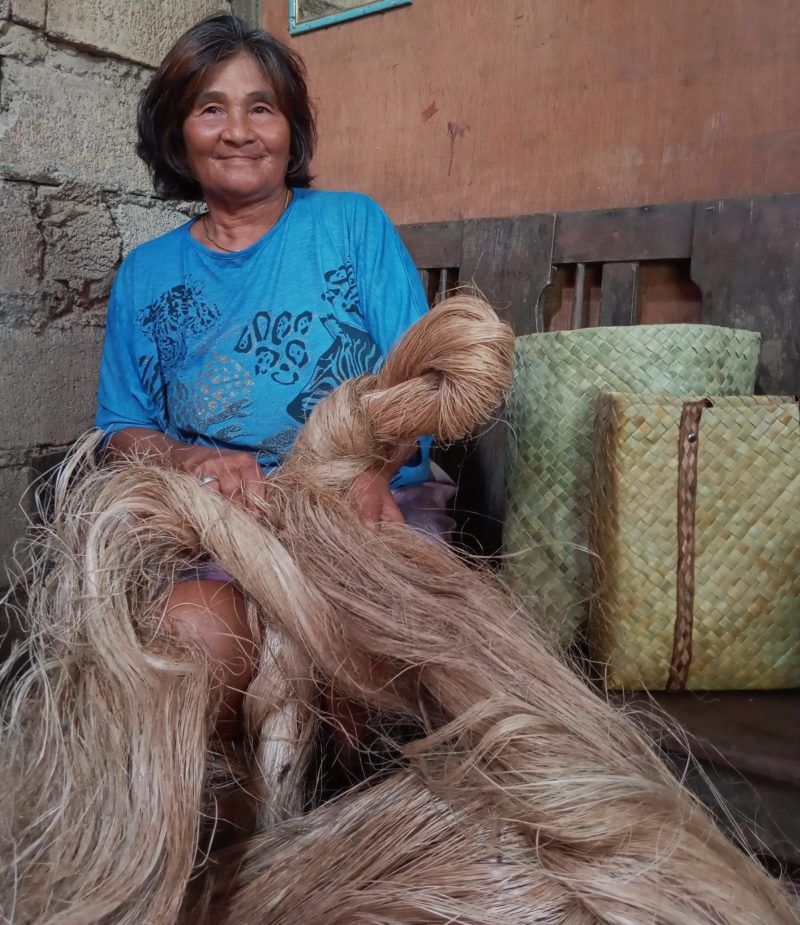
Ledesma Tañon, 59, was born into a family of abaca (Manila hemp) farmers and has been deeply involved in farming for as long as she can remember. Alongside her husband, Noe, a dedicated blacksmith, she raised ten children in their home in Brgy. Buyo, Virac, Catanduanes.
She cultivates abaca, root crops, and vegetables on a four-hectare land, ensuring a steady food supply for her family. The income from abaca farming is a crucial source of support, enabling her to cover the family’s daily needs and finance her children’s education.
On December 16, Typhoon Pepito (Man-yi) made landfall in Catanduanes, devastating her farm by toppling nearly all 250 hills of abaca. She was left with only the suckers, which will require two years to mature before any fiber can be harvested. The typhoon also tore off the roof of their home and brought floodwaters that rose to at least 2 meters high. Most of their belongings were damaged, leaving them with little to salvage.
Photo: Several mature abaca plants were destroyed by the typhoon at Ledesma’s farm.
Despite everything, Ledesma remained steadfast. “Starting over is difficult, but I have to be strong for my children”, she said. She shared that this wasn’t the first time they had faced such devastation. “Our house was flooded to the rooftop when Typhoon Rolly happened in 2020. All our crops were destroyed, too”, she added.
Catanduanes is highly prone to typhoons. As the easternmost province of the Philippines, it directly faces the Pacific Ocean and is often the first to be hit by storms entering the Philippine Area of Responsibility (PAR). Its location makes it a frequent target for powerful typhoons, which bring heavy rain, strong winds, and storm surges, often causing flooding and landslides.
The people of Catanduanes, like Ledesma, depend largely on abaca, a crop resilient to drought but highly vulnerable to typhoon damage. In fact, Typhoon Pepito devastated around 23,000 hectares of abaca plantations on the island, which produces 27% of the Philippines’ total abaca fiber supply.
Photo: The hills turned brown after Typhoon Pepito felled most of the trees and crops in Virac.
In October 2021, CARE Philippines introduced the Women Economic Empowerment (WE Empower) Project in Catanduanes to address the impact of Typhoon Rolly on the abaca-based livelihoods of affected communities. The project focused on empowering women and young abaca farmers by providing capacity-building programs, enhancing access to essential services, and fostering an environment conducive to sustainable economic activities.
Ledesma is one of more than a thousand farmers who participated in the WEE project. She and her fellow farmers organized the Buyo-Dugi-Hicming Farmers Association. They were trained on abaca and root crop by-products, financial management, other relevant business and financial skills, climate-resilient farming techniques, and good agricultural practices. Part of their learning was also on disaster preparedness and climate change adaptation.
When the news forecasted the typhoon’s landfall in Catanduanes, she immediately harvested root crops such as cassava, taro, and sweet potatoes to ensure that they could have something to eat after the deluge.
She also evacuated three sows to a safe location and ensured the processed abaca fibers were stored in a high place to protect them from flooding before leaving for safety. She also brought their meager savings which she used to buy roofing materials and had her sons repair the damage to their home. She also managed to buy some rice though this only lasted a few days.
Through the WEE Project, CARE introduced the aGAP Bangon assistance program, an innovative, market-based emergency relief initiative. The program provides immediate relief packages, including food items and seedlings, to the most vulnerable community members and farmers impacted by natural disasters like Typhoon Pepito.
Ledesma received a 25-kilo sack of rice and vegetable seedlings to supplement the supplies she saved before the typhoon. She plans to use the remaining abaca fiber she saved to weave mats and baskets for sale. Additionally, one of her sows is pregnant, and she intends to sell the piglets to raise funds for restarting her farming activities.
“It’s difficult to start but it gets easier when you have something to start on”, she shared.
Featured Stories, Latest News & Stories, Women and Girls
Emerita, 60, has dedicated 32 years of her life to serving as a Community Health Worker in Macalelon, Quezon Province. Currently, she holds the esteemed position of president of the CHWs in her municipality, a role she fulfills with unwavering commitment and passion.
The role of a CHW is crucial for the health and well-being of the barangay. CHWs provide a range of essential services, from administering first aid to accompanying the sick or those in labor to the hospital. Rain or shine, CHWs like her continue their work, ensuring that community members receive the care and assistance they need. In her capacity as president, she also responds to those affected by calamities, showcasing her leadership and dedication to her community’s welfare.
She finds great joy and fulfillment in her work as a CHW. She believes that staying active and engaged in her duties helps keep her mind sharp, preventing forgetfulness and maintaining her mental acuity. This perspective is especially poignant given her personal health challenges.
She is a breast cancer survivor. She underwent extensive chemotherapy and radiation treatments, all while continuing to fulfill her responsibilities as a CHW. When she was diagnosed with cancer, the CHW coordinator of Quezon advised her to step down from her duties. However, she refused to stop working, finding happiness and purpose in her role despite her serious illness. Her determination and resilience have inspired many in her community.
“I stayed active and continued serving my community. Knowing I was making a difference to others helped me through those difficult times.”
Throughout her illness, her children and the Department of Health (DOH) provided crucial support, covering the costs of her treatment. Even during her treatment, she remained committed to her work, preferring to stay busy and active rather than staying at home. Her unwavering dedication to her duties as a CHW, even in the face of personal health struggles, speaks volumes about her character and commitment.
She emphasizes the importance of extensive knowledge, numerous health-related trainings, and adequate support for CHWs to effectively perform their duties. She believes that continuous education and training are vital for CHWs to stay updated with the latest health care practices and protocols, enabling them to serve their communities better.
Emerita’s story is one of resilience, dedication, and selfless service. Her journey as a CHW, marked by challenges and triumphs, highlights the critical role of community health workers in maintaining public health. Her unwavering commitment to her community, even in the face of adversity, exemplifies the true spirit of a health worker dedicated to the well-being of others.
Featured Stories, Latest News & Stories, Women and Girls
Rhodora, a 65-year-old widow, has dedicated nearly three decades to serving as a Community Health Worker in Barangay Rizal, Macalelon, Quezon. Since 1995, she has been a cornerstone of her community’s health system, providing invaluable services and support to her fellow residents. Currently, she holds the position of secretary of the BHWs in the municipality and is also a leader of the senior citizens in her community.
Her journey as a BHW has been marked by numerous achievements and recognitions. In 2023, she was a finalist for the “Outstanding BHW in Quezon-Marinduque,” representing the Bondoc Peninsula and securing a top 4 position. Despite the modest honorarium, which started at 250-300 pesos and has gradually increased to 500 pesos, her dedication to her role has never wavered. For her, the value of serving her community far exceeds any financial compensation.
She has undergone extensive training in primary health care, TBDOTS, and various other health-related fields. Her knowledge and commitment have greatly benefited her community. She has also worked as a daycare worker and a Barangay Nutrition Scholar (BNS), using her skills to improve the health and well-being of her barangay.
“Our work is not easy. We need proper support and resources to serve effectively.”
Beyond health services, she has guided new community health workers, helped create action plans, and facilitated monthly meetings. She has been instrumental in establishing the vision and mission for the barangay nutrition council, women’s groups, and senior citizen groups. Her leadership and organizational skills have left a lasting impact.
Rhodora’s path has not been without challenges. She often buys her own supplies, and her honorarium frequently goes toward these expenses. Despite being a senior citizen, she remains tireless in her work, defending her right to serve and valuing her extensive knowledge and experience.
Her dedication has come with personal sacrifices. She struggled to fund her children’s education but, through scholarships and family support, successfully saw them through college.
Rhodora believes that to improve services, BHWs need adequate supplies and support from the local government without deductions from their honorarium. She emphasizes that the municipality should have a counterpart for the honorarium, as the workload for BHWs remains substantial regardless of the barangay’s size. Her vision is for a healthier, more empowered community, where each individual contributes to the collective well-being.
Rhodora’s profile is a powerful narrative of dedication, resilience, and unwavering service. Her journey as a BHW, marked by significant contributions and overcoming challenges, highlights the critical role of community health workers in fostering public health and well-being. Her story continues to inspire and uplift her community, proving that age and adversity are no barriers to making a profound impact.
Featured Stories, Latest News & Stories, Press Release
[October 23, 2024 – Manila] – Tropical storm Trami continues to devastate six regions across the Philippines, with Southern Luzon particularly hard-hit. Homes and infrastructure have been submerged. Landslides and widespread flooding devastated farming and fishing areas. Over 400,000 individuals – many still reeling from the devastation of Typhoon Yagi last month – are now grappling with another disaster.
“CARE Philippines, in collaboration with other humanitarian organizations, is on the ground, conducting needs assessment and ready to deliver immediate assistance to those most affected by Tropical Storm Trami. Our primary concern is for the most vulnerable, especially women and girls, who face heightened risks of gender-based violence and neglect as access to essential services like food, water, shelter, and healthcare has been severely disrupted.
Our top priority is to address the urgent needs of those hardest hit. We are deploying rapid assessment teams and working closely with our local partners through the Humanitarian Partnership Platform and authorities to provide life-saving support and ensure that the protection of women and girls, who are disproportionately affected by disasters, remains central to our response.
To effectively respond to this crisis and support recovery efforts, we need the collaboration of all sectors—government, civil society, and the private sector. The scale of need is vast, and only through coordinated efforts can we help affected communities and prevent further loss of life.”
CARE Philippines has been providing humanitarian and development support since 1949, consistently working to uplift vulnerable communities. The Philippines continues to be among the most disaster-prone countries globally, and CARE remains at the forefront, delivering life-saving assistance to those most in need. According to the World Risk Index 2023, the Philippines remains the most at-risk country with the least capacity to respond to natural disasters.
This document represents a working draft that encapsulates the initial findings from the Rapid Gender Analyses (RGA) conducted in Kalinga and Negros Oriental provinces. RGA is an interactive process that incorporates more information as it becomes available. The analyses and recommendations are based on the data and observations collected during the initial phase of the study.
Currently, we are awaiting the completion of the RGA for North Cotabato and Zamboanga del Norte. The findings from these additional provinces will provide a more comprehensive understanding of the gender dynamics and disparities across the studied areas. Consequently, the final report may include significant updates and modifications to the information contained in the initial report.
This working document’s purpose is to share the preliminary results with stakeholders, enabling them to provide feedback and contribute to the ongoing analysis. We encourage all recipients to review the findings critically and offer insights that may enhance the accuracy and relevance of the final report.
Please be advised that the data presented here should not be used as a basis for decision-making until the full analysis is complete. Any use of the information in this draft should be made with the understanding that it is part of an evolving study.
We appreciate your understanding and patience as we work towards delivering a thorough and accurate gender analysis that will inform future initiatives and interventions in these provinces. Thank you for your continued support and collaboration in this important endeavor. For any inquiries or further information regarding this document or the ongoing analysis, please do not hesitate to contact the project team.
Blog, Featured Stories, Latest News & Stories, Women and Girls
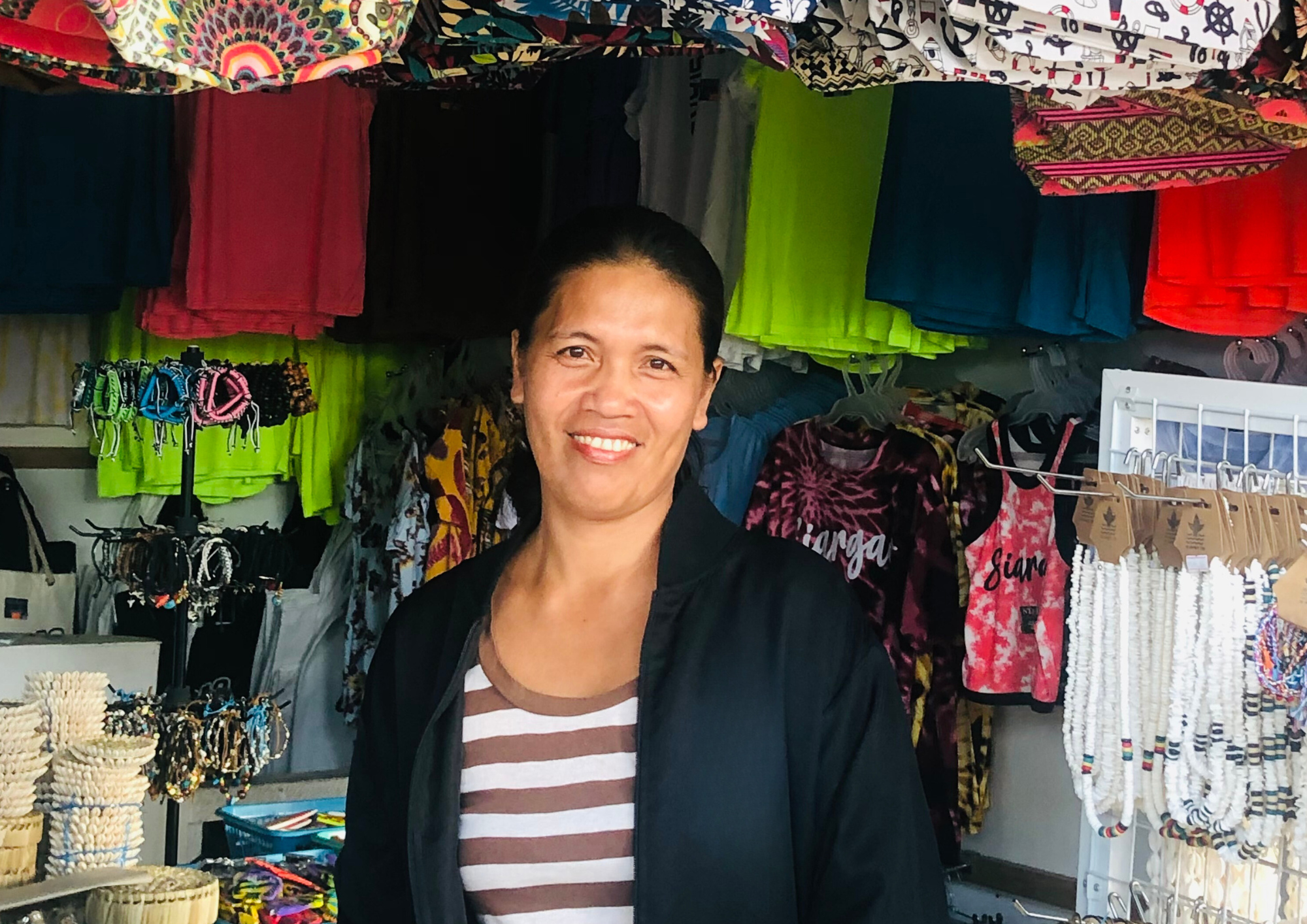
It’s a busy day as tourists swarm the line of stalls at the popular Maasin River in Barangay Maasin, Pilar, Siargao Island, Surigao del Norte. Madel Elimanco, 39, stands at the front of her shop and invites tourists to check the various goods she sells. She has souvenir items such as shirts, bags, shell ornaments, accessories made of coconuts, and delicacies that are sought after by people who flock to the island.
She still gets overwhelmed whenever she earns more than she expects on a day of selling. She remembered how difficult it was for her and her husband to get back on their feet when Typhoon Rai (Odette) struck in 2021. Their stall where they used to sell hot cakes, processed foods, and coconut shell souvenirs was swept away by the strong winds. After the onslaught, her husband who was a tour guide and surfing instructor struggled to find income when all tourists had gone, and the island was left in ruins.
As much as Madel wanted to recover their assets and start selling again, they had no capital to use. She wanted to find a job so that they could survive the daily challenge of putting food on the table and taking care of their children’s needs.
“It was hard for me to find another job because I’m used to running a small business. I wasn’t confident to do something that I don’t have the right skills for”, she said.
CARE Philippines through Project WAVES (Women Adding Value to the Economy in Siargao) identified Madel as one of the women entrepreneurs to be engaged as a project participant who will lead their livelihood recovery. She participated in a series of livelihood and financial literacy training and was supported to recover her assets and improve and diversify her products through financial assistance.
“Before, I only sell a few items. Now, I have more products displayed and sold in my souvenir shop”, she shared.
CARE Philippines and the Department of Science and Technology-Philippine Council for Agriculture, Aquatic and Natural Resources Research and Development (DOST-PCAARD) signed an MOU to provide a holistic package of farming solutions to smallholder vegetable farmers in Mabitac, Famy, Sta. Maria, and Pangil, Laguna province on February 12.
This will be made possible through the Asenso sa Good Agriculture Package (aGAP) Social Enterprise project being implemented in the said municipalities where vegetables are the prime commodity. Small-scale farmers in these areas have costly and or unreliable access to farming inputs, technology, and markets for their produce. Moreover, they suffer from losses caused by natural hazards such as drought, flooding, and typhoons.
Reiza S. Dejito, CARE Philippines Country Director emphasized the importance of collaborating with the DOST-PCAARRD in increasing farmers’ resilience by accessing necessary resources through the latter’s Agri-Aqua Business Hub.
“It’s an alliance that promises to harness the best of science, technology, and community spirit to break down barriers, open doors to opportunities, and pave the way for a new generation of entrepreneurs in agriculture and aquaculture,” she said.
Photo: DOST-PCAARRD
The Agri-Aqua Business Hub is DOST-PCAARRD’s new platform for technology promotion, transfer, and commercialization that offers a diverse range of services. In this project, these are innovative, client-focused, and sustainable agricultural support services that would improve the livelihood of more than 2,000 smallholder farmers in Laguna.
“Working together, we can offer personalized advice, training, and support that is more closely aligned with farmers’ individual circumstances and goals,” shared Dr. Reynaldo V. Ebora, DOST-PCAARRD Executive Director.
Photo: DOST-PCAARRD
aGAP SE is a social enterprise project that offers a range of solutions such as seed, fertilizer, farm tools, and equipment while providing education, financial connection, and market facilitation to smallholder farmers through collaboration and partnership with local government units, government line agencies, businesses, and other stakeholders.
It is supported by the Tijori Foundation, a long-time partner of CARE Philippines in humanitarian and development initiatives.