A health worker supports her community through earthquake recovery in Sarangani province
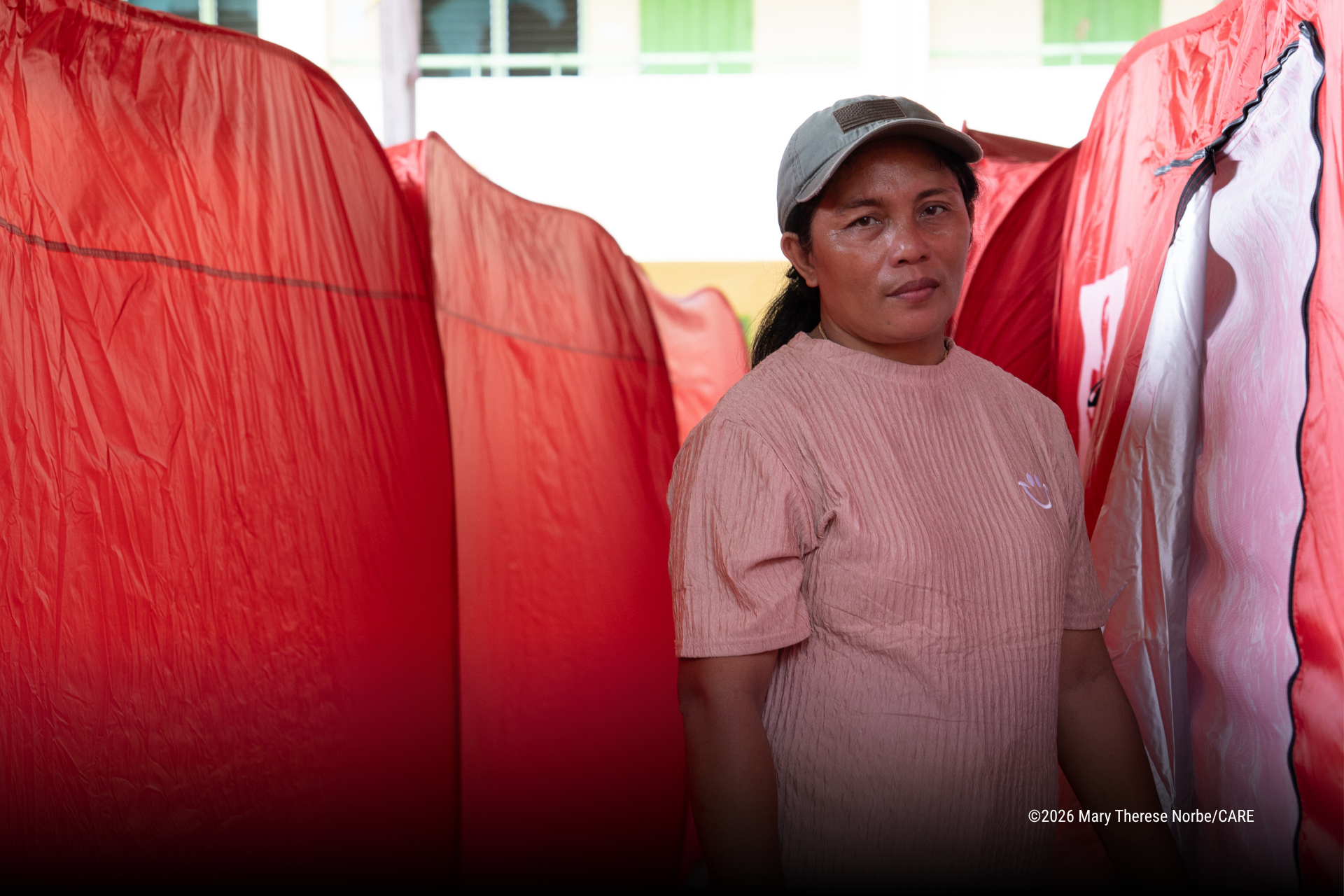
The ground was still shaking when Melanie Sangalan’s mind raced to one place: her grandchild’s second-floor classroom. In the months since, an earthquake, a landslide, and an evacuation have upended her family’s life, yet she has found purpose helping her neighbors as an evacuation camp manager.
Melanie Sangalan, 49, a community health worker known as a barangay nutrition scholar, was at the morning flag ceremony at her barangay hall in Sitio Lanao Mafnoh, Malapatan, Sarangani, when the ground began to shake. Her mind jumped straight to her grandchild, whose classroom sat on the second floor of the school building.
When the shaking stopped, she ran to the school and found her grandchild standing frozen in the yard, unharmed but in shock. She held him close, calmed him, and together they hurried home to check on their family.
Along the way, a neighbor stopped her with news that another family’s house had completely collapsed. She felt afraid. If that house was gone, hers might be, too.
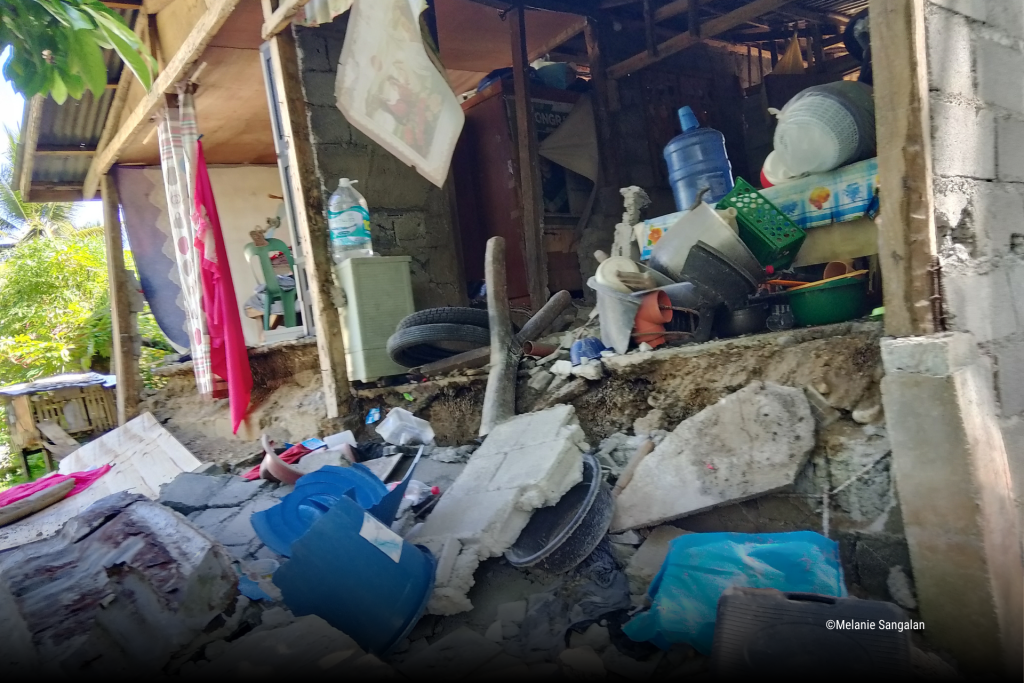
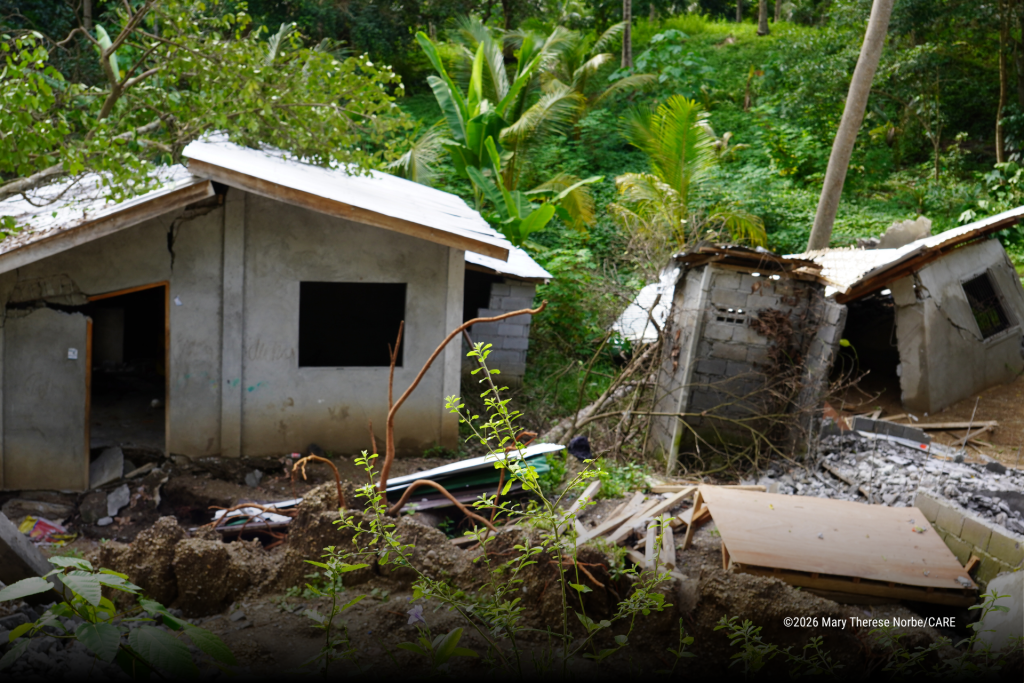
Their home, built in 2022 and improved gradually with whatever extra income they earned, was still standing, but its walls collapsed and floors badly cracked. Her married children’s homes had suffered the same damage.
“It’s better that only the house was destroyed than a life lost,” she said.
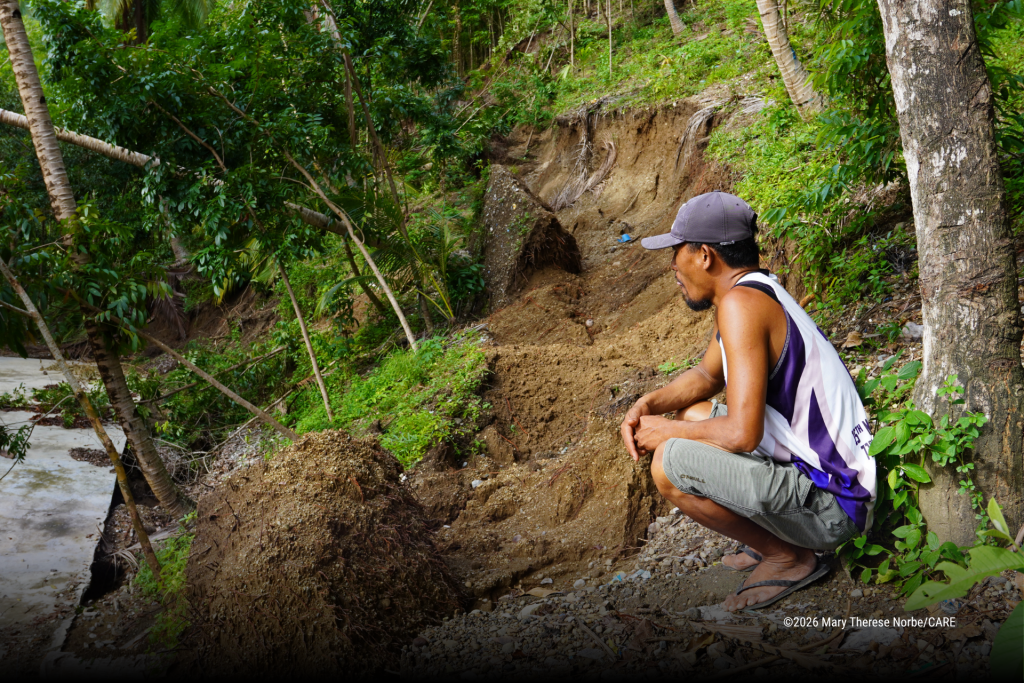
With their homes unsafe to sleep in, Melanie, her husband, and their daughter’s family, eight people in all, crowded into a waiting shed. Her husband covered it with a tarp and built a wooden bed for the children; she slept on a narrow bench. Along the road, her neighbors pitched tents, away from a long stretch of cracked, collapsing ground that damaged four houses.
Even displaced herself, Sangalan kept working as a health worker, moving from tent to tent to check on those she knew would struggle hardest: older residents, people with illnesses, and people with disabilities.
Government food packs and cash assistance helped the family through those first weeks. But the earthquake had loosened the soil around their house, making it unsafe to rebuild in the same spot. She and her husband decided to rebuild on the same lot, just far enough from the unstable ground.
“We have no choice. We want to move somewhere safe, but we have nowhere else to go,” she said.
Rebuilding would take money the family does not have. Her husband’s earnings as a tricycle driver and coconut tenant farmer have nearly stopped since the earthquake, and the coconut harvest is still months away.
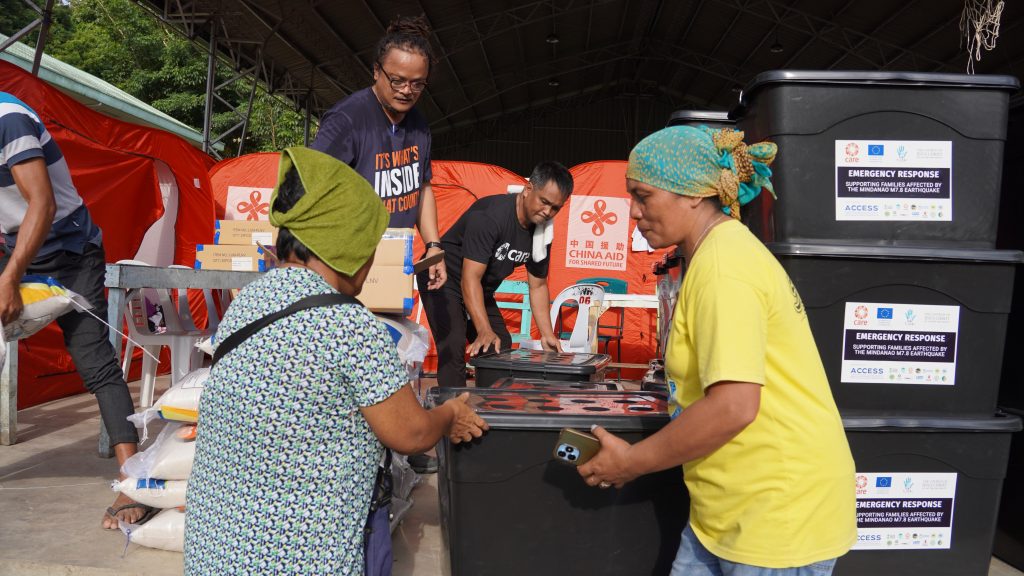
A month after the earthquake, heavy rains raised landslide risk in their community. Rebuilding went on hold; the family evacuated to a center in town, where Sangalan and her daughter’s family squeezed into a small tent, hot by day and cold at night. She lay awake many nights, unsure if they would return home.
Still, she stepped up again as one of the center’s camp managers, keeping track of the families staying there, relaying their needs to local officials, and checking on older and sick residents.
There is much to manage: water runs slowly through the toilets, families spend scarce money on drinking water, and men risk the unstable road home to cook food. Supplies are running low.
On July 12, CARE delivered food kits to 54 households at the center. Sangalan and her fellow camp manager helped manage the distribution, prioritizing older residents, pregnant and breastfeeding mothers, and others needing extra support. Each kit held 36 items, enough for a family for 15 days. Families also received solar lamps from CARE’s partner, ShelterBox.
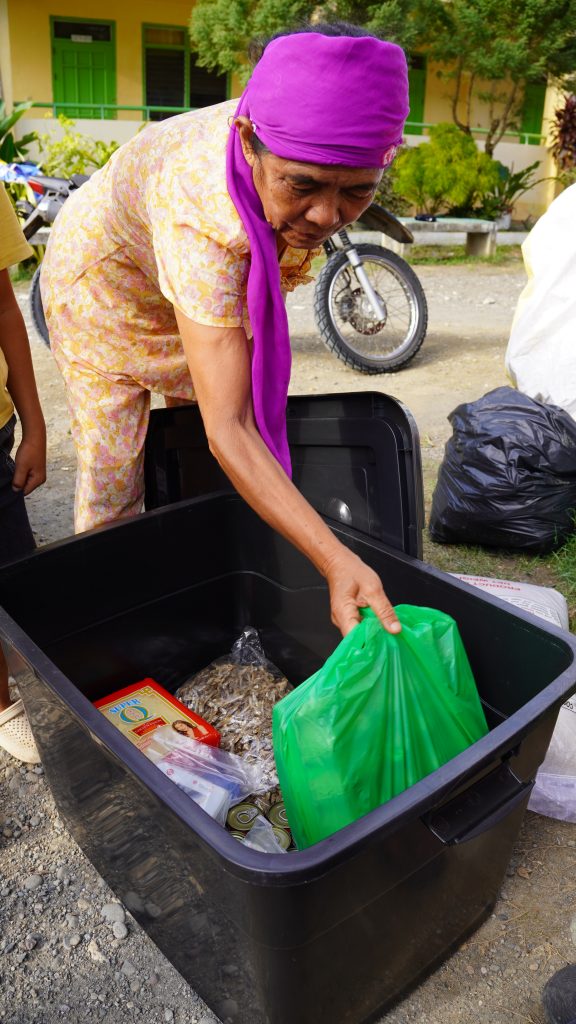
“I’m happy to see my fellow residents and neighbors smile. Even in this small way, it eases some of the sadness in our situation,” Sangalan said.
CARE Philippines remains in Sarangani, working alongside local government units and agencies to reach communities affected by the earthquake and the disasters that followed.
Photo: An elderly woman checks the contents of a food kit she received for her household. Mary Therese Norbe/CARE
The emergency response supporting families affected by the magnitude 7.8 earthquake is led by CARE Philippines, together with partners in the Humanitarian Partnership Platform (HPP), the Philippine Inclusive NGO Network, and the ACCESS consortium, co-funded by EU Civil Protection & Humanitarian Aid, the TIJORI Foundation, and The Church of Jesus Christ of Latter-day Saints.