A young indigenous woman leader helps her community recover after a strong earthquake
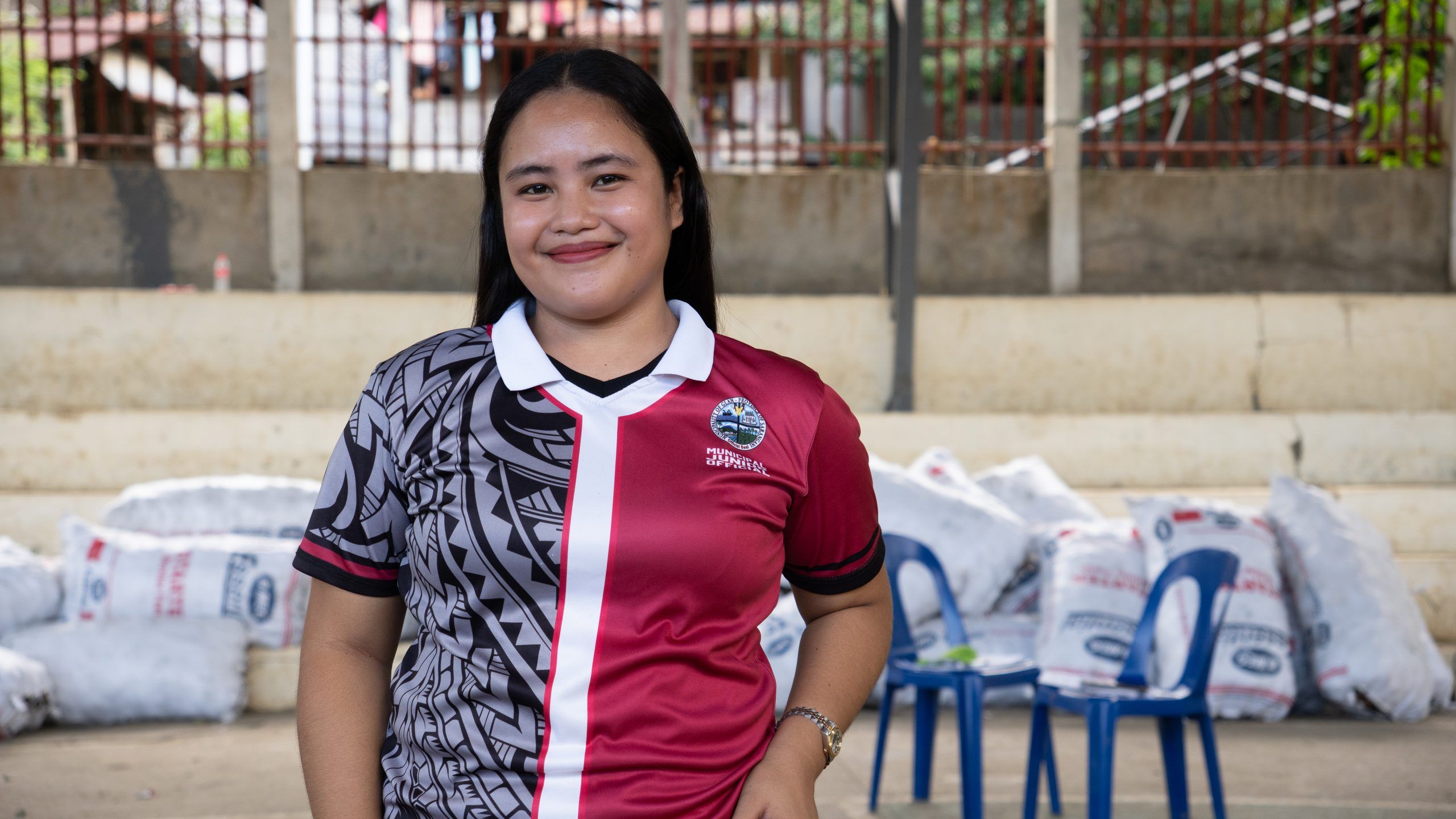
Ana, 26, leads the youth council of Barangay Batotuling, one of the hardest places to reach in Sarangani, Philippines. Her council was used to bringing help to other villages hit by disaster. Then, in June, a magnitude 7.8 earthquake shook her community, damaged more than 100 houses, the farms and their sources of water.
Ana never planned to run for office. Her grandmother, barangay treasurer for 20 years, kept telling her she already spoke like a leader. “My grandmother said I was always the one talking about what was wrong in our community,” Ana says. “She told me that if I could see it, I should be the one to fix it.”
She listened. Three years ago, she ran for the office of the Sangguniang Kabataan (Youth Council) chairperson in her barangay and she won. The village is small with only more than 1,000 people living there. most of them B’laan, an Indigenous Peoples group. Families grow corn, bananas, and coconut for copra — seasonal work that heavy rain, long drought or any disaster can wipe out.
That uncertainty falls hardest on the young. Many cannot afford college. Some marry early to escape what waits at home.
“When there are no harvest and no money for school, young people stop hoping anything for themselves,” she says. “That is the hardest part to watch.”
Ana’s answer was to give young people something to belong to: a real voice in barangay decisions, and activities like youth weeks that kept them connected. And because their municipality is prone to disasters, her council would set aside part of its funds to bring relief goods to young leaders and their families in affected communities.
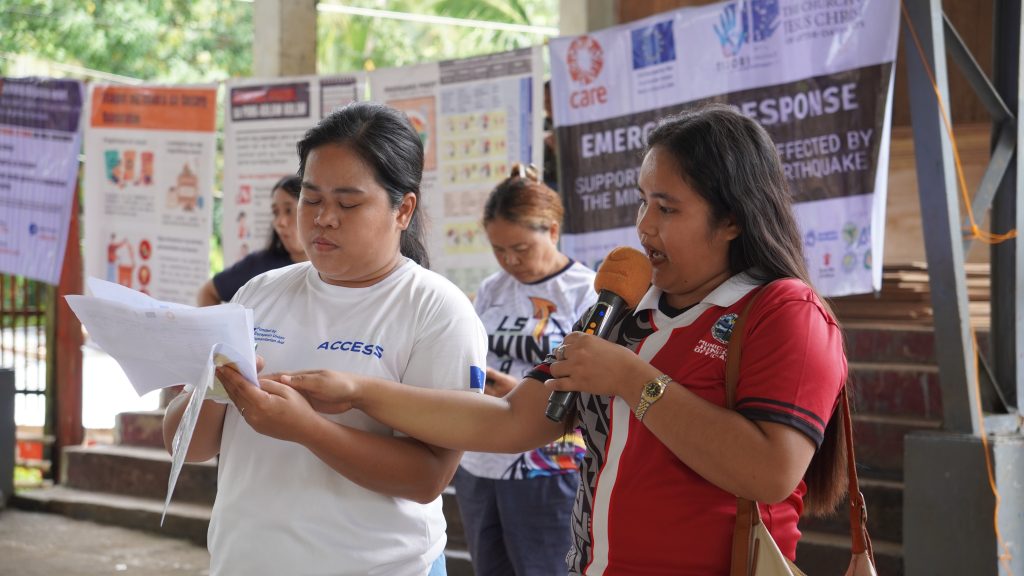
Ana assists CARE staff in facilitating the distribution of food kits and solar lamps and street lights at the community. @2026 Mary Therese Norbe/CARE
Then the disaster came to them. On June 8, the ground moved under Batotuling. Ana and the other barangay officials met immediately. People were shaking, afraid to go back inside. More than 100 households lost their homes. Others still had walls standing but would not sleep behind them, watching the cracks widen with every aftershock. The families who lost the most lost twice: the earthquake took their houses, then tore through the farms that fed them and paid for everything else. The worst loss was the water. Landslides buried the springs, the community’s only source of drinking water.
Help began to arrive in waves. The Department of Social Welfare and Development got food packs in after two days. A week later came the helpers Ana recognized best — young people. The Sangguniang Kabataan of Barangay Malandag, in Malungon, arrived with water, rice, canned food, and clothes. For the first time, the young leaders of Batotuling were on the receiving end.
Recovery had barely started when the monsoon rains came, soaking slopes the earthquake had already loosened. The hillsides slid again, carrying off what was left of the crops — and the road, cutting off Batotuling and the barangays around it. Power lines went down too.
On July 15, the CARE Philippines team got through anyway. Each family received a food kit designed to feed a family of four for 15 days: a 25-kilo sack of rice, a tray of eggs, dried fish, mung beans, peanut butter, cooking oil, and canned fish and meat, all packed in a storage box that keeps food dry. CARE also brought solar lamps for families sleeping outside, and street lights for the barangay, so no one has to move in the dark when an aftershock hits.
Ana was in the middle of it. She worked with the CARE team to validate the list of affected families, making sure those who lost the most came first. And when distribution day came, she was one of the officials keeping the line moving and the process fair.
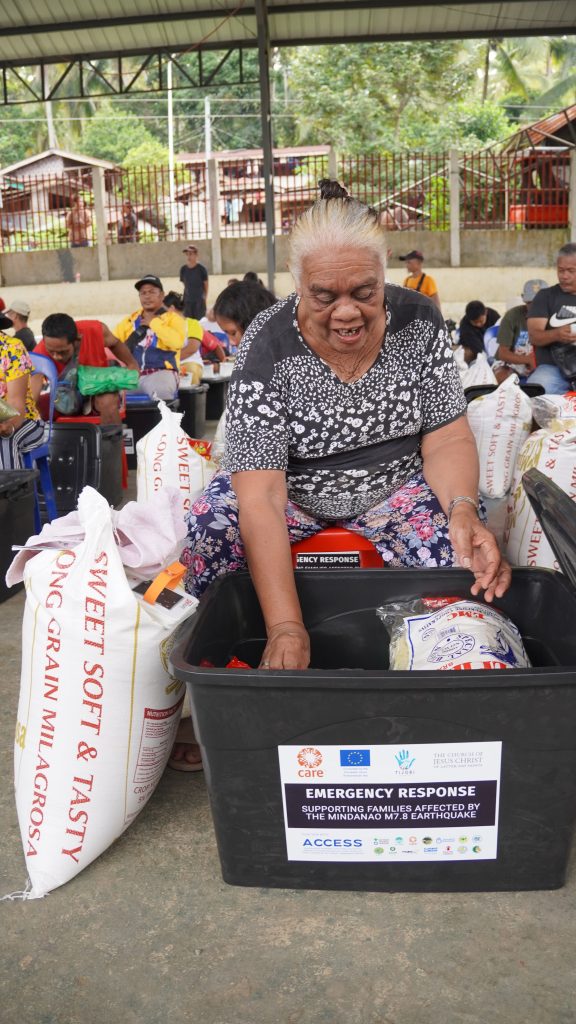
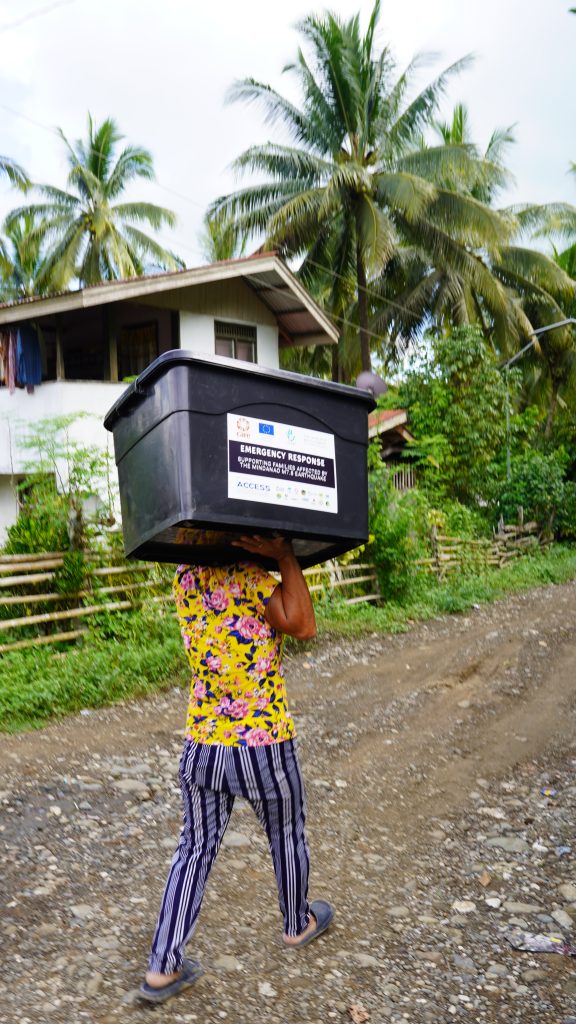
Photo: Residents receive and carry their food kits home to their families who have limited food stock since the earthquake. @2026 Mary Therese Norbe/CARE
“Losing your house is hard, but losing your farm means you do not know what you will eat next month,” Ana says. “So, this support means a lot to those families who have been so worried for days.”
What Ana wants next is water the community can rely on, farms that can feed people again, and young people who finish school before they decide anything else about their lives. “It’s going to take us a long time to recover but knowing that there are people who support us gives us enough hope to move on”, she added.
—————————————–
The Emergency Response supporting families affected by the M7.8 earthquake is led by CARE Philippines, together with partners in the Humanitarian Partnership Platform (HPP), Philippine Inclusive NGO Network, and the ACCESS consortium, co-funded by the EU Civil Protection & Humanitarian Aid, the Tijori Foundation, and The Church of Jesus Christ of Latter-day Saints.