Stronger together: women driving resilient seaweed farming in Palawan
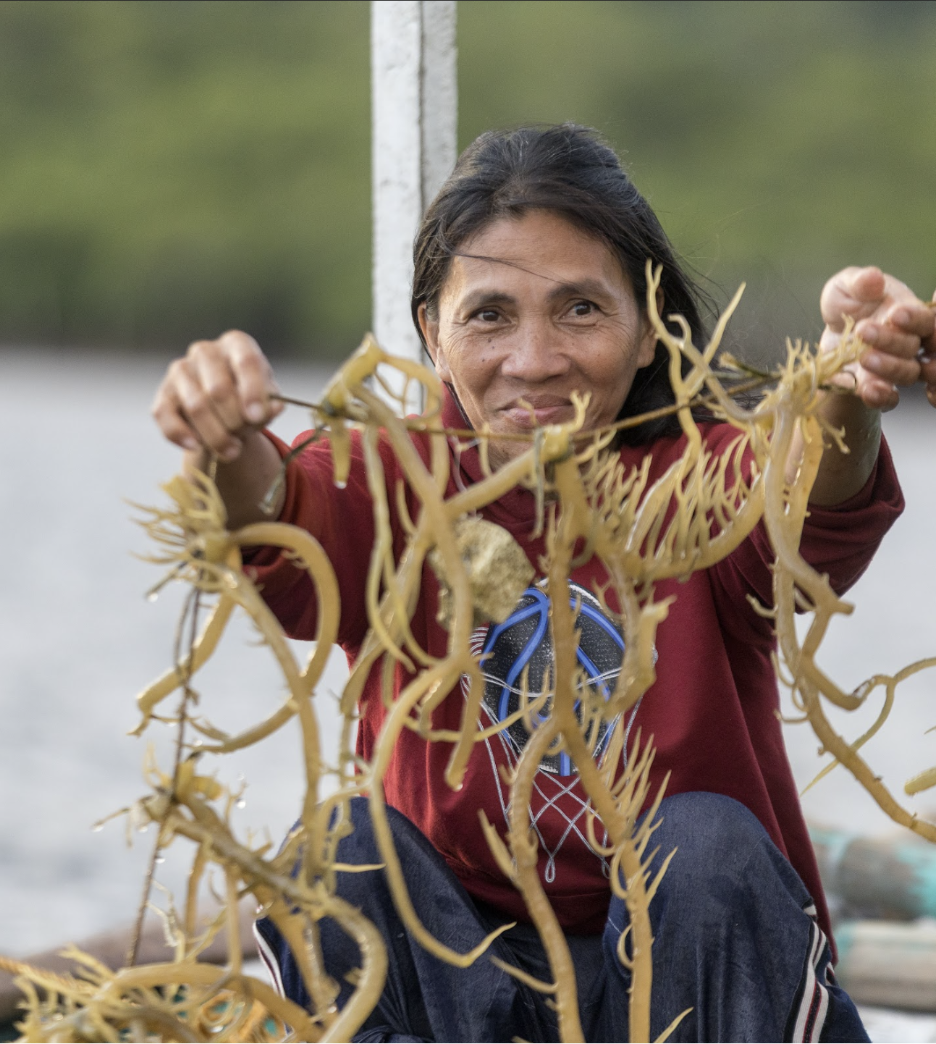
Roseline Jimenez holds up a seaweed line she just checked for diseases. A good harvest for their livelihood group, economic security for their family in the coming months. Photo: Kathleen Limayo for ACCORD
Story by Detsy Uy/ACCORD; Photos by Kathleen Limayo/ACCORD
While many see Palawan in the Philippines as a tropical paradise of pristine beaches, lush forests, and abundant seas, for locals like Roseline Jimenez and Rovelyn Espinoza, it is more than a destination – it is home. It is where they earn a living, sustain their families, and help produce food that reaches communities far beyond its shores.
One of these is seaweed, farmed in coastal waters and central to local livelihoods. Once a lucrative source of income, seaweed cultivation has been impacted by strong typhoons and a changing climate, making it difficult to ensure a good, healthy yield.
Seaweed farming under pressure
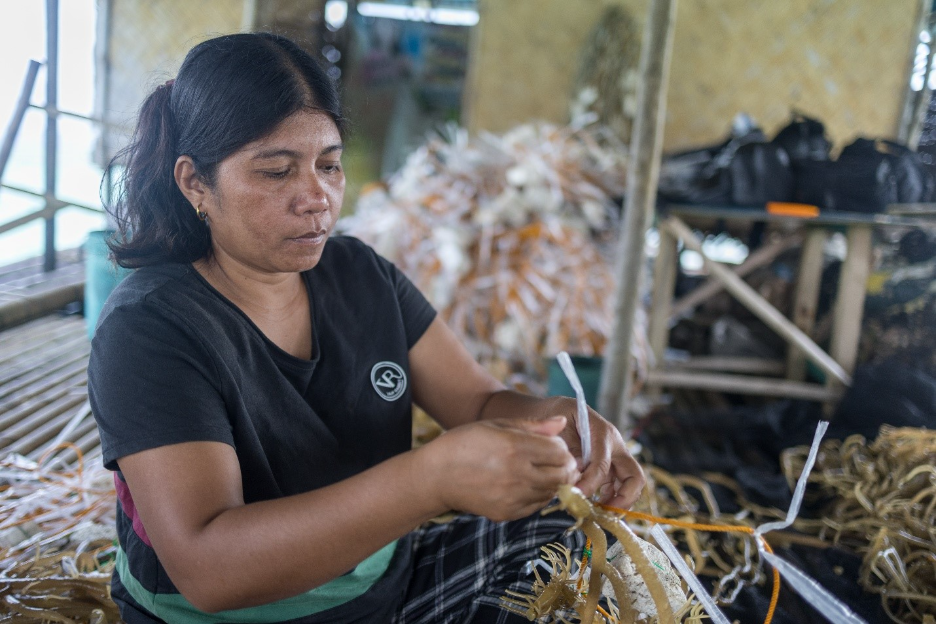
Like many in their community, Roseline and her husband have experienced the highs and lows of farming seaweed. Rovelyn, who has been cultivating seaweed for 14 years, has faced the same uncertainties, having to find ways to earn during periods of low production – from taking on additional work such as tying seedlings for replanting to selling homemade rice delicacies.
Rising water temperatures leave seaweed vulnerable to “ice-ice” and “siring-siring,” conditions that turn it white, brittle, and unfit for harvest. A good season once meant stability even during lean months. In recent years, incomes have become less predictable, while the cost of living continues to rise.
Finding new income sources, support through the Farmer Field and Business School
Roseline was among the first women to join the Farmer Field and Business School (FFBS) for Fisheries Program – implemented by ACCORD and CARE Philippines in Palawan – which helps small-scale fisherfolk, especially women, through hands-on learning, climate-resilient practices, and basic business skills. Alongside fellow fisherfolk like Rovelyn, she attended training diligently, sharing her experiences and struggles to find ways to strengthen and protect their livelihoods.
One strategy her group developed was forming a collective to help each other diversify their income sources. Now, apart from improving their seaweed farming practices, the women are exploring other income-earning activities such as aquaculture.
Moving towards collective action
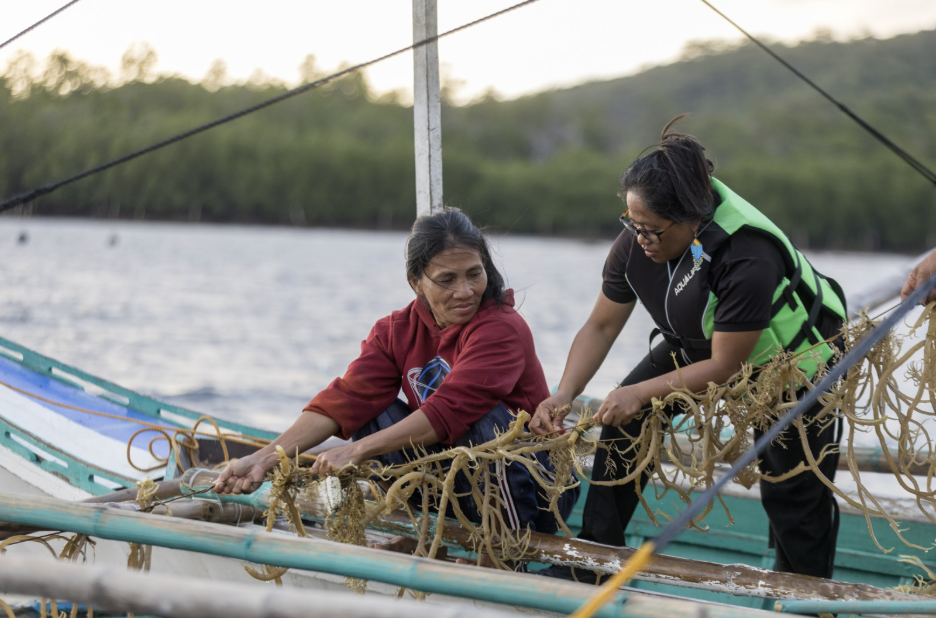
They’ve also shifted how they work: instead of each family managing their own farm alone, they now share both the burdens and the rewards of their co-managed farms.
This shift toward collective action has strengthened not only their livelihoods but also their relationships within the community. As Rovelyn shared, “Before the seaweed demo farm, we worked individually. Now, we have an association where we work together for our livelihood. Before, we didn’t really pay attention to our neighbors. Now, we know who needs help.”
Growing in confidence and leadership
Once shy and hesitant to participate, Rovelyn is now an active member, gaining confidence and renewed motivation to improve her family’s income.
Roseline has become one of the group’s leaders. Through practical knowledge, a deeper understanding of environmental degradation and climate change, and a new appreciation for collective action, she and the other women feel more confident and secure – ready to sustain their families and communities despite uncertain seasons ahead.