“We Built It Piece by Piece”: After the Typhoon, a Family Builds a Safer Future
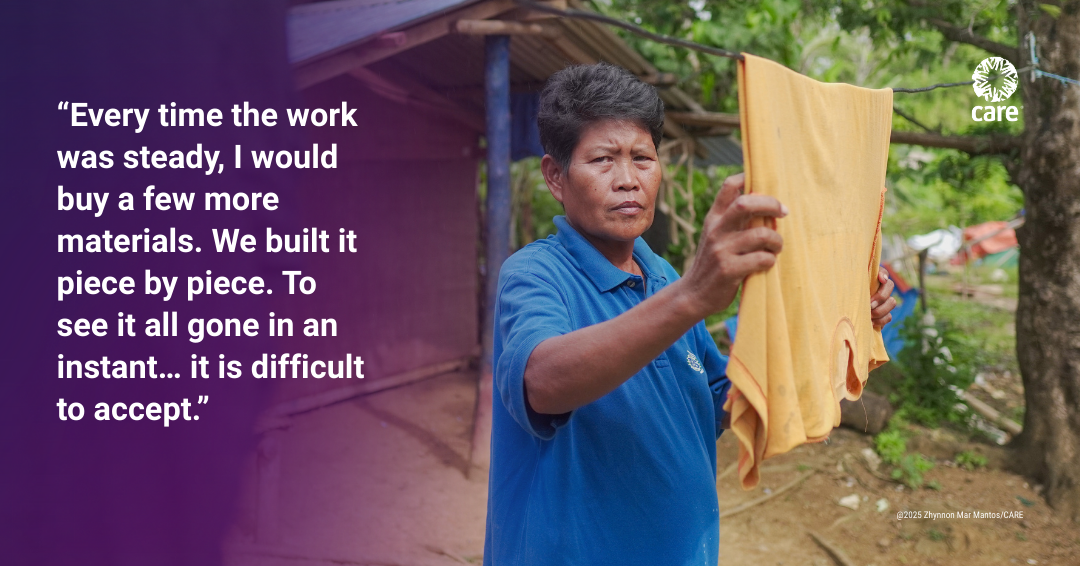
For Imelda, life in Panganiban, Catanduanes, is tied to the sea and the soil. Located directly in the country’s typhoon belt facing the Pacific Ocean, the province is known for its “howling winds” brought by typhoons. For residents, this means life is a constant balance between the calm seasons of work and the ever-present threat of the next storm.
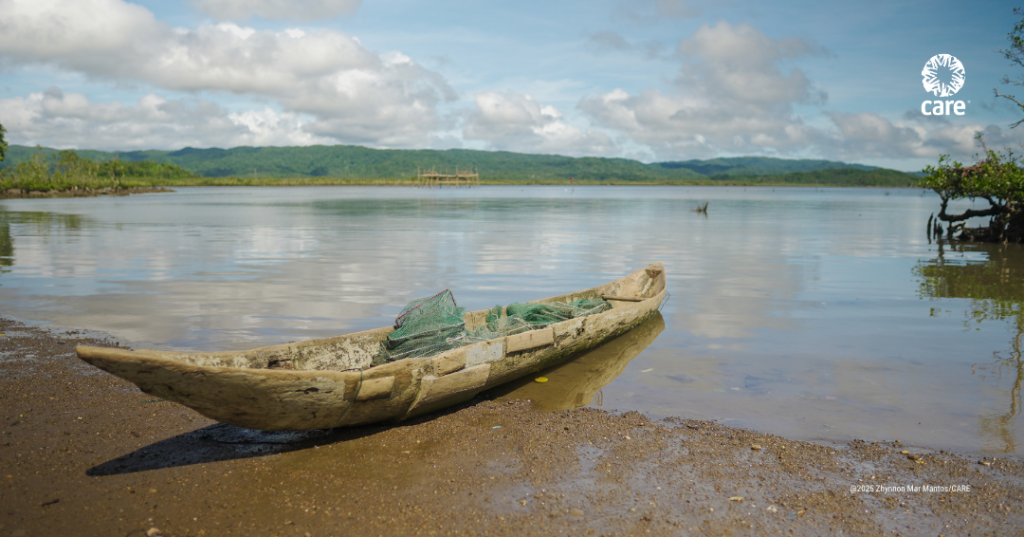
Photo: The shores of Panganiban in a moment of peace. On days like this, the calm sea is a lifeline, offering a treasured opportunity for work and rebuilding before the next storm.
At 52, Imelda’s days are shaped by the rhythm of the tides and the turn of the seasons as she supports her family through fishing and farm work. Lacking her equipment, she rents fishing gear, her livelihood dependent on both the availability of tools and the temper of the ocean. When the sea is harsh, there is no work and no income.
Imelda shares a home and a responsibility with her sister, Marife. Together, they are part of a close-knit network of relatives—five families who support one another through shared meals and daily challenges. When Typhoon Pepito struck in November 2024, Marife’s children were with them, huddled together as the storm unleashed its fury.
The wind tore at their roof until the entire house collapsed, flattened to the ground around them. The family ran through the storm to the safety of the nearest church. When they returned the next day, only debris remained where their home once stood.
“That was years of our life,” Imelda shared. “Every time the work was steady, I would buy a few more materials. We built it piece by piece. To see it all gone in an instant… it is difficult to accept.”
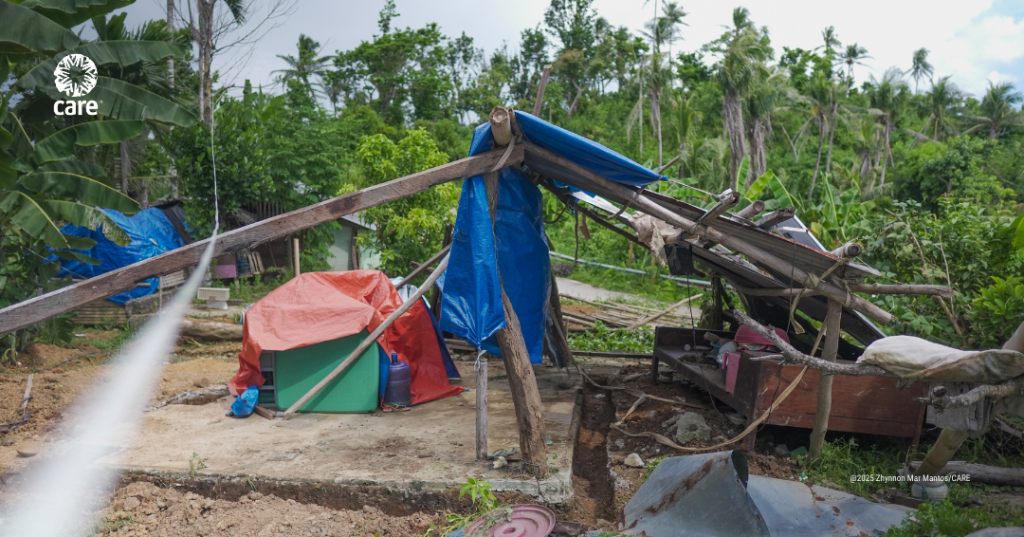
Photo: A powerful reminder of the journey. These are the remains of the temporary shelter Imelda built from scraps after Typhoon Pepito. It was a crucial first step that led to the permanent, sturdier home her family lives in today.
Despite the loss, Imelda took the lead. She organized her family to scavenge for wood and scraps, anything that could be used to build a temporary shelter. A private foundation provided galvanized iron sheets and nails, which they added to their collection of materials. For two months, they lived in the shelter they had constructed, a constant reminder of their loss.
The local government provided cash assistance, which helped them buy food and other immediate necessities. But with her nieces and nephews in school, the money stretched thin. She wanted to return to fishing to help with their education, but the storm had destroyed most of the boats and gear she used to rent. The path to recovery seemed impossibly steep.
With support from the United Nations Central Emergency Response Fund, United Nations International Organization for Migration, and CARE Philippines, she and her sister used the shelter repair kits and cash assistance not just to rebuild, but to build back stronger. They purchased cement and cable wires, investing in a solid foundation designed to withstand future storms.
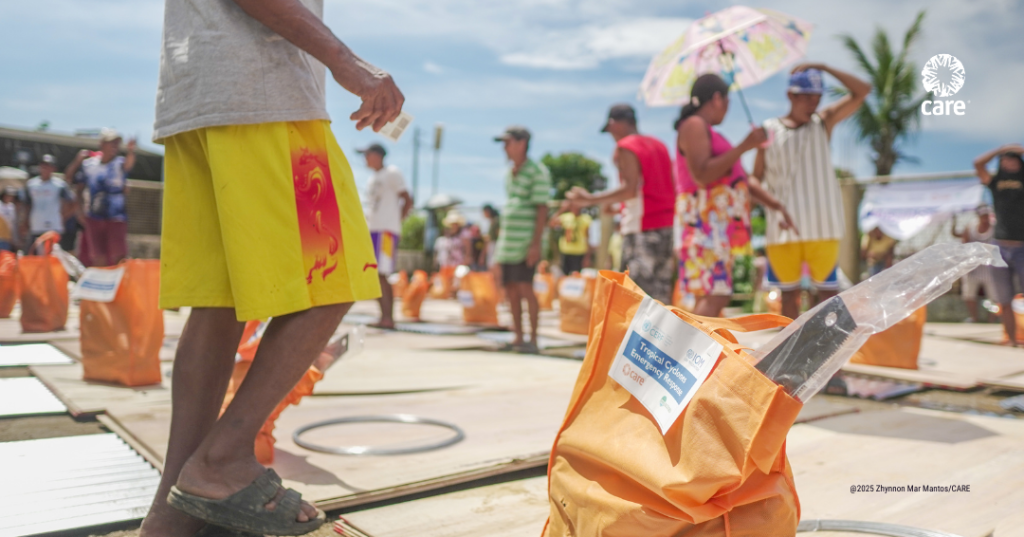
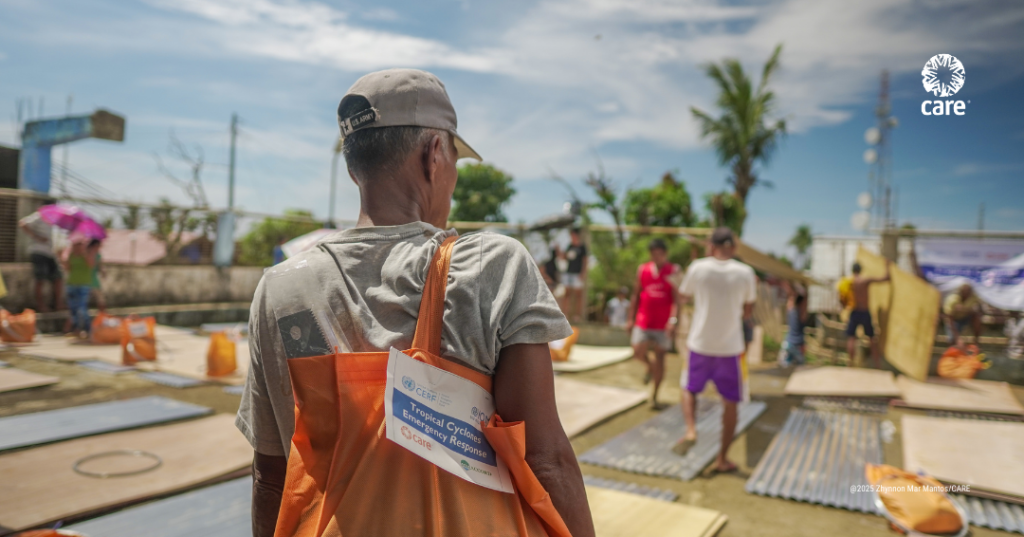
Photos: Shelter repair kits with essential building materials are now in the hands of families working to recover and rebuild their community.
With this, Imelda and her family did more than reconstruct a house; they built a safer home, which is a testament to their resilience and their determination to create a more secure future.